Date:Friday, January 2nd 2026
Happy Friday, everybody, and a happy New Year! Today's fish of the day is the Alvord chub!
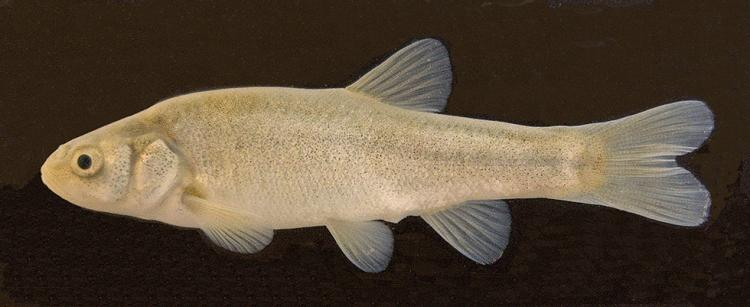
The Alvord chub, scientific name Siphateles alvordensis is found in the Alvord basin. Found stretching from Southeastern Oregon down to Northwestern Nevada, this basin was once filled by a large lake, once connecting to the great basin in the Pleistocene. However, in modern days this area has dried to the Alvord desert, with many of the remaining waters being fed only by geothermal springs. The basin has only two native fish, the Borax Lake chub, and the Alvord chub, both of which have an amazing temperature range. The Alvord chub withstanding water temperatures of up to 80 ° , limiting these fish from many of the hot springs in their region, giving them only the warm springs, and warm spring fed streams. These fish live in depths between 4inches to 4 feet of depth, over gravel, silt, or sand, willing to take any water that won't dry up on them.
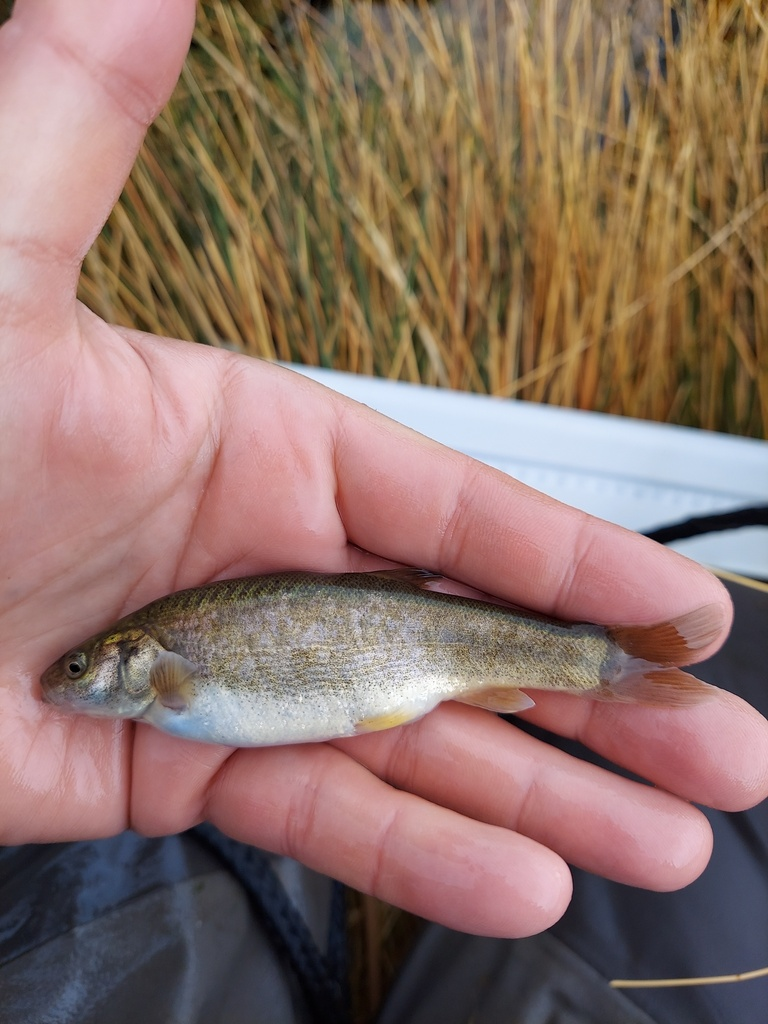
Due to the limited species within the area, the Alvord chub is an opportunistic omnivore. Most of their diet is made up of midge larvae, although they also consume other insects, crustaceans, and mollusks. AS there are very few other animals in this region, they are thought to be unpredated on, giving these fish free roam over the waters they live in. The Alvord chub uses this to grow as large as 14cm maximum, with most only growing to 8.5cm in their lifetime.
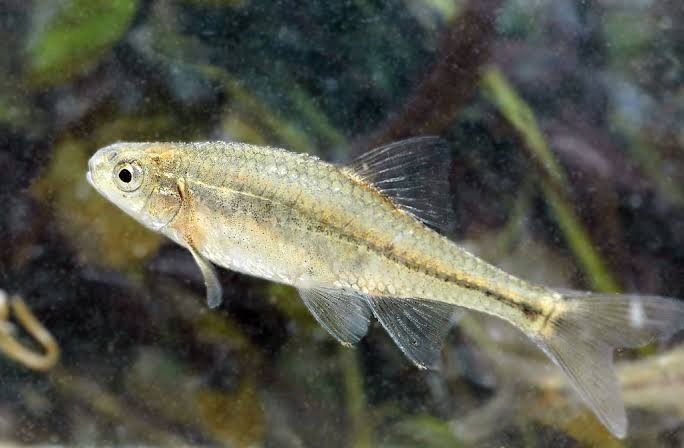
Very little is known about these species, as there exists quite a few gaps of knowledge around the Alvord basin, not just the animals living in the area. Female fish spawn between April to July, when temperatures warm in the region, but not once they become hot enough to threaten populations in minimal water depth. There is no current knowledge on how quickly the Alvord chub grows, but due to a lifecycle of 4-5 years these fish likely begin breeding once they age to a year. Sadly, the Alvord chub is on the decline, with many of their historical streams drying up, as well as invasive species taking valuable resources from an environment with so few. There is, however, hope, as the breeding populations appear to hold high diversity, despite the declining environment.
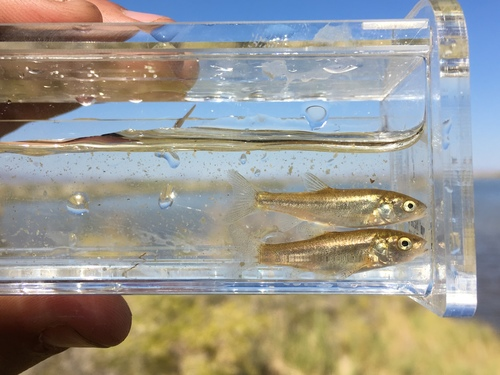
That's the Alvord chub! I hope that you enjoyed reading about the fish for today, and I wish a very positive year ahead!
Sources
Stewart-Fusek, C. (2024b, August 29). Biologicaldiversity. https://biologicaldiversity.org/species/fish/pdfs/2024.08.29.AlvordChubPetition.pdf?_gl=1
D. Scheerer, P., Peterson , J. T., Bauman, B., & Clements, S. (2013, July 28). Progress reports 2013 Fish Division Oregon Department of Fish and ... ODFW.https://odfwnfi.forestry.oregonstate.edu/sites/default/files/2013 Scheerer et al. ODFW - Alvord chub.pdf
Siphateles Alvordensis summary page. (n.d.-b). https://www.fishbase.se/summary/Siphateles-alvordensis