Date: January 12th 2026, 2:00pm
Happy Monday, everybody! Today's fish of the day is peamouth minnow chub!
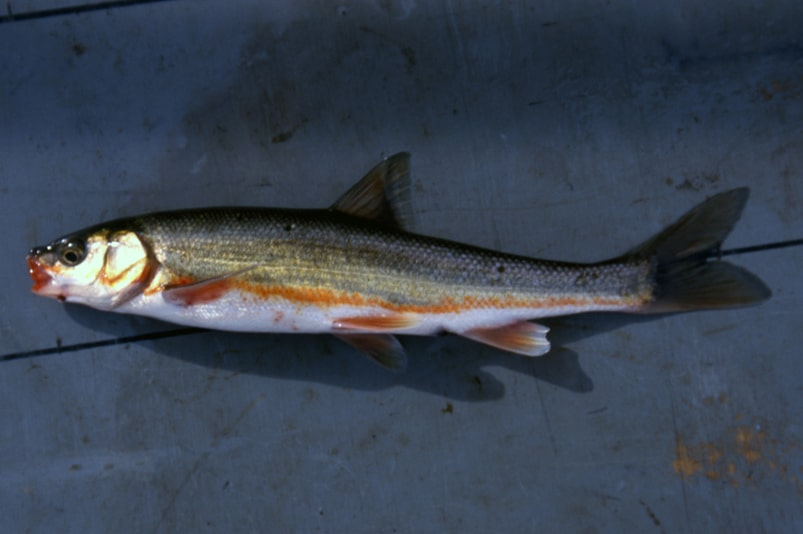
The peamouth minnow chub, scientific name Mylocheilus caurinus, is a common Western fish. Found in and around the Columbia basin, stretching from British Columbia, through Washington, Idaho, Montana, and Oregon. However, unlike almost all other minnows these fish are slightly salt resistant, giving them the ability to spread into freshwater streams in Vancouver island, as well as other islands in the Salish sea. These fish are in lakes, streams, and rivers, where they settle around vegetation on the bed, so long as it is above 60ft of depth. Although in the winter and day these fish can be found in deeper, warmer waters, coming to the shore in the day or around summer.
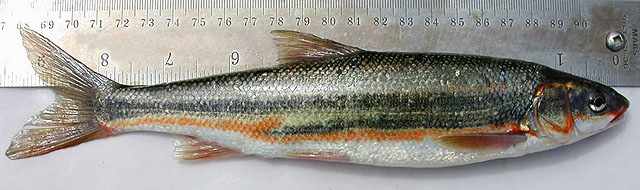
These fish are the last surviving member of the genus Mylocheilus, with only three other relative fossils found, all of which found in Glenns Ferry Formation, or Poison Creek Formation Idaho during the late Miocene (around 10-11mya). Once, when settlers were just settling around the Columbia basin, these fish were called Redhorses, and were served in restaurants. Despite their reputation as "trash fish" nowadays. They can be identified not only by the impressive sizing of adults, but also by the small mouth, barbels at the jaw corners, and bright red lips year round.
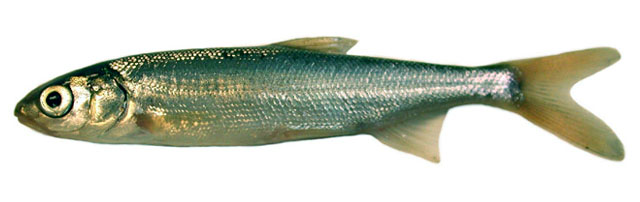
Peamouth minnows are well known for the impressive size they can reach, getting as large as 15 inches, although most will only get around 9-10 inches throughout their lives. Despite this large size these fish do not act as mid sized predators, instead consuming aquatic and terrestrial insects, larvae, crustaceans, mollusks, and on rare occasion small fish. Despite few carnivorous fish being able to feed on the peamouth, they are fed on by various fish eating birds, and hunting mammals.
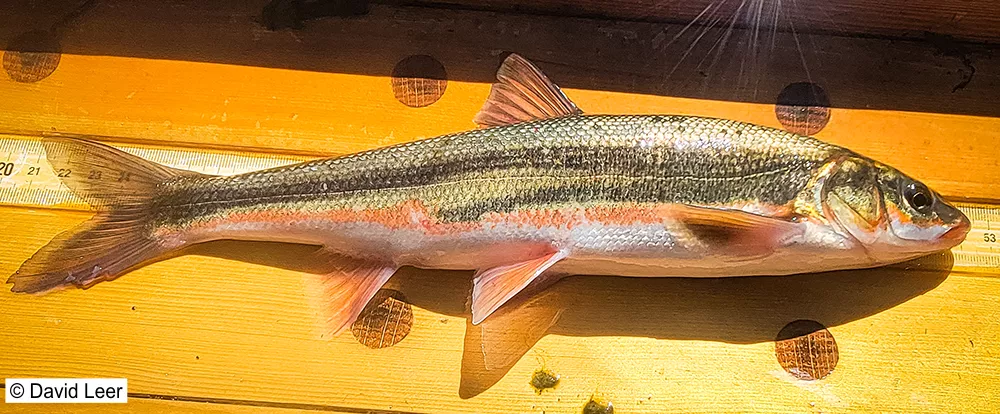
Spawning takes place between May-June when water temperatures reach 54-64 degrees F. This is when females sized 11-13 inches will produce between 11,000 to 16,000 eggs, and schools of 40-500 fish will cluster at the edges of lakes and streams. Positioned in less than 3ft of water, above gravel 2 or more males will tightly pack beside the female and release eggs and milt. These eggs will hatch within 7-8 days, and will sexually mature within 3-4 years. Although most fish will die before sexually maturing, those who do will can survive up to 20 years.
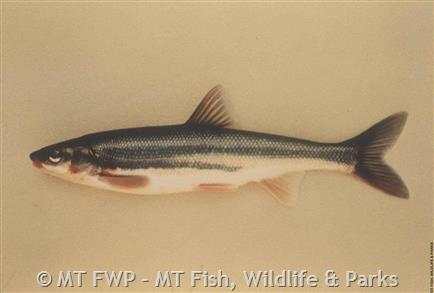
That's the fish for today! I hope we all enjoyed ourselves learning about the peamouth minnow chub!
Sources:
Species Summary: Mylocheilus caurinus, Peamouth. Species summary. (n.d.). a100.gov.bc.ca/pub/eswp/speciesSummary.do;jsessionid=354b70fbcb618ed1bbda36de52a56c235f51cfbf7c0510c3fc6b52914a209e67.e3uMah8KbhmLe3iTaxqRbN0Rb41ynknvrkLOlQzNp65In0?id=14449
Peamouth. Pearson Ecological. (n.d.). https://pearsonecological.com/fish-l2-single/peamouth/
Oregon State University. (2025, December 1). Peamouth. Oregon Sea Grant. https://seagrant.oregonstate.edu/WRF/native-fishes/minnow/peamouth
Montana Natural Heritage Program and Montana Fish. (n.d.). MTNHP. Peamouth. https://fieldguide.mt.gov/speciesDetail.aspx?elcode=afcjb24010
Mylocheilus Caurinus summary page. FishBase. (n.d.-c). https://fishbase.se/summary/2804