Date:Mon 5/6/2024 8:00 AM
Happy Monday, everyone! Been a long while since the last email, partially due to my old laptop being completely decimated, and its data lost. However, Fish of The Day is back once more! Today's fish of the day is the mangrove horseshoe crab!
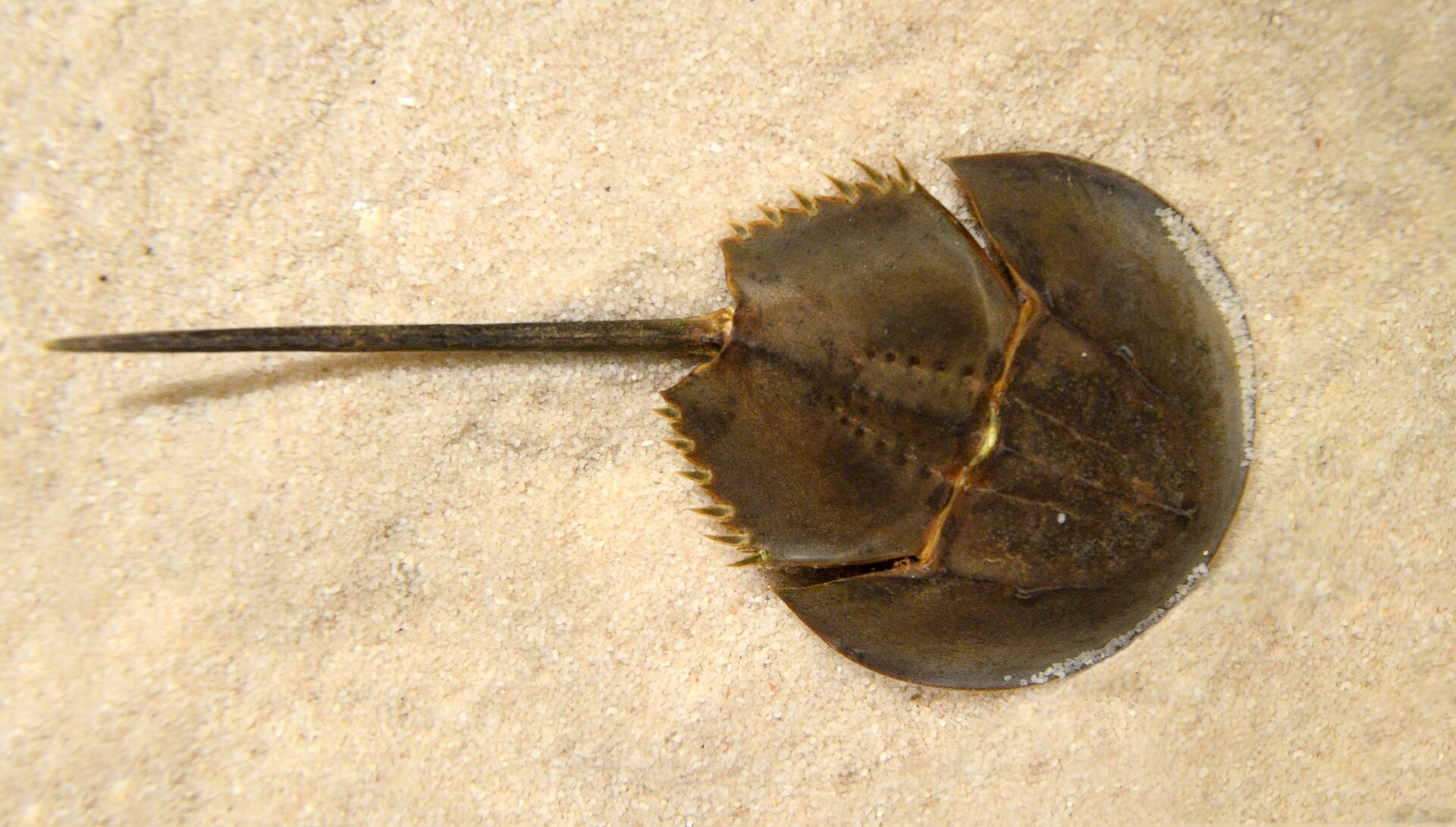
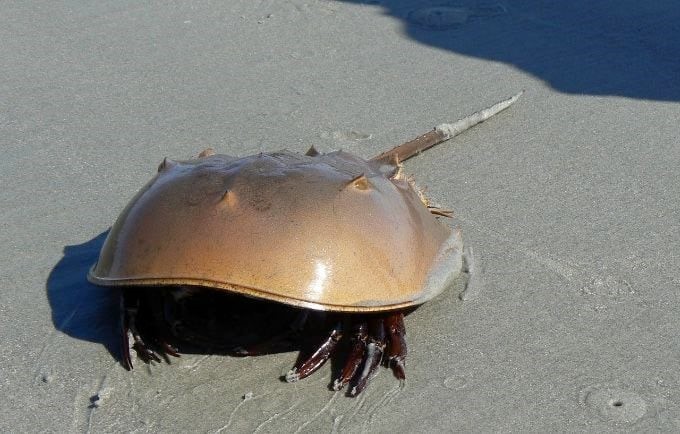
The mangrove horseshoe crab, also known as the round-tailed horseshoe crab, and scientific name Carcinoscorpius rotundicauda is one of the four living species of horseshoe crab remaining. The mangrove Horseshoe crab is closely related to the other 2 asian horseshoe crabs: The Indo-Pacific Horseshoe crab (Tachypleus gigas), and the Chinese Horseshoe crab (Tachypleus tridentatus), but is the only member of the Carcinoscorpius genus. These three horseshoe crabs are separate from the American Atlantic Horseshoe crab, which separated between 130 to 400 million years ago! Now, Horseshoe crabs are horribly named, as they're not crabs at all. Instead, they belong to subphylum Chelicerata, which is in the Arthropod phylum, directly relating them to spiders and ticks.
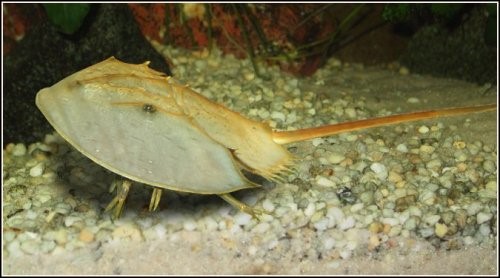
Like its name implies, the mangrove horseshoe crab lives in brackish waters in mangrove forests. They can be found across Southeastern Asia, down to the Indo-Pacific in Tropical and subtropical climates. This animal spends its time in shallow waters, preferring sandy areas. The mangrove Horseshoe is benthopelagic, meaning it lives its life on the seafloor, and although they rarely do so, horseshoe crabs can swim, albeit, upside down. I'd recommend looking up a video on them swimming, it's very cool to see!
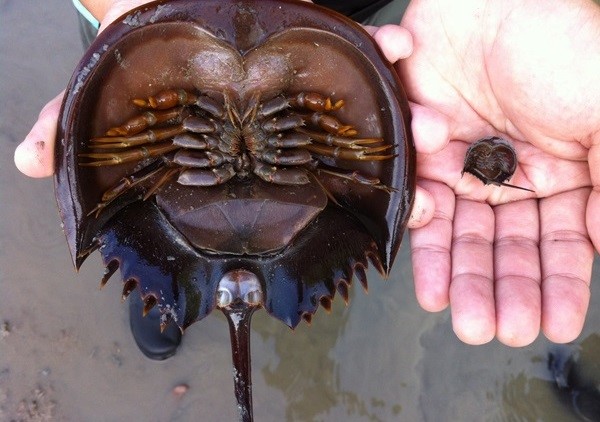
As benthic creatures, the mangrove horseshoe crabs diet is limited to what it can find on the seabed. Not only that, but, like all parts of the Chelicerata subphylum, it lacks jaws and teeth, and so it must feed in another method. Horseshoe crabs eat by grabbing prey with chelicerae, a pair of appendages in front of its legs, and passing prey to a food grove that runs from the furthest back legs, and up to the mouth. Well in the food grove, the bases of the legs are used to grind prey with teeth like structures, simultaneously passing further forward. Due to horseshoe crabs being so unchanged over the years, it is thought that this feeding method may have belonged to some of the earliest Arthropods. The diet of the mangrove horseshoe crab in particular is made up of insect larvae, small fish, marine worms, and mollusks. Although mangrove horseshoe crabs in particular have a strong preference for insect larvae above other prey.
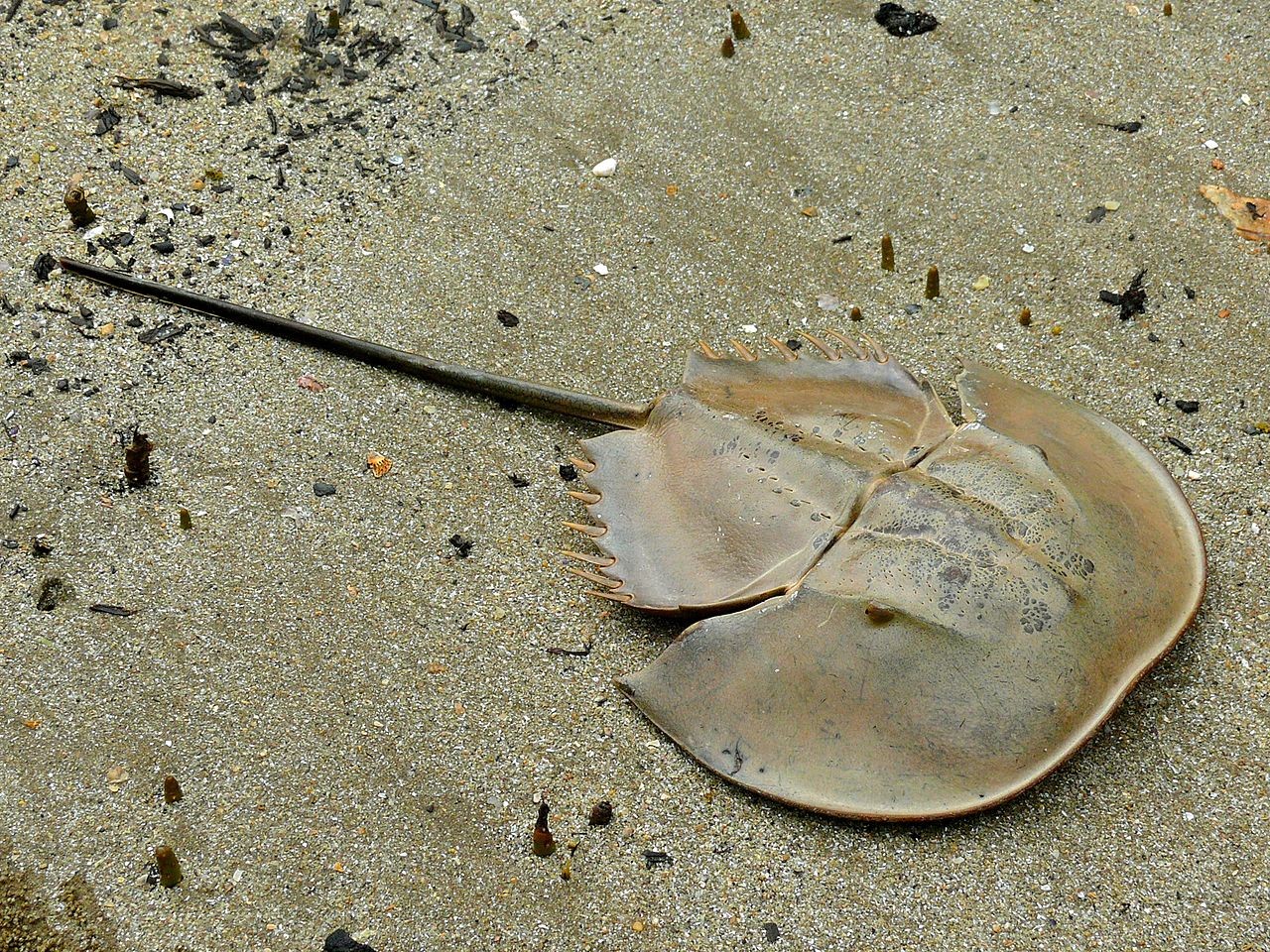
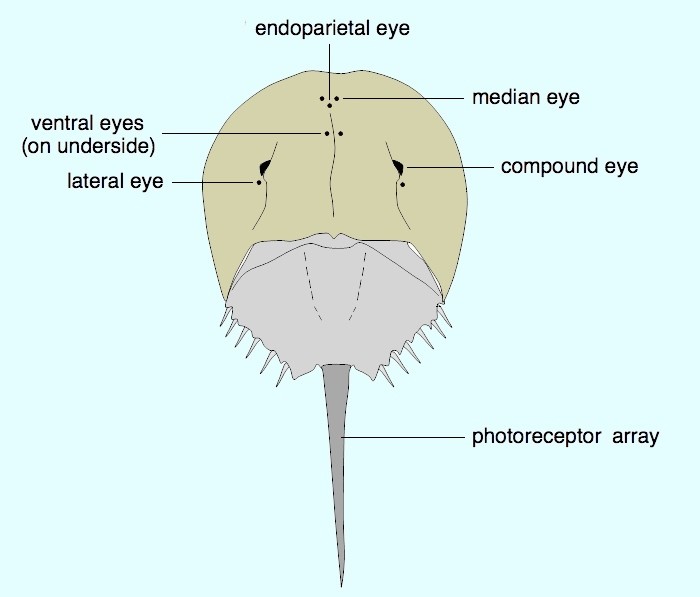
Anatomically horseshoe crabs get stranger yet. They contain 10 eyes: 2 compound eyes, which can be seen on the top of the head, used primarily for finding mates. Then, there is a pair of lateral eyes, on the underside, ventral eyes, used for finding prey, an endoparetial eye, and median eyes. Horseshoe crabs can see both visible and ultraviolet light, but are particularly sensitive to light amounts and changes in their surroundings. The tail, as opposed to some common thought, is not poisonous or a weapon, but rather it is used for flipping over easily, and some movement well swimming. In Mangrove horseshoe crabs the tail is far more rounded than its relatives.
That's the mangrove horseshoe crab, and I hope that this was a satisfactory restart to fish of the day! Have a good Monday, everyone!