Date:Wed 5/29/2024 1:00 PM
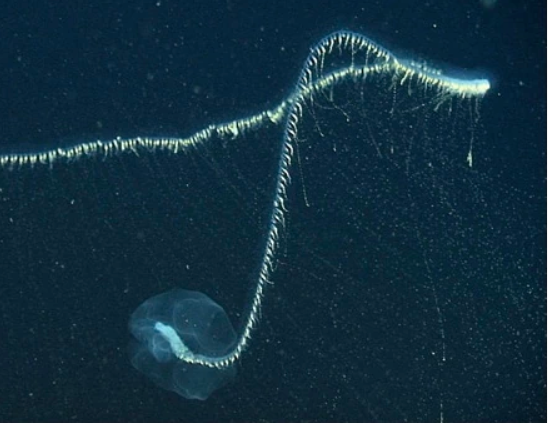
Happy Wednesday everyone! Today's fish of the day is the giant siphonophore!
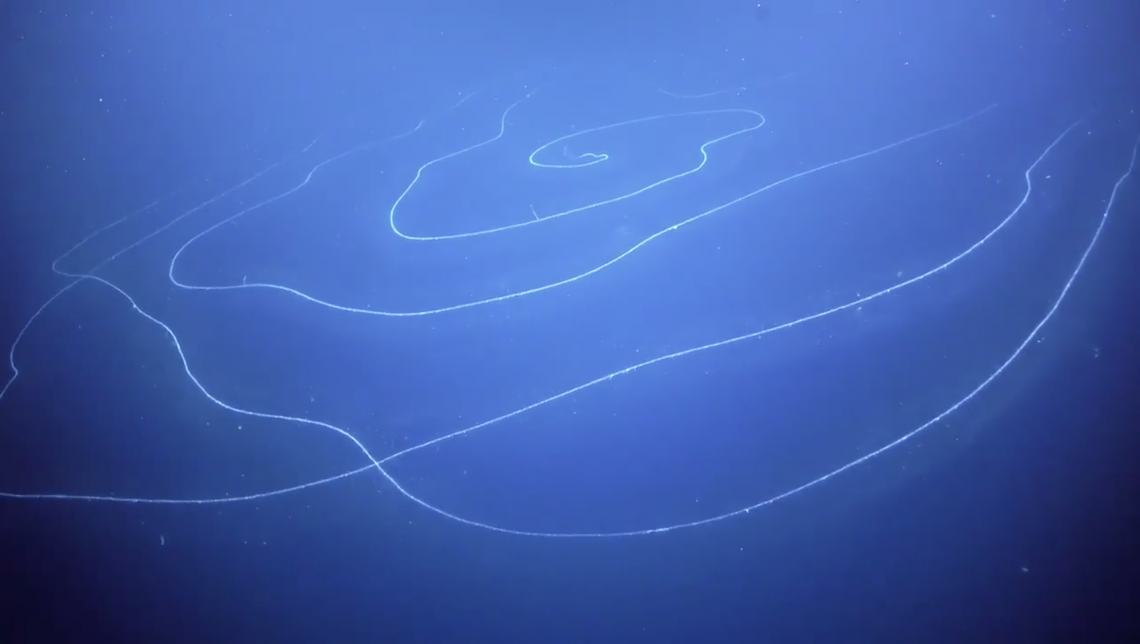
The giant siphonophore, also called the giant siphonophore, scientific name Praya dubia, is known for their strange appearance and the mystery surrounding them as a relatively new discovery. Within the Cnidaria phylum, lays jellyfish, corals, anemones, and many others. Within that is the Hydrozoa class, the most notable of which being freshwater jellies, hydras, and the Portuguese man o' war (which is also a siphonophore).
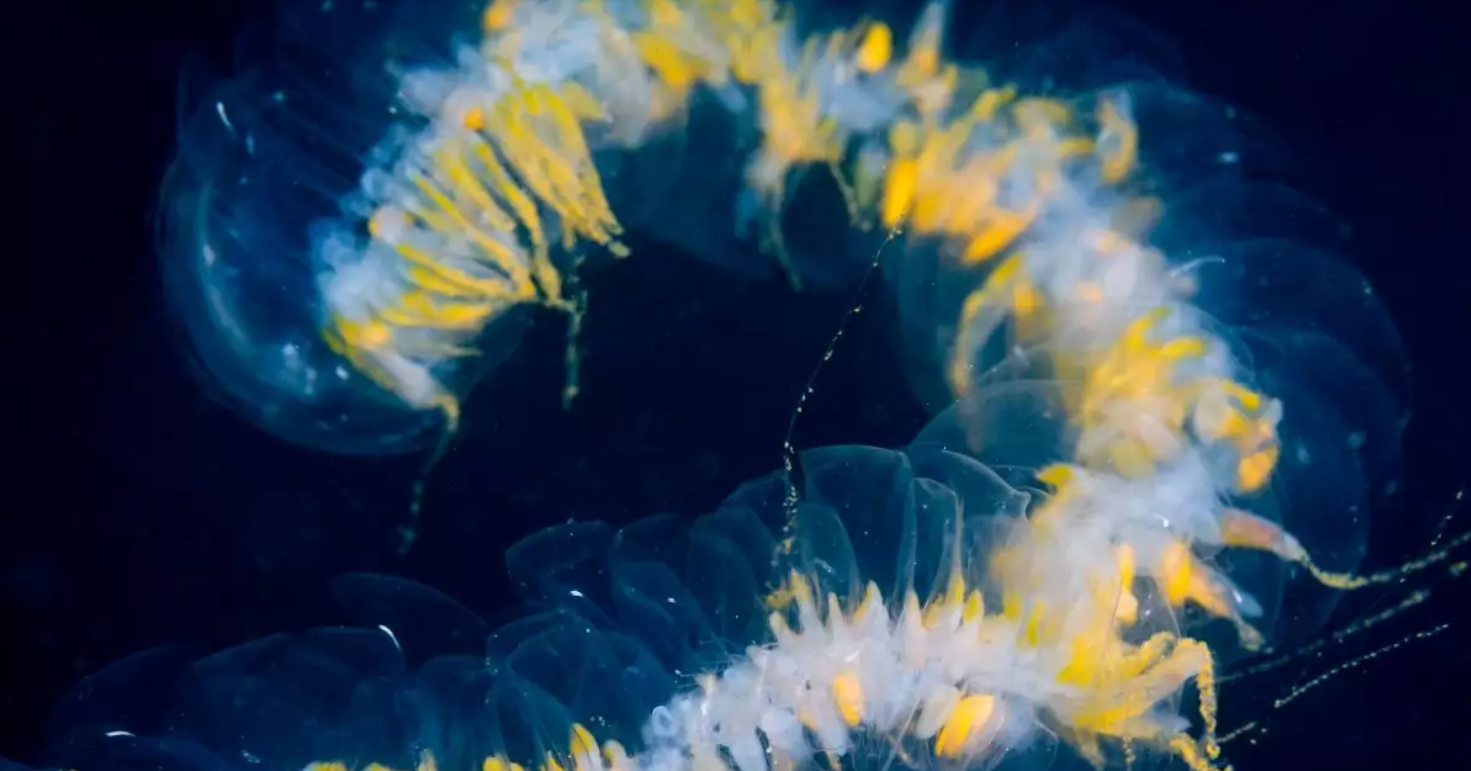
Siphonophorae, unlike the popular perception, is not a single organism, but rather a colony of both medusa stage and polyp stage zooids, all of which have evolved to specialize jobs and live attached. Zooids are multicellular organisms that reproduce asexually through a budding process. This process starts with a single bud called the pro-bud, and siphonophores are unique in that this pro-bud can produce zooids with specific functions and unique roles to play. The body itself is made first out of a stem (a vertical branch stretching the length of the animal that the remaining colony attaches to) allowing for zooids of particular purposes to attach themselves in specific spatial patterns along the length.
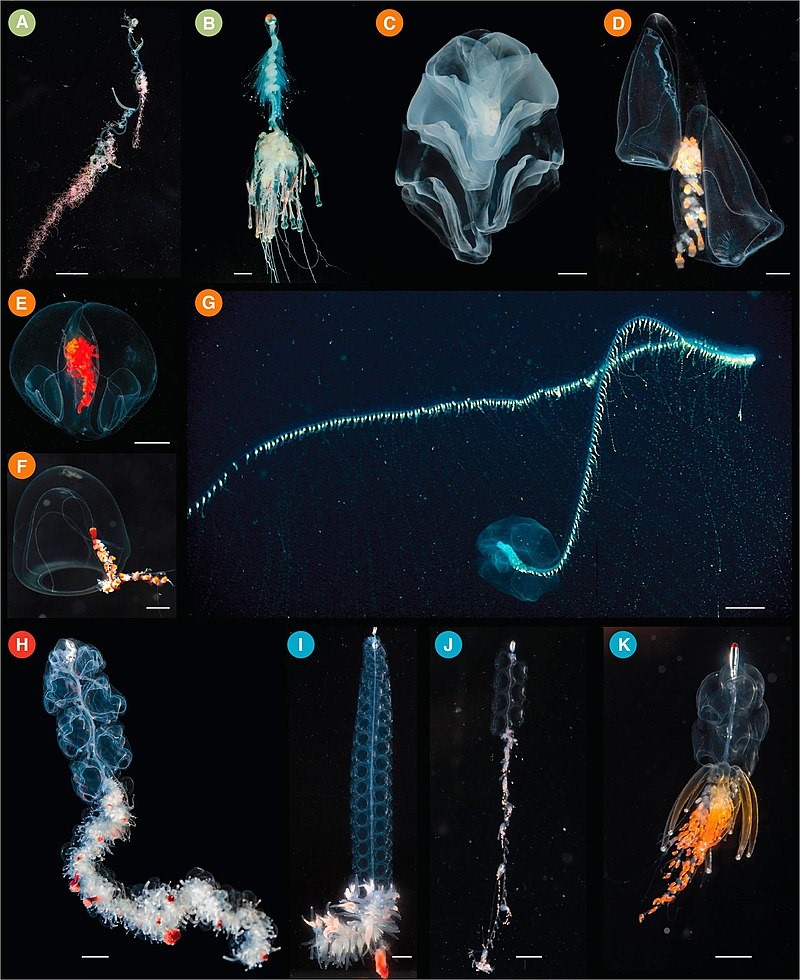
The giant siphonophore, as a part of the Calycophorae suborder, has certain zooids in its construction unique to its order. The specialized roles consist of: brachts (used for maintaining a neutral buoyancy, storing oil acting as a protective cover), gastrozooids (used to feed on prey), gonophores (used for reproduction), nectophores (stinging cells held on the outside of tentacles across the body), palpons (used for digestion), and pneumatophores (holds gas on the anterior end, used for balance and locomotion, and possibly identifying changes in the water).
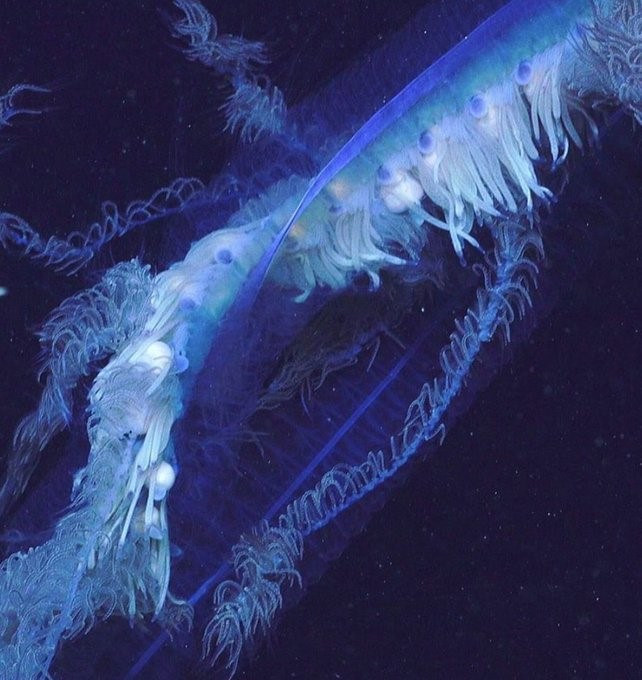
The giant siphonophore was first discovered in April of 2020 off the coast of Australia by researchers, as far as 800 meters below the surface, living in the mesopelagic to the bathypelagic zones, 700-1,000m. This is the largest siphonophore ever found, a recorded 150 feet in length, although exact measures can be difficult with an animal living at depths like this. Their range is unknown, along with many other things about this animal, but sightings have been primarily made in the pacific and indo pacific oceans. The diet is made up of anything that runs into this animal, primarily fish and crustaceans. These animals are active swimmers, willing to pursue prey, although this behaviour hasn't been seen in larger specimens. Like other siphonophores, this giant is bioluminescent, producing a blue light whenever it is bumped into, and can use these bright lights to attract prey. Hunting is done by extending nematocyst stinging cells into anything that contacts the tentacles, injecting them, this can deliver a toxic sting and paralyze prey. As of this time, there are no known predators.
Have a wonderful Wednesday, everyone!