Date:Thu 5/23/2024 10:00 AM
Happy Thursday, everyone! Today's fish of the day is the humphead wrasse!
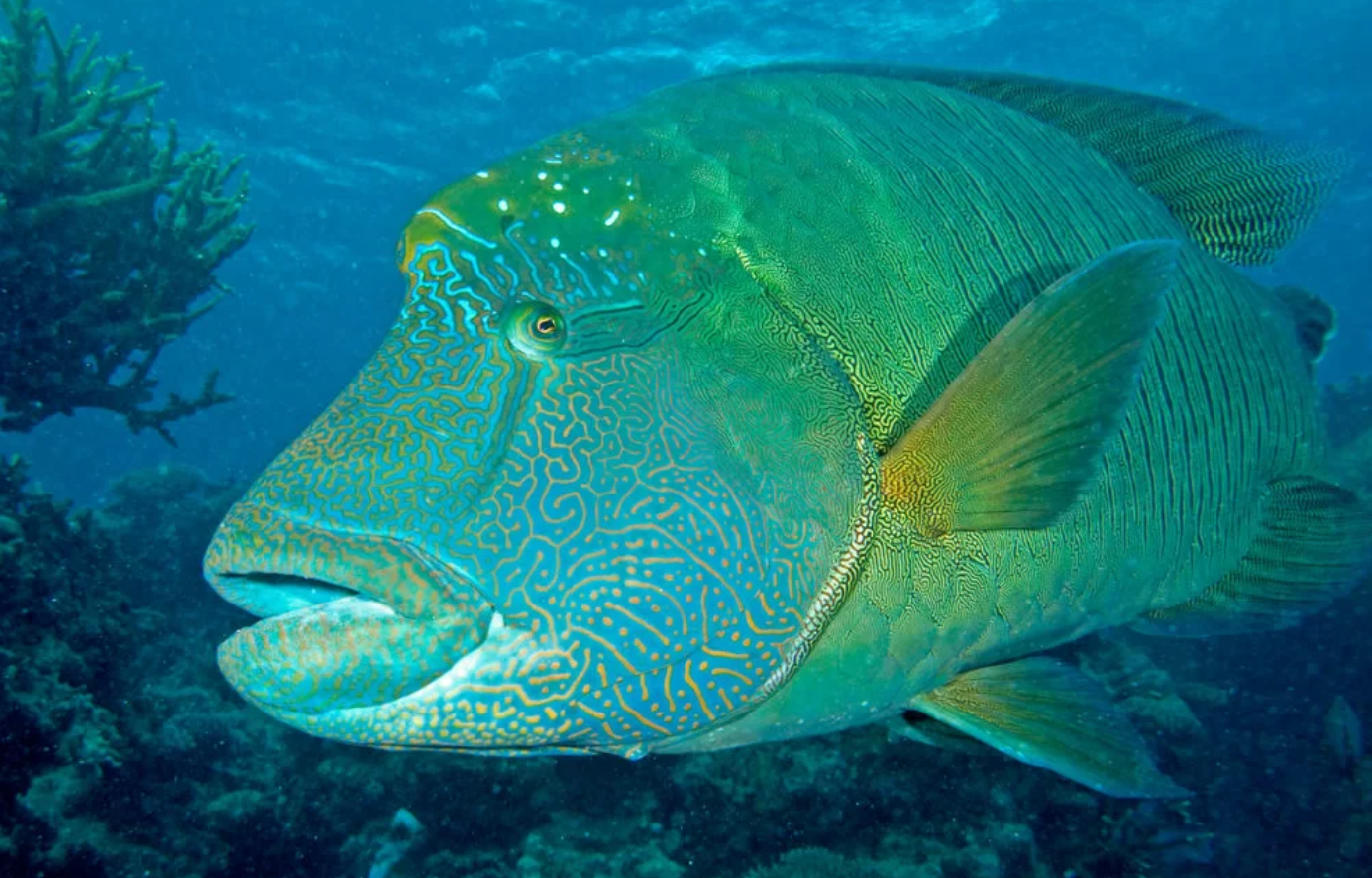
The humphead wrasse, also known as the Māori wrasse, Napoleon wrasse, and Napoleon fish, scientific name Cheilinus undulatus is an endangered fish found around coral reefs. Primarily found in the indo-Pacific ocean, their range stretches from the Eastern side of Africa to as far East as the islands of Oceania. Other populations live in lagoons, estuteries, and the red sea, thriving on the reefs within. Juveniles prefer to live on sandy banks, closer to the surface, but fully mature wrasse prefer to live a bit deeper in the waters. Anywhere from 3-350ft into the depth of the water, where offshore corals thrive.
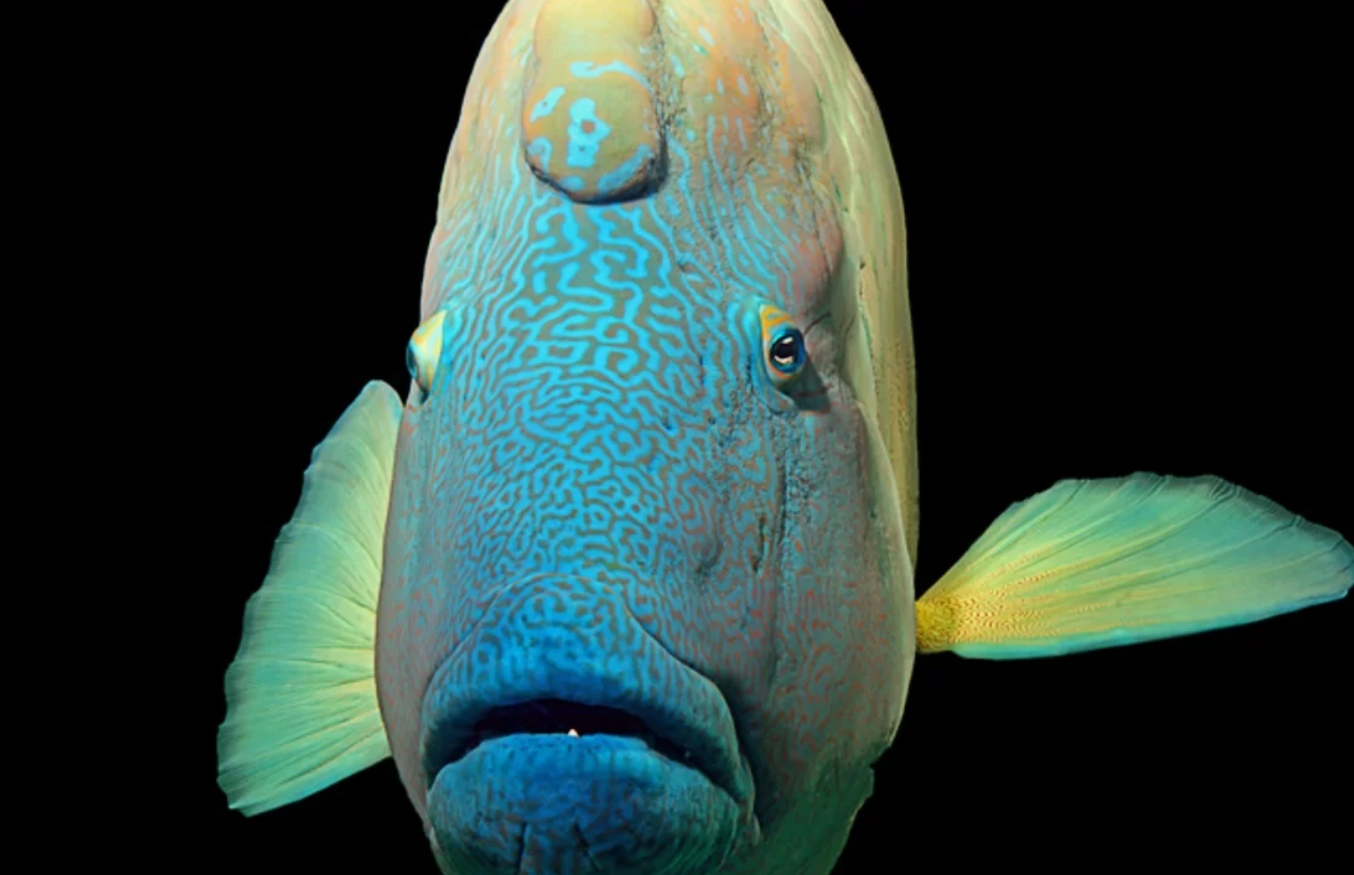
The diet of the humphead wrasse consists of mollusks, crustaceans, urchins, and smaller fish. But, the most impressive thing about their diet is the ability to eat toxic animals. More importantly, their ability to eat crown-of-thorns starfish, which are a common reason for disease in coral reef systems, as these starfish eat coral at a faster rate then they can grow in natural condition and the recent surge in population is one of the larger reasons for coral loss. The wrasse's ability to eat these is essential to their home ecosystem. Their diet can also support their large size, with females only getting as large as a meter, but males coming in as large as 2 meters (a little larger than 6 feet). Predated by sharks, but one of their main issues, and cause for endangerment is due to overfishing by humans, along with illegal aquarium trading. This combined with habitat loss is what makes it so important we watch their numbers closely.
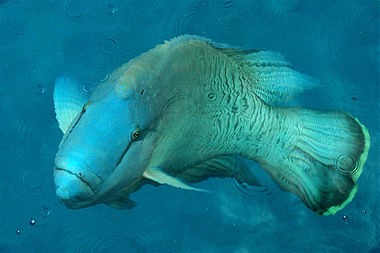
Reproduction of the humphead wrasse is much like that of others in the wrasse family. Wrasse are protogynous hermaphrodites, meaning that they can switch sexes throughout their lives, although the timing behind sex change is still unknown. All humphead wrasse are born female, and most switch to male at about 9 years old. Spawning will take place at reef edges, and eggs will rest on or near coral until hatching. The first 5-7 year of their lives juvenile, but after they will choose sex based on the population needs of their reef, and live another 30-40 years before dying.
Have a wonderful day, everyone!