Date:Tue 6/25/2024 1:00 PM
Happy Tuesday, everyone! Today's fish of the day is the atolla jellyfish!
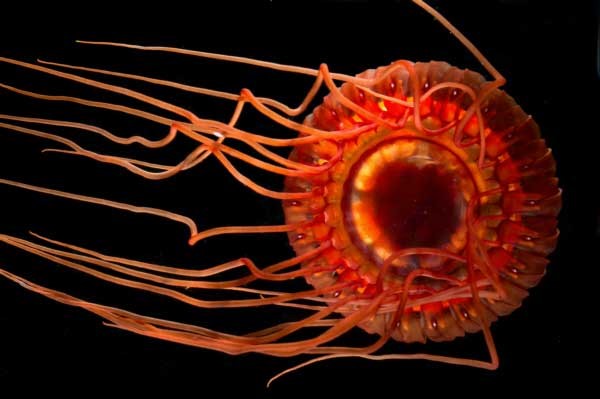
The atolla jellyfish, also known as the coronate medusa, alarm jellyfish, and deep-sea jellyfish, scientific name Atolla wyvillei, is a crown jellyfish (from the order Coronate) found in deeper waters. (Note: Atolla jellyfish may refer to several species of atolla, but Atolla wyvillei is the most commonly found globally.) The atolla jelly is one of the most commonly found jelly in the depths, living in the midnight zone (1,00 to 4,000 meters below the surface) across the globe! Although, they can be found as high up as 300 meters below the surface, we still know little about them due to their depth range.
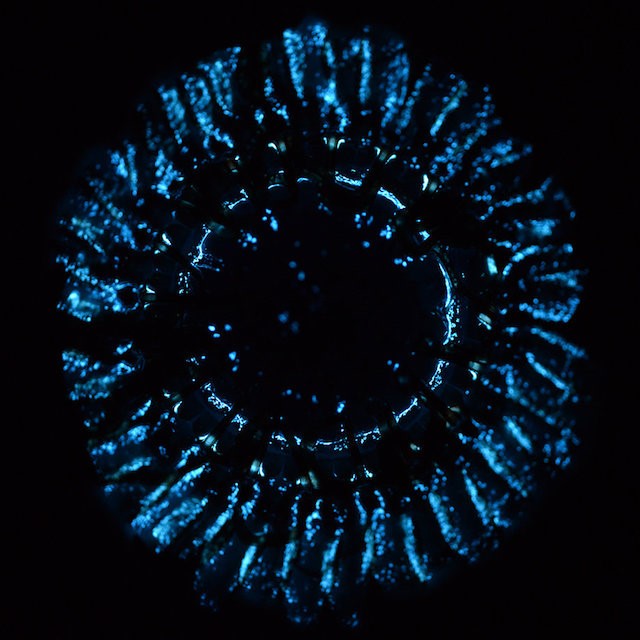
Most well known about these jellies is their bioluminescent response to predation. When this jellyfish is threatened or disturbed, a blue-green bioluminescence lights up, lighting up the predator. The visual is that of several rings flowing down the bell of the jelly, I would recommend looking up a video, it's quite stunning! This confuses the predator, shocking it into halting its attack, and giving off the illusion of multiple jellyfish in the area. However, this lightshow also acts as a calling for larger predators, lured in by the lights, the attacker of the jellyfish is far better prey to larger animals. Allowing the atolla jelly time to retreat. In the early 2010's this was used by marine biologist Edith Widdler to invent the E Jelly, a device which mimics the luminescent patterns of the atolla. The E Jelly has since been successful in luring animals, and its use provided us with the first ever video of a live giant squid in 2019.
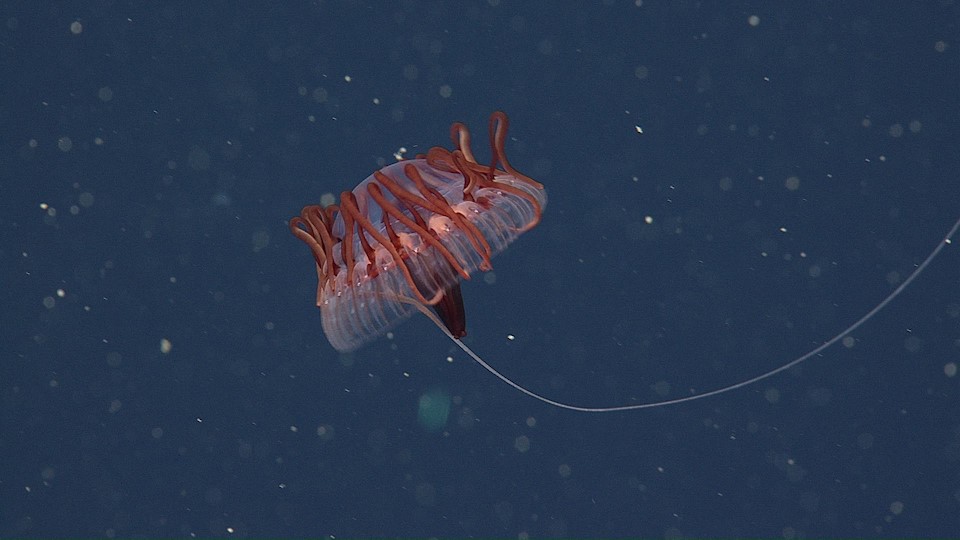
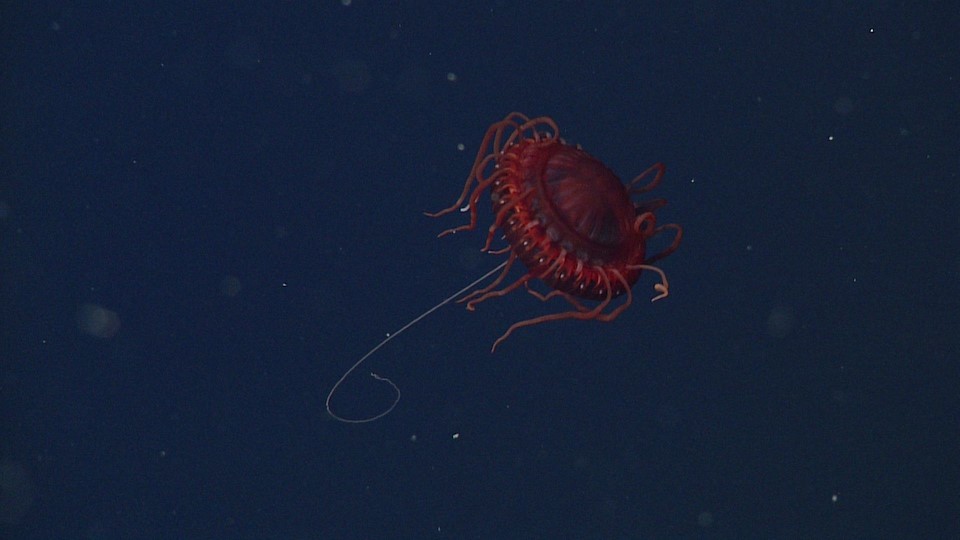
The atolla feeds on crustaceans and shrimp, along with floating nutrients around them. The jellyfish has 20 marginal tentacles and a trailing tentacle, which is larger and thought to be used in catching prey. Reproduction can be done both asexually, and sexually, using the trailing tentacle to pull themselves towards a mate and attach temporarily. They grow between 20-180 mm (about an inch to 7 inches) in diameter along the bell, and although tentacle length is currently unknown, it is estimated to be 10 inches at most.
Have a wonderful Thursday, everyone!