Date:Wed 6/19/2024 5:05 PM
Happy Wednesday, everyone! Today's fish of the day is the whitespotted bamboo shark!

The whitespotted bamboo shark, known by scientific name Chiloscyllium plagiosum is an average carpet shark. With a range across the Indo-Pacific ocean, from Japan to India living in and around coral reefs, close to the shore. They can stretch as far as the coast of madagascar, but most populations are focused around Southeastern Asia at depths from 0-50 meters deep. The coloration of the whitespotted bamboo shark is unique among carpet sharks, and other sharks in the area making it easy to identify when found. Like other carpet sharks, this shark contains 5 gills, and 2 distinct dorsal fins, allowing a wider range of movement.

The diet of the whitespotted bamboo shark consists of small fish and nearby invertebrates, they have only about 30 teeth of the upper and lower sections of their jaw, but the teeth are small and skilled at grasping and crushing. Softer prey is grabbed by the teeth, biting in to prevent escape, however harder prey, such as crabs or other crustaceans, are grabbed with a different method. To prevent damage to teeth tips, the shark can pivot their teeth backwards, and grab hard shelled prey with this flattened surface, crushing down on them. This diet can support them getting as a large as a meter, with the largest recorded getting up to 37 inches.
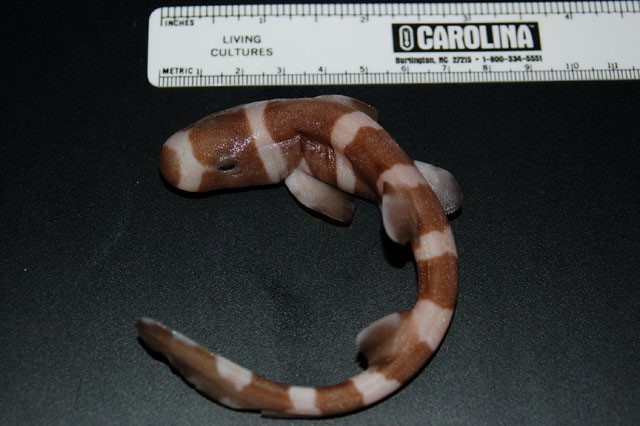
Like many other carpet sharks, the whitespotted bamboo shark is egg laying. A single laying will contain anywhere between 2-6 eggs, which will then spend between 14-15 weeks hidden on the sea bed before hatching. However in an aquarium in Detroit in 2002 had a female whitespotted bamboo shark that had eggs despite not being anywhere near a male within 6 years. These eggs went on to hatch and produce healthy offspring. Although, we are currently unsure, the more popular theories being that: this species of shark contains both female and male genitalia, this shark can store sperm for longer than initially thought, or that this species may be able to complete a process called parthenogenesis, which is a kind of asexual reproduction.
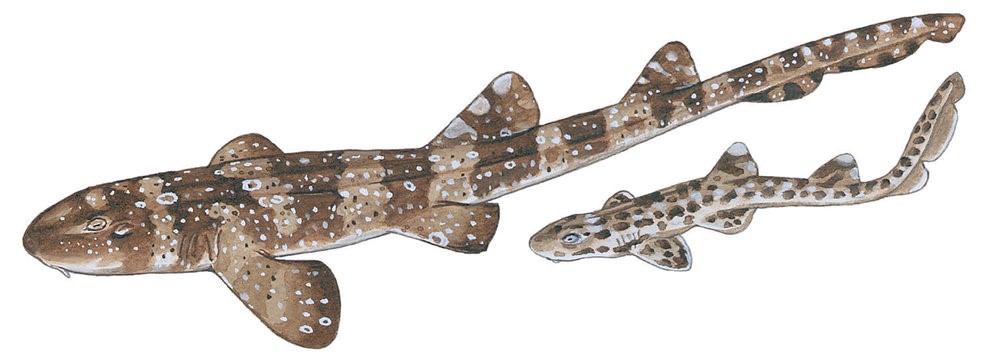
Have a wonderful Wednesday, everyone!