Date:Tue 7/9/2024 1:00 PM
Happy Tuesday, everyone! Today's fish of the day is the pirarucu!
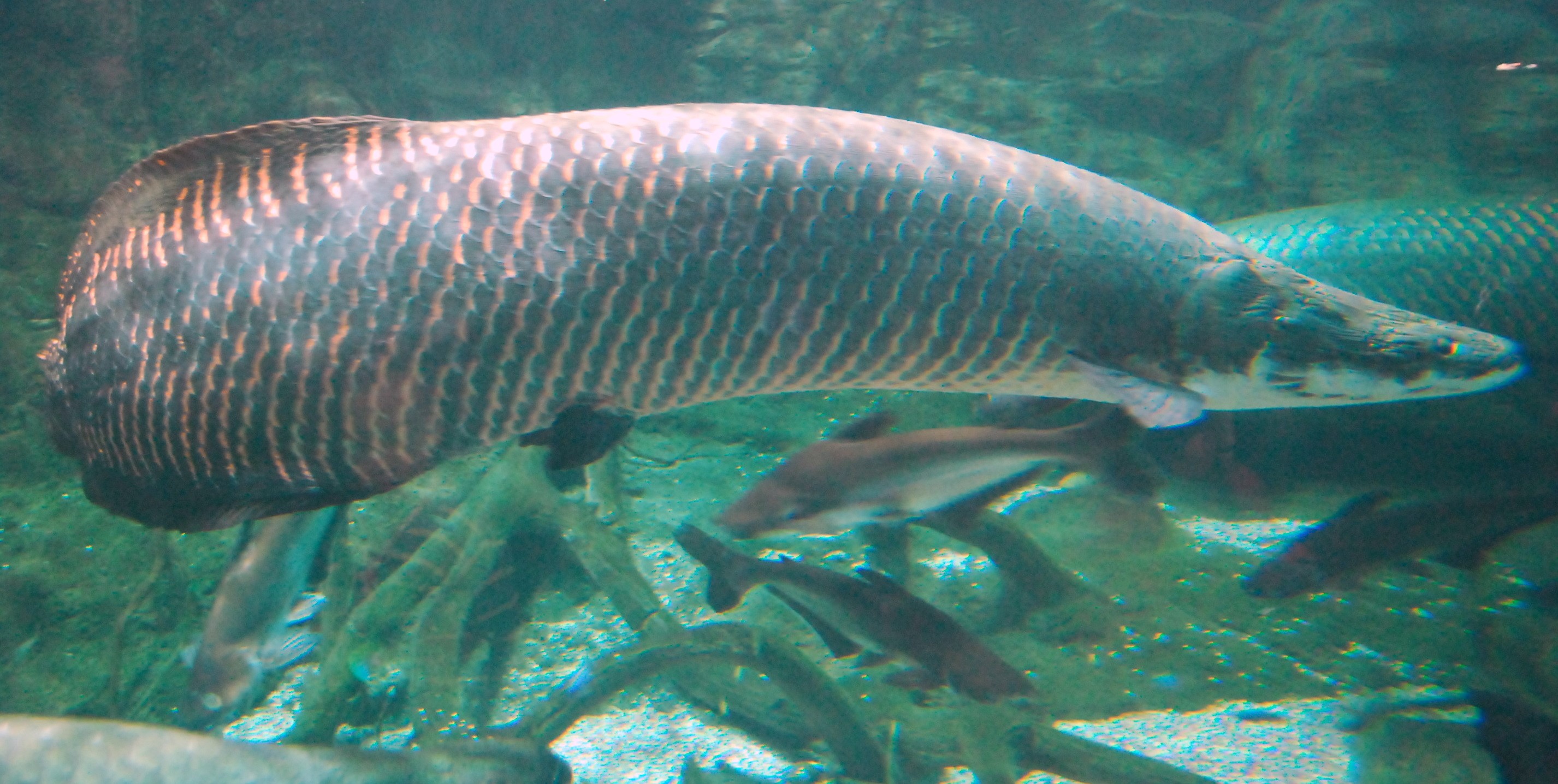
The pirarucu, scientific name Arapaima gigas, is known for its impressive size. Getting as large as 3 meters, and about 10ft in length, the pirarucu is one of the largest freshwater fish in the world! Living in the Amazon river basin, this fish can be found in Peru, Brazil, and Guyana, with an invasive population within Bolivia, and some Eastern Asian countries. It is thought that this fish washed into Bolivia in the mid 1970's when a nearby Peruvian fish farm was flooded, and since then the pirarucu has wreaked havoc among the local fish populations, although the populations introduced into Asia have far less issues. Within their range, these fish prefer to live in slower moving waters or stagnant areas of lakes, and have a breeding season tied to the water amount in local waterways.
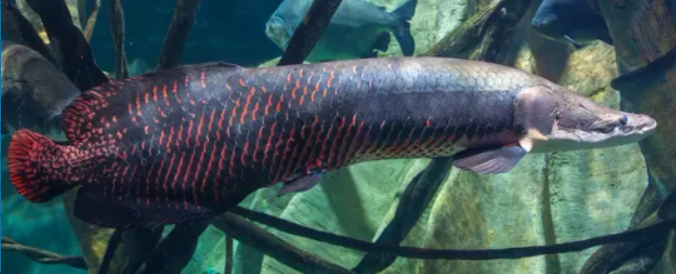
The diet of the pirarucu is made up primarily of fish along the basin bed, but a secondary large section of their diet is made up of small insects and other invertebrates at the surface of the water, along with crustaceans and water birds. These fish are air breathers, and must travel to the surface every 10-20 minutes to swallow in a mouthful of air, in a loud gasp, during which time they also hunt for prey. These fish are predated on in their natural habitat by crocodiles, boto, and humans, and they have adapted defenses, the pirarucu has large bony armor spanning the length of the body, similar to that of plecostomus fish.The lung structure that allows them to breath air is made out of a modified swim bladder that has adapted for easier gas exchange.
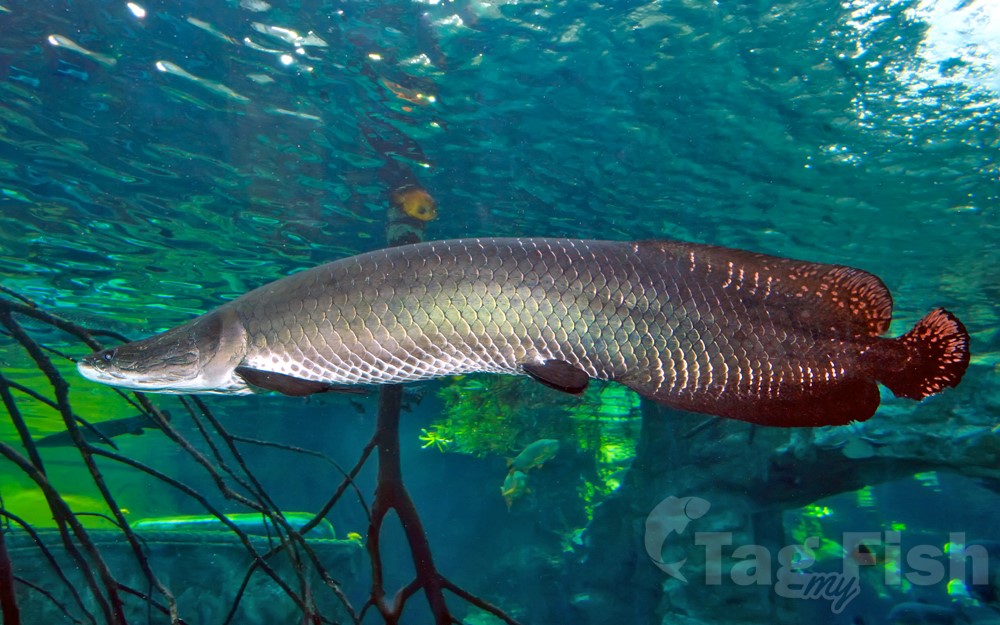
During the drought months of February-April, the pirarucu will begin spawning, laying its eggs. Then after this during the flooding months, these eggs will hatch. For the first 8 days of their lives these fish survive off of a gill structure, before going through a morphology change as the gills adapt to ion absorption rather than water intake. These babies are then protected by the male and female pirarucu within a built nest for up to three months, during which time they can get as large as a 1ft. By it's first year of life, these fish can get as large as 3ft, and reach sexual maturity by their fifth year. Then, they can live as long as 10-20 years. Although we don't know exactly when these fish would have started existing within their family, within Columbia, a 13 million year old fossil of pirarucu, or an ancestor of was found.
That's the pirarucu, everybody. Have a wonderful Tuesday!