Date:Fri 7/5/2024 9:37 PM
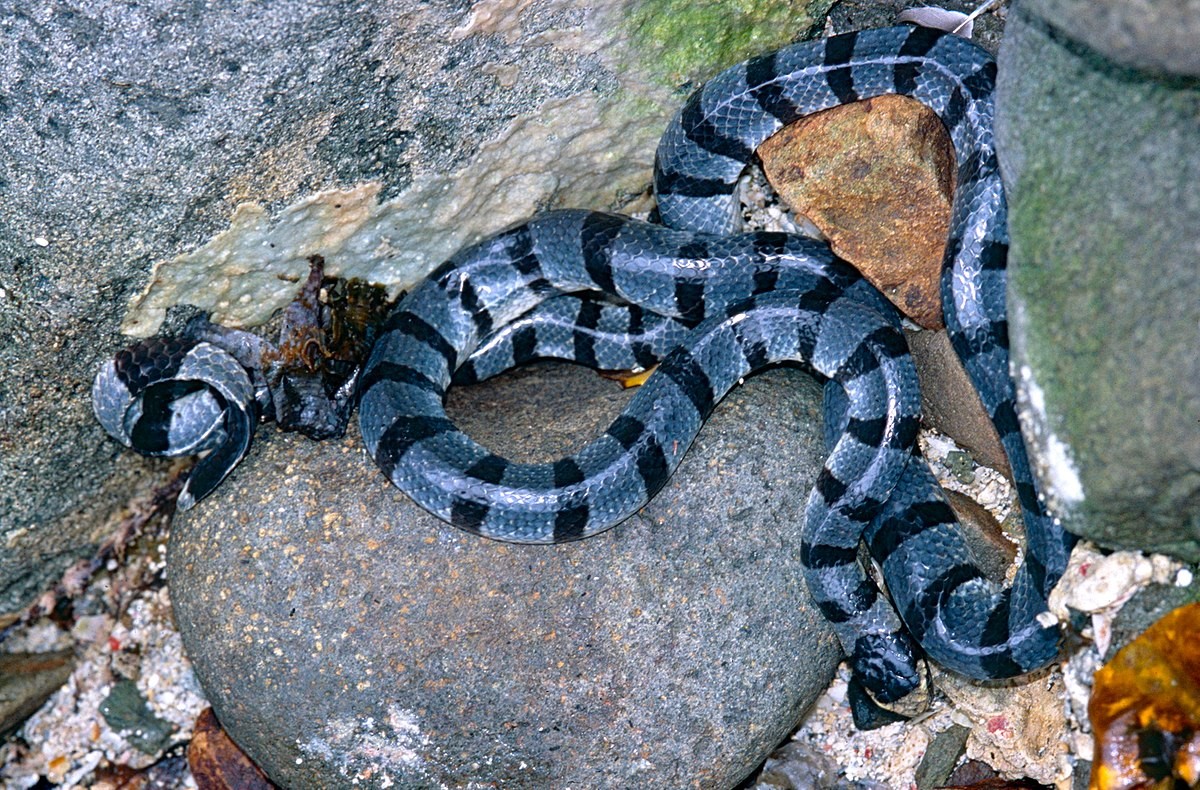
Happy Friday, everyone! Today's fish of the day is the yellow lipped sea krait!
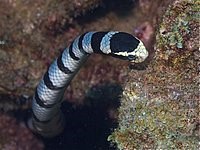
The yellow lipped sea krait also called the banded sea krait, or colubrine sea krait, scientific name Laticauda colubrina, is a well known aquatic snake. The range of the yellow banded sea krait is throughout the Indian Ocean and Western Pacific. To be more specific, along the eastern coast of India and then stretching the coasts of the bay of Bengal to all other Southeastern Asian countries with a coast, including as far as Fiji. Although they are not native to Australia or New Zealand, several populations have been found across their coastlines.
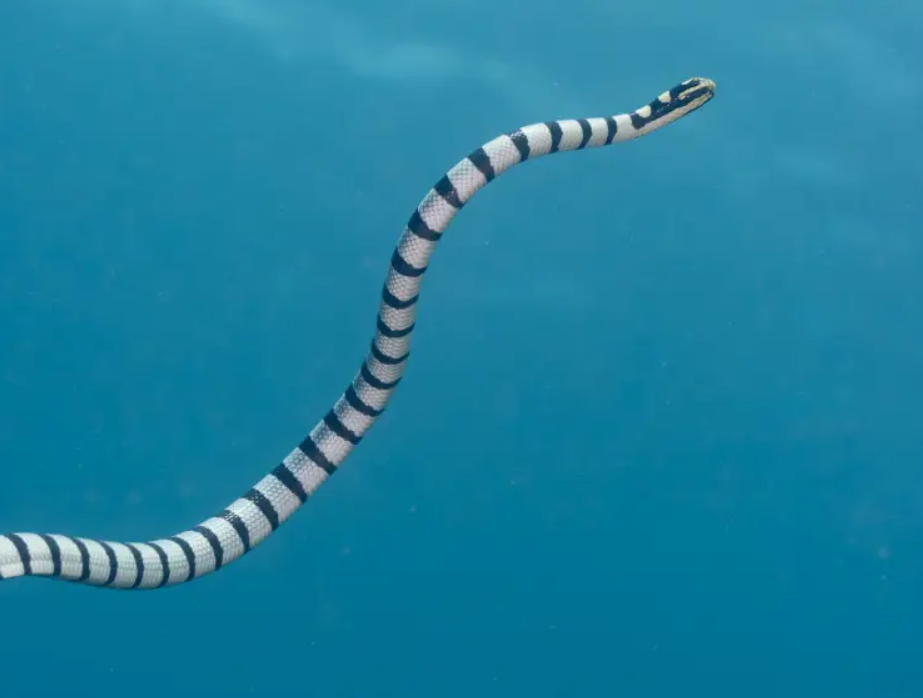
These snakes live nearby coral reefs primarily and shallow bay like areas, as their prey is almost exclusively within these areas. Unlike other sea snakes the yellow lipped sea krait spends significant time out of the water, around 50% of its time once it reaches adulthood. Juveniles spend their time almost exclusively in the water, where they will hunt and rest, but once prey is caught they will leave the water to digest on nearby shores. The speed on land is significantly reduced to that in the water, and as such these animals will attempt to remain hidden during these times, presenting a problem for when unsuspecting animals get too close. Other than to digest, the time on land is also spent shedding old skins, and reproducing.
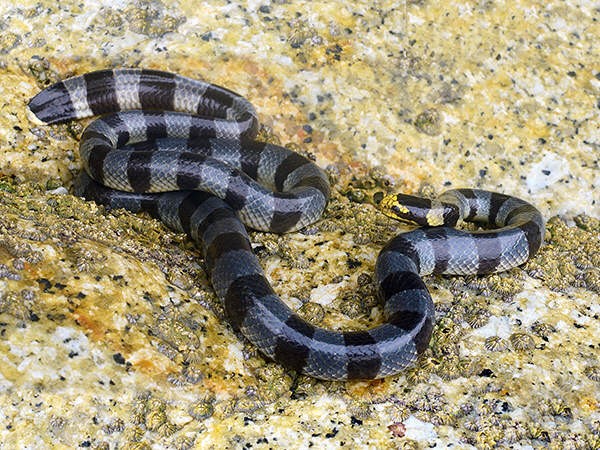
Hunting is done alone, despite large numbers gathering together before and after hunts, and they eat primarily moray eels. This is done by flushing out their prey from narrow crevices and holes, by probing their head in. They then used their striped tail to convince the eel that their tail is their head, tricking them into attempting to flee in the wrong direction, then once the eel is close enough, they strike. Another thing that the yellow barred sea krait is known for is their venom. This venom is a rather powerful neurotoxin protein from the alpha neurotoxin family, which disrupts the synapses, causing paralysis.
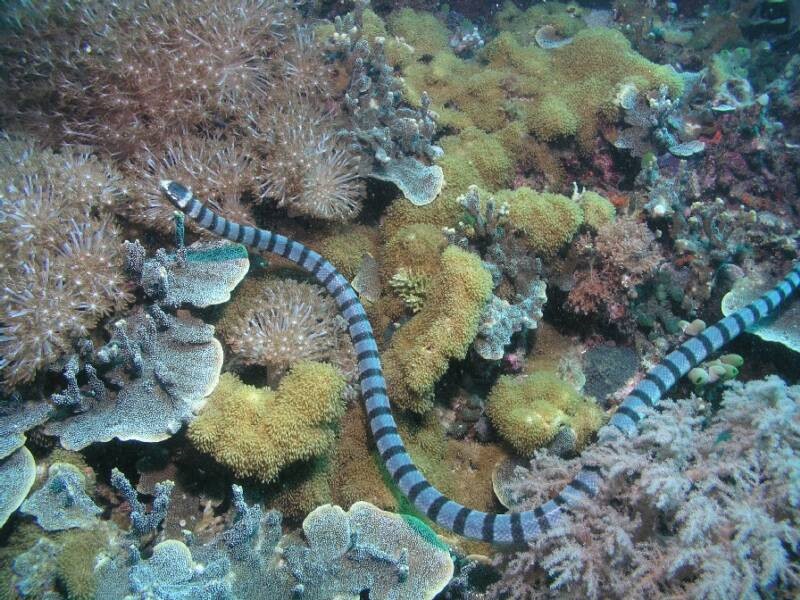
The life cycle of the yellow lipped sea krait is regular for sea snakes. Breeding is done throughout September-December on the gently sloping beaches at high tide, where courtship rituals occur. Multiple male snakes will find a female that they consider large enough to successfully carry eggs. Then, they surround her, aligning their bodies as close as possible and contracting rhythmically, until she chooses one of them. After this, she will lay 10 eggs in a clutch, and hide the nest. In adulthood, they can grow up to 3 ft in males, and almost 5ft in females, and have life spans around 20 years.
Have a wonderful day, everyone!
Viewer comment: "Is this "high-length-to-width-ratio-fish week"?"