Date:Wed 7/3/2024 8:00 PM
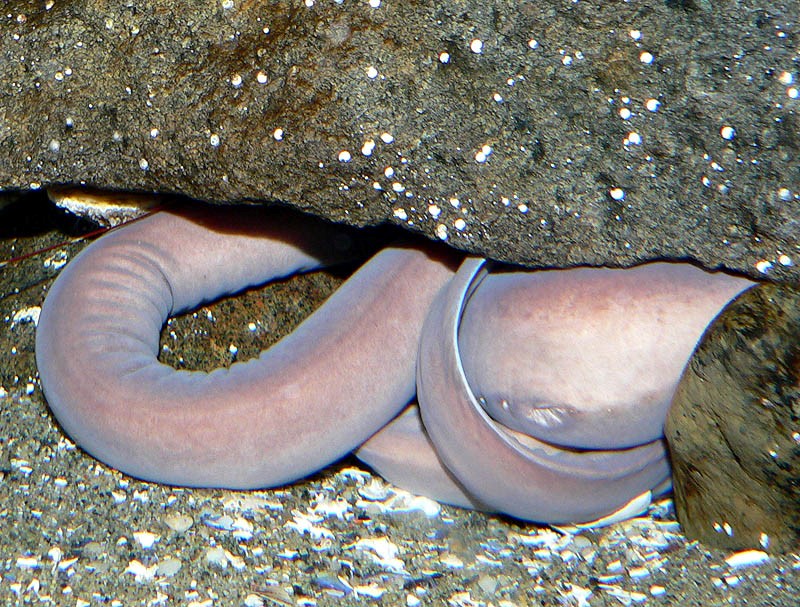
Happy Wednesday, everyone! Today's fish of the day is the pacific hagfish!
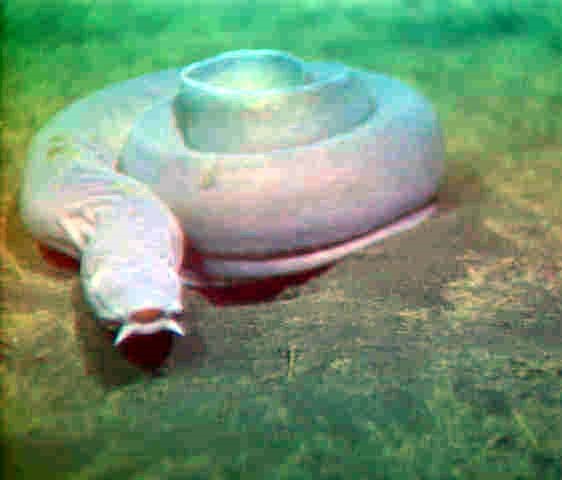
The pacific hagfish, also known as the california hagfish, and scientific name Eptatretus stoutii, is known for being the widest spread hagfish species, and one of the deepest living. Their range stretches from the Northern sections of Alaska all the way down to Baja, California, living at depths of 16-966 meters, or 50-3,200 feet. Along this range they prefer to live on fine silt and clay bottomed areas of the continental shelf, or upper shelves, their swimming skills are weak and so they spend much of their time along the sea bed. Although currently unproven, it is thought that during the fall these hagfish migrate to deeper waters, remaining until the winter, which is consistent with other hagfish migration patterns.
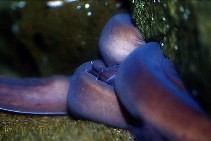
Hagfish first emerged in the fossil record as far back as 310 million years ago, with animals resembling the modern hagfish we know today 100 million years ago. To this day, hagfish still serve as a cause for confusion when it comes to defining fish as a taxonomic bracket. As a jawless fish that broke off just before the jaw was evolved, and sharing their infraphylum with lampreys, they break up a definition of fish that include the movement of the jaw as a definer. However, this lack of a jaw doesn't stop their hunting style from being just as interesting as us vertebrates who do contain a mouth that opens and closes.
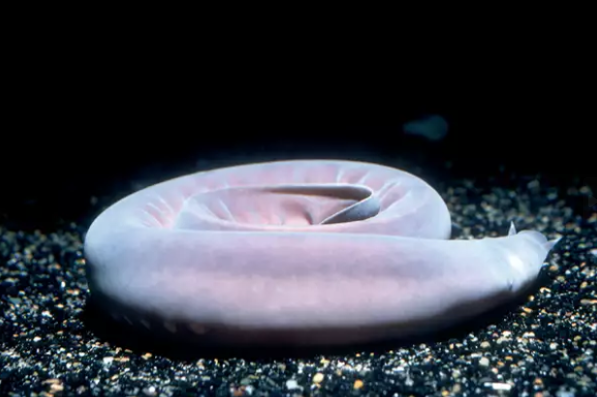
Like all hagfish, the pacific hagfish establishes a hold onto prey before tying its body into knots and untying to generate a ripping force to tear off pieces of flesh. Due to this, a majority of their diet consists of already dead animals, forcing them into the scavenger role. Other than what the hagfish can scavenge, they also eat polychaete worms along the seabed, shrimp, other hagfishes eggs, and small cephalopods. Strangest of all, this animal can absorb amino acids through the skin. The other notable feature of hagfishes is their slime. When threatened, they can ooze a slime made of specialized mucus out of slime glands. This is known for expanding over 10,000 times its original size in less than a second. This slime can be used to slip away from predators who may have already gotten a hold on them, but also to clog the gills, choking out predators before they can get the chance to escape, and providing them with a meal.
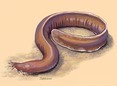
The reproduction of hagfish is not well understood, but let's go over what we do know. Female hagfish will lay eggs within a muddy burrow it has formed or other structures it may find, and males will come to fertilize externally. After this, female hagfish will remain in the burrow to protect the eggs from any potential predators or other hagfish, until they hatch. Once they have emerged from their eggs, at a size of 6-8cm in length, they are already in the same shape they will remain the rest of their lives, as they lack a larval stage. Their life cycle lasts for up to 40 years in the wild, and they can get as large as 25 inches in length by sexual maturity, with a typical length of 17 inches.
That's the pacific hagfish, and have a wonderful Wednesday, everyone!