Date:Tue 7/23/2024 1:00 PM
Happy Tuesday, everybody! Today's fish of the day is the bonnethead shark!

The bonnethead shark, also called bonnet shark, or shovelhead, scientific name Sphyrna tiburo, is known for its unique head shape. It is often thought that the bonnethead shark is a young hammerhead shark, and despite belonging to the same family, Sphyrnidae, they are not the same species. Unlike the hammerheads worldwide range, the bonnethead shark's natural range only stretches from Southern Canada down to The coast of Brazil and Peru, with populations on both coasts of the Americas. It lives primarily in estuaries or bays, living around vegetation, sandy bottomed areas, or reefs. These are a migratory species: during the summer they move inshore and further North, but during Winter they move back south. Eastern populations concentrate around the Carolinas in Summer, and the Florida coast or Caribbean sea during the other months, but there are no concentrated points known for Pacific populations.
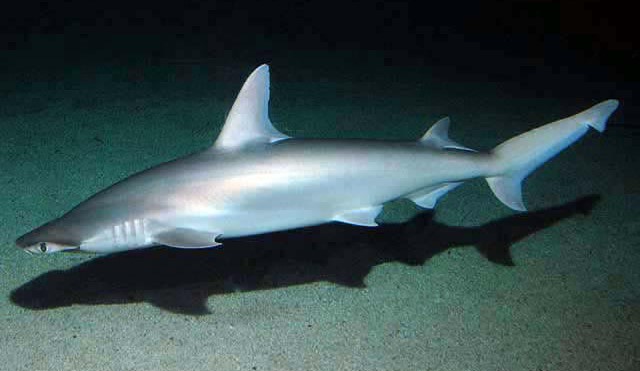
Bonnethead sharks, similar to other sharks of their size, eat primarily crustaceans. Crabs, shrimp, mollusks, and small fish. Similar to hammerhead sharks, they have many electromagnetic sensors on the underside of the head, this is the reason for the spade shape as the spacing of the sensors allows them to better find prey below them. They hunt along the sea bed, moving the head similar to how one moves a metal detector, looking for electromagnetic irregularities produced by living beings. After detection, the shark turns sharply and bites into the sediment, then grinding prey and swallowing. When unable to find prey, or in larger groups they also have been found eating seagrass. Other than for detection of prey, this head can also be used for better vision: as the eyes are faced to the sides this gives them a much wider field of view, allowing them to see if any predators are around, something that gives them a higher chance of surviving past childhood.
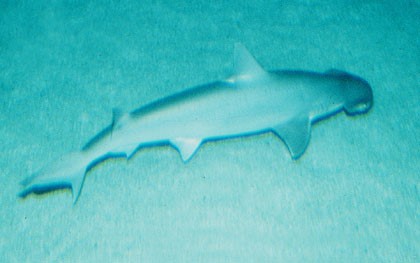
The reproduction of the bonnethead shark is viviparous, meaning that the baby is formed inside the mother and born alive. breeding is thought to take place around spring and autumn in the Atlantic populations, but may take place year round without a proper season for it. However, these fish will breed only after they've reached 31 inches in females, and 24 inches in males at around their second year of life. Then, after breeding, gestation takes only 5 months before they have anywhere between 4-12 pups, who are already 12 inches in length. These pups are then abandoned, primarily to keep the parents from feeding on their own offspring, and will live in and around seagrass beds they were born in. This is where they can hide from predators for the first few years. The largest bonnethead shark reported was 4 feet in length, but most are only 2.5-3 feet long. Male and female bonnetheads can be told apart by the sexual dimorphic morophology of the head shape. In females, the head is rounded, but males have a bulge shape around the midline of the head, referred to as a cephalofoil.
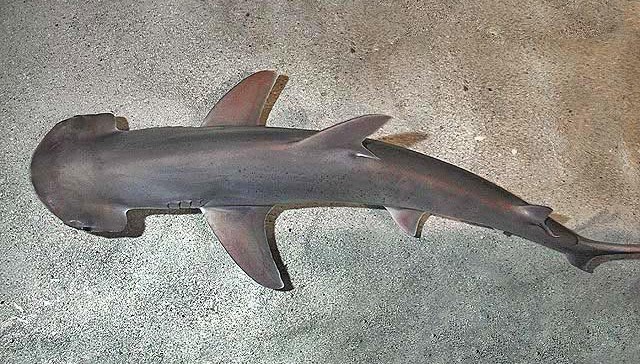
Their behavior is unlike many sharks, as bonnetheads are known to exist in groups. Living in smaller numbers of 5-15 in a pod, although there have been schools of thousands reported to be traveling with one another. These groups are not territorial, but they have a hierarchy within them. Strangest of all, these sharks appear to communicate with one another using cerebrospinal fluid as a chemical communicator between individual sharks, letting the others know where they are at any given time.
That's the bonnethead shark, everybody! Have a wonderful Tuesday.