Date:Mon 7/15/2024 8:00 AM
Happy Monday, everyone! Today's fish of the day is the gulper eel!
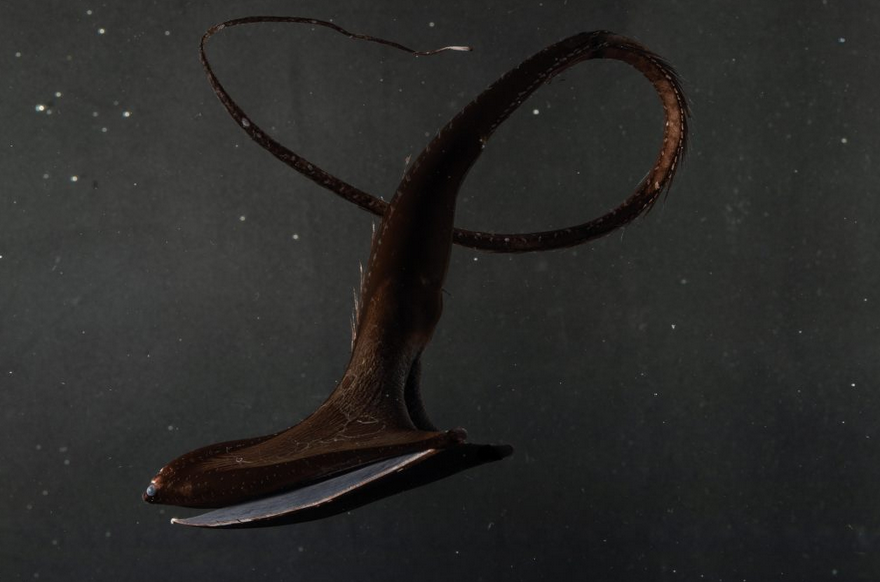
The gulper eel, also known as the pelican eel, and scientific name Eurypharynx pelecanoides is a species of deep sea eel renowned for their unusual swallowing ability. With a range stretching worldwide in both temperate and tropical zones, with a depth range of 500-3,000 meters. Solidly placing themselves within the Mesopelagic-Bathypelagic zones, or the twilight-midnight zones. Despite being found primarily in tropical zones, recent findings have led to the discovery of a gulper eel in the arctic, providing the possibility that the current understood range may need to be reevaluated.
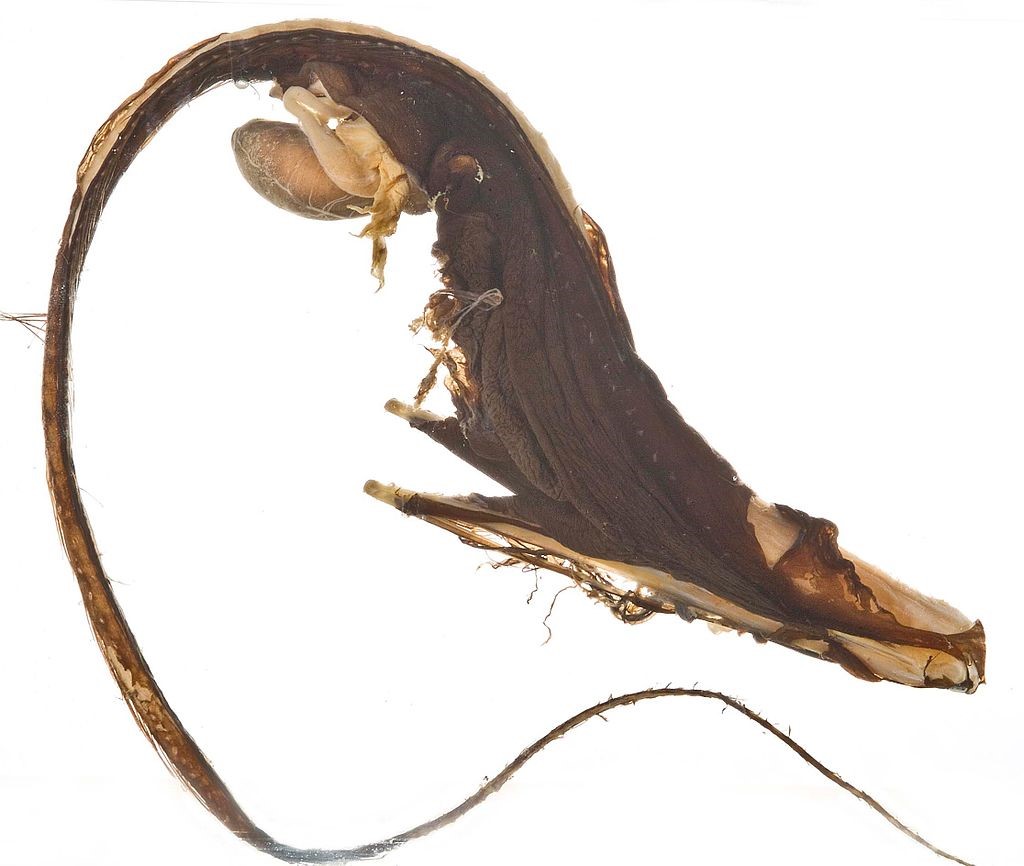
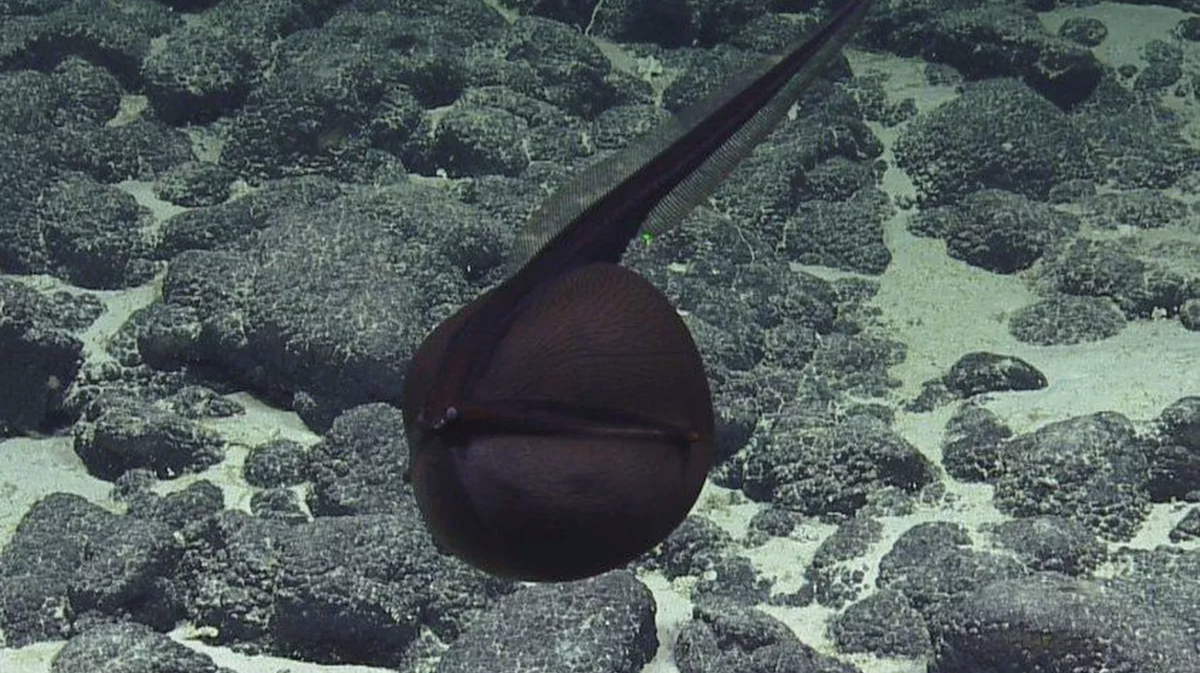
The most notable feature of these eels is the large mouth, which can be expanded outward and used to swallow prey several times larger than the eel itself. Similar to how a baleen whale uses ventral grooves, the mouth is only loosely hinged to the body, and around a quarter of the eel's body length. This jaw can unfold both vertically and horizontally, stretching open a sac of skin larger than the entire rest of the body, although the stomach is made of a similar material and can distend outward with a meal. Unlike many other animals in deeper waters, the gulper eel is an active hunter for its food: hypothesized to exhibit lunge-feeding. Their diet consists primarily of crustaceans, and small fish, because despite their large mouth, they have small teeth and can not handle larger prey. Rather, they feed often by swimming into swarms of shrimp, catching huge swathes of them in one go. In their natural habitat, they are predated on by lancetfish, and other large animals, and there are semi rare cases of them being caught as bi-catch in deep sea fishing nets.
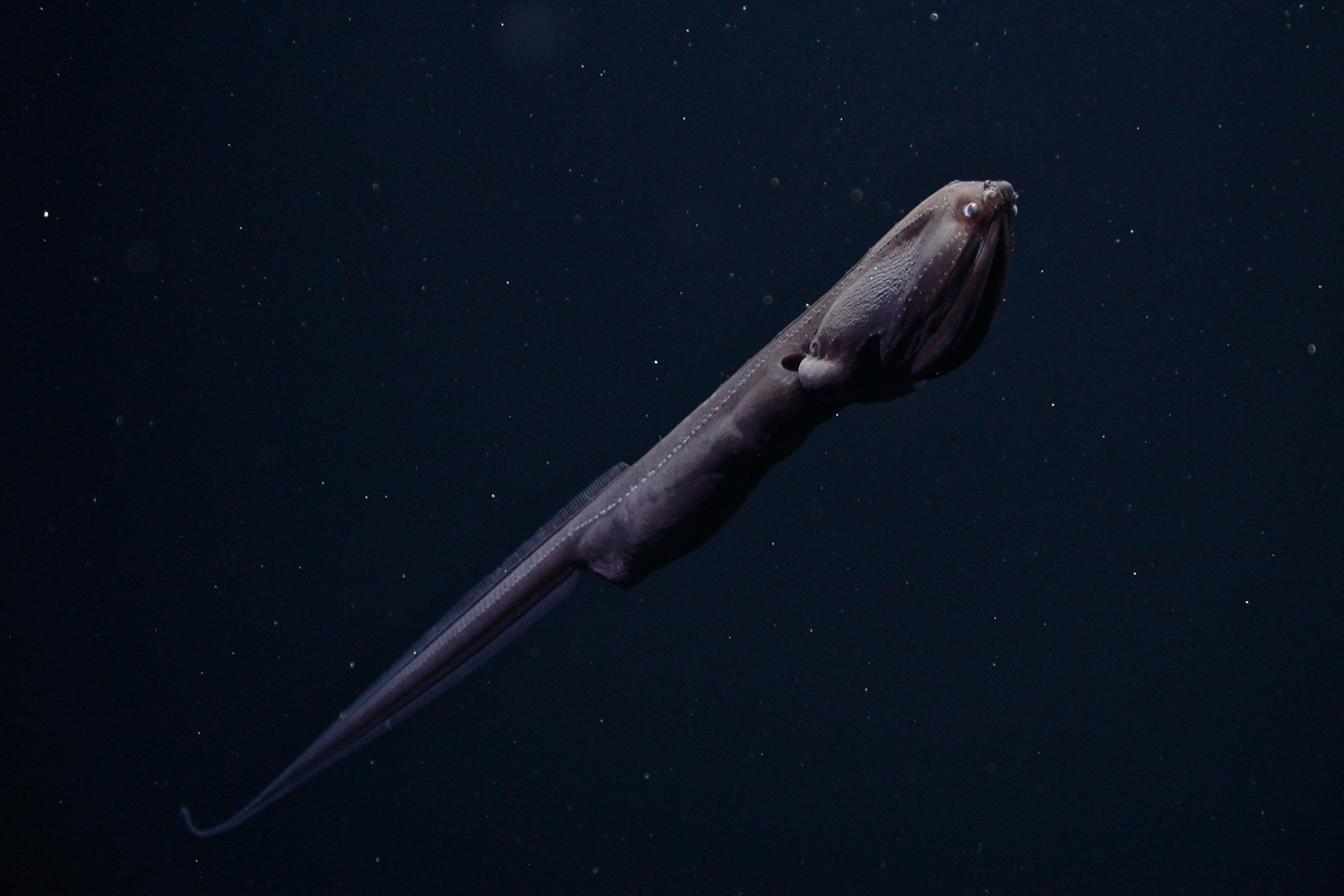
The life cycle of the gulper eel is similar to many other eels. They start life in a larval form, where they are thin and transparent, surviving off of marine snow. Then, once they enter the juvenile stage, they have small organs and no red blood cells. In adulthood, they have bioluminescence along the long tail, which can glow pink, or flash red, which is used to attract prey, along with developing a remarkable olfactory sense. This is then used during mating, as they release pheromones to attract partners. Over their lifetimes they can get as large as a meter in length, and it is curren. tly unknown just how long they can live.
I hope everyone has a good Monday!