Date:Wed 8/14/2024 1:07 AM
Hello, everybody! Today's fish of the day is the flower hat jelly!
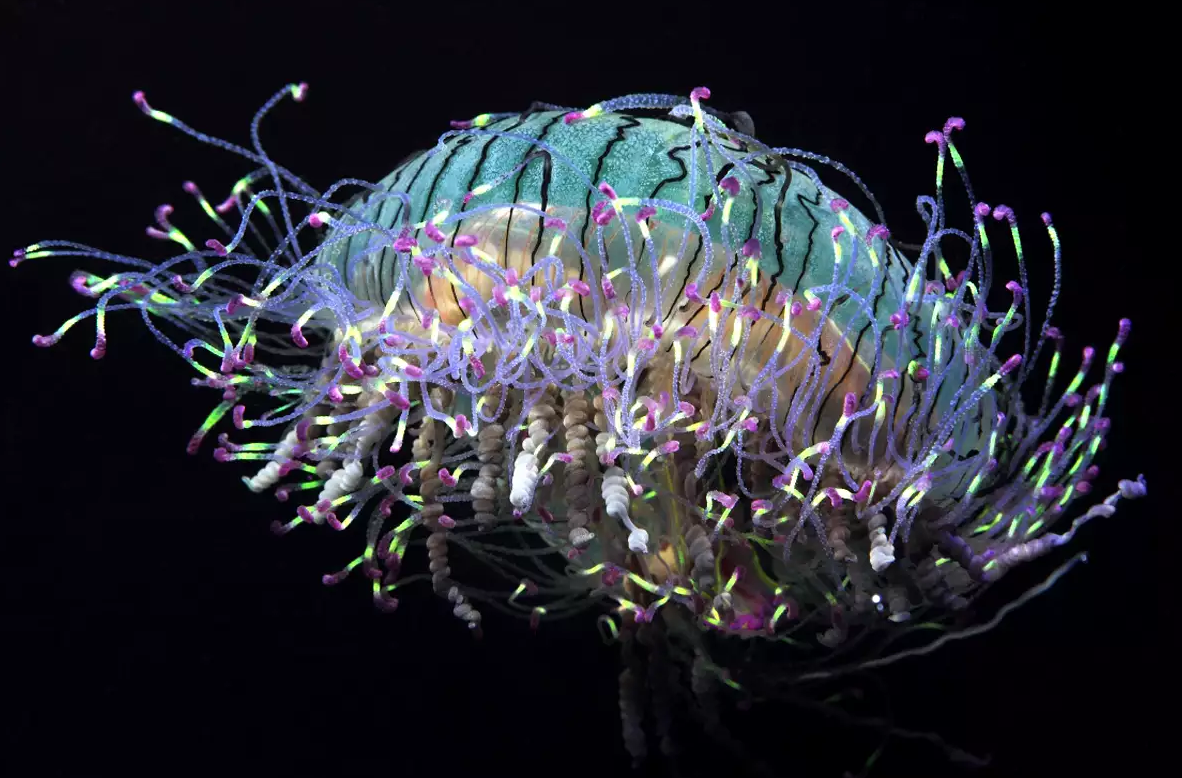
The flower hat jelly, scientific name Olindias formosus, is a small and rare jelly known for the multicolored tentacles and luminescent display. Belonging to the hydrozoa family, the flower hat jelly is not actually a true jellyfish. The main difference between them being that true jellyfish belong to the Scyphozoa class, and have a life cycle defined by a longer period as a medusa (their adult form) whereas hydrozoans have a lifecycle primarily defined by their polyp or juvenile stages, sometimes even lacking medusa forms, a pattern that can once again be found in the flower hat jelly's life cycle. Their distribution is off the coastline of Japan, Korea, and countries within Oceania. Although some believe that these jelly's can also be found outside of Argentina, and Brazil, it is thought this may be a close relative, Olindias sambaquiensis. With a depth range from sea level down to 55m of depth, these jellyfish tend to live near the ocean floor where they can hide among kelps, sea grasses, and loose rocky bottoms.
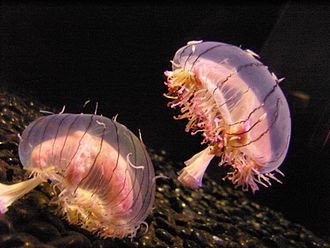
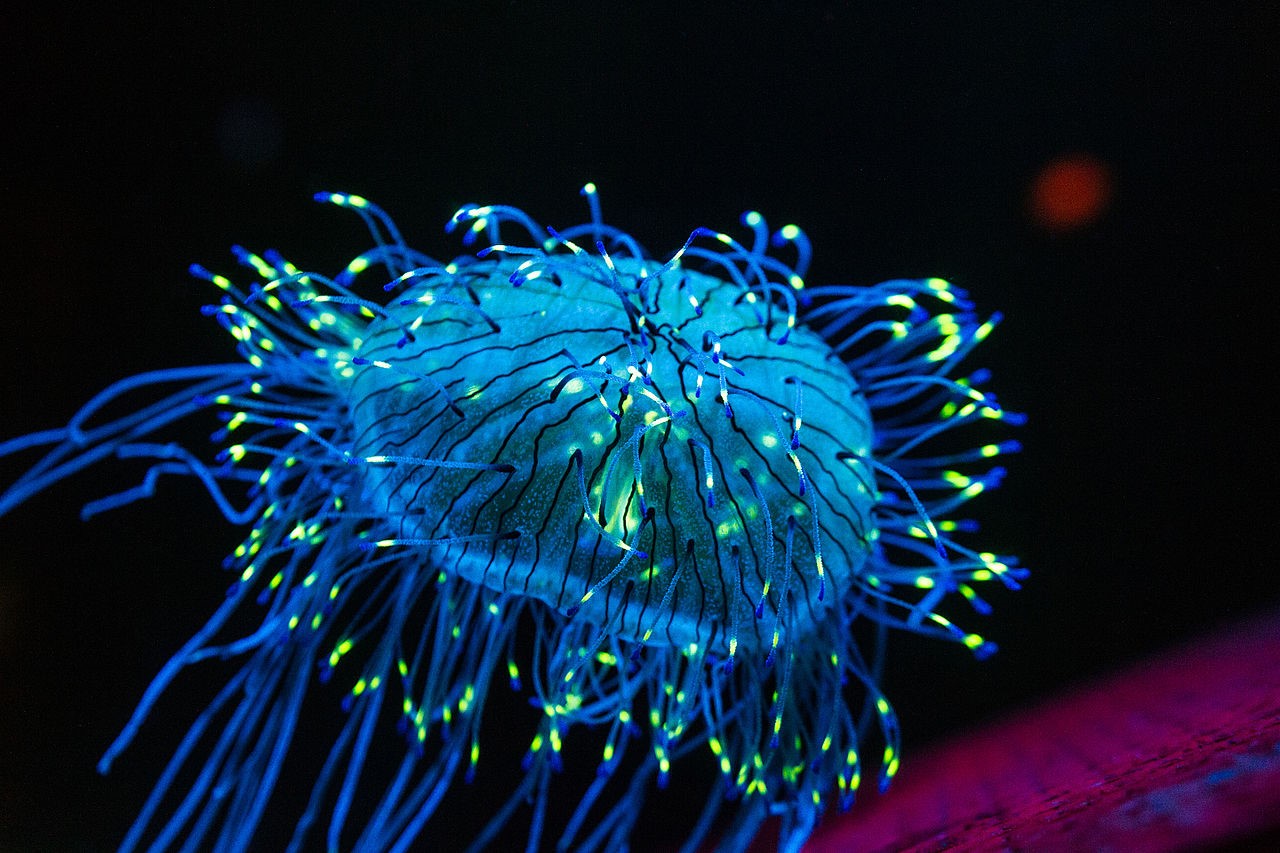
Living a nocturnal life, the flower hat jelly spends its days hiding on the ocean floor. But, once dusk arrives this jelly rises from its hiding places to capture small fishes within its tentacles, paralyzing and or killing the fish, before drawing the corpse up into the bell to be consumed. The stings from this jelly are painful, and at least one fatality has been recorded from them in Japan. These tentacles hold most of the intrigue of the flower hat jelly. The length of the tentacles may appear to be random, but has been found to be arranged mathematically in an optimization hashing algorithm known as fibonacci hashing. Length aside however, these jelly's, and especially their tentacles contain fluorescent proteins, which are used to attract prey when hunting, and are particularly bright under blacklight. This protein is uniquely interesting due to its use in helping treat some COVID cases, as it can be used as an inhibitor, stopping the replication of the disease, and slowing or halting its spread.
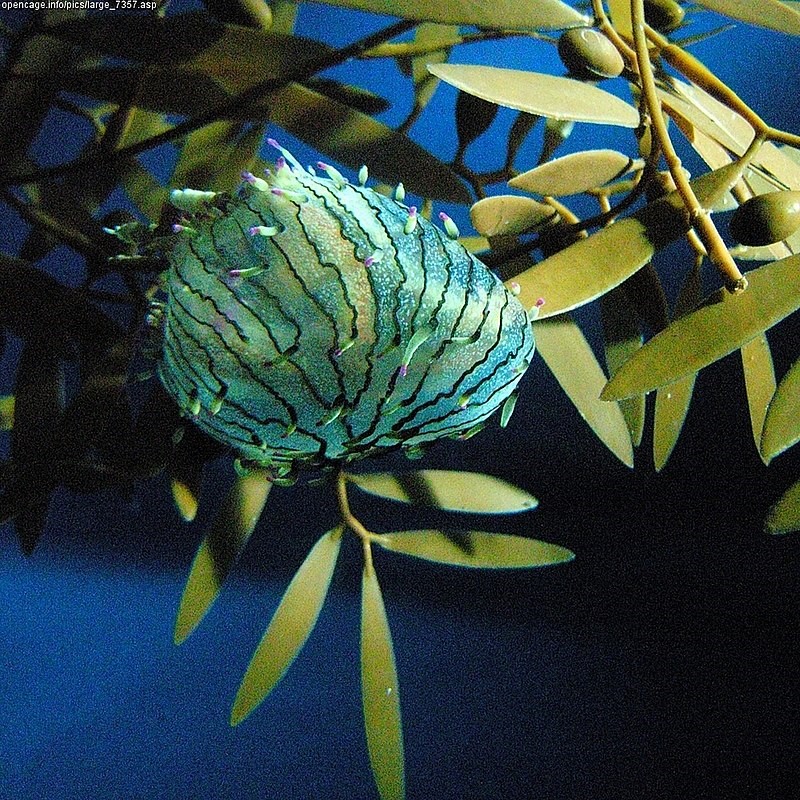
The reproduction and younger stages of the flower hat jellyfish were a mystery for many years, but in 2012 the Monterey Bay Aquarium managed to be the first to breed them in captivity, capturing a full lifecycle from larvae to polyp to medusa. Beginning as polyps attached to a hard surface along the seabed, where they are completely stationary, surviving off of a single active tentacle, which is waved back and forth to gather nutrients, forming a medusae and releasing them only once a size of 1mm was achieved. Then they will mature into juvenile medusa, which are identical to adult medusa in appearance and behavior, only being identifiable by their smaller size and less tentacles. Juvenile medusa only being around 2-20mm, and adults getting only as large as 6inches total throughout their lifespan. Adult flower hat jellies are only observed in the months of December-July with peaks in the months of May and April. However, we understand very little about how these jelly's sexually breed in the wild, but fertilization occurs externally, as gametes are released into the water to create small, non-cooperative colonies along similar areas. These animals live only 4-6 months as adults, and only around a year total before slowly losing their fluorescence and passing away.
That's the flower hat jelly, everybody, have a wonderful Tuesday!