Date:12/5/24
Happy Thursday, everyone! Today's fish of the day is the leopard coral grouper!
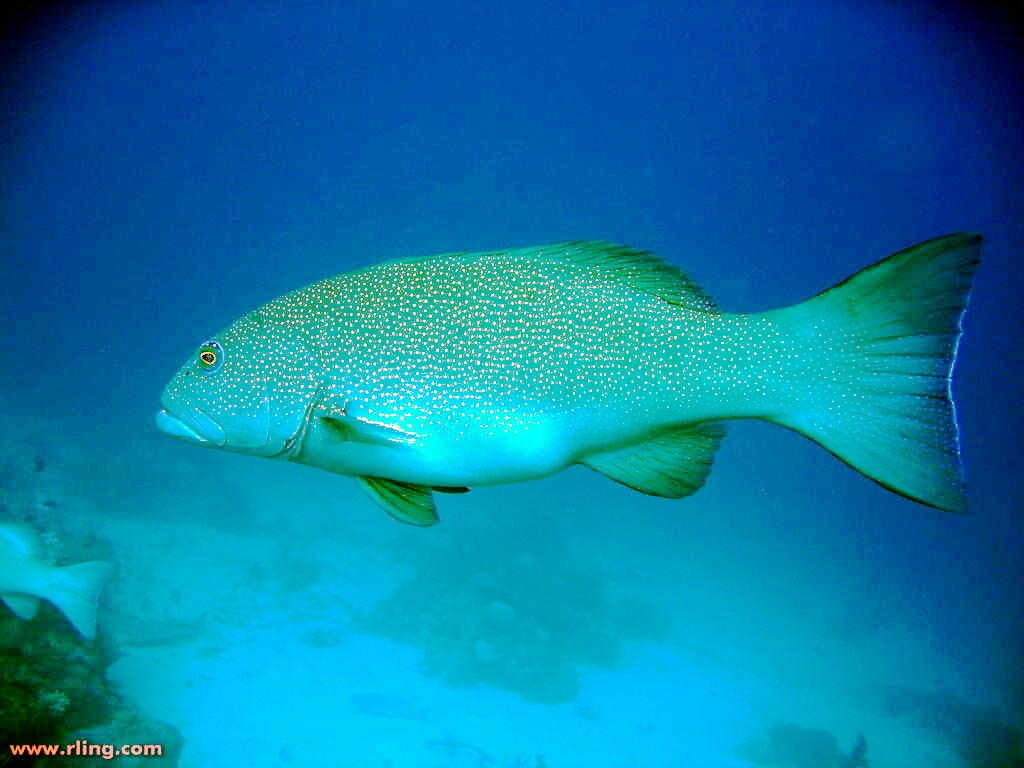
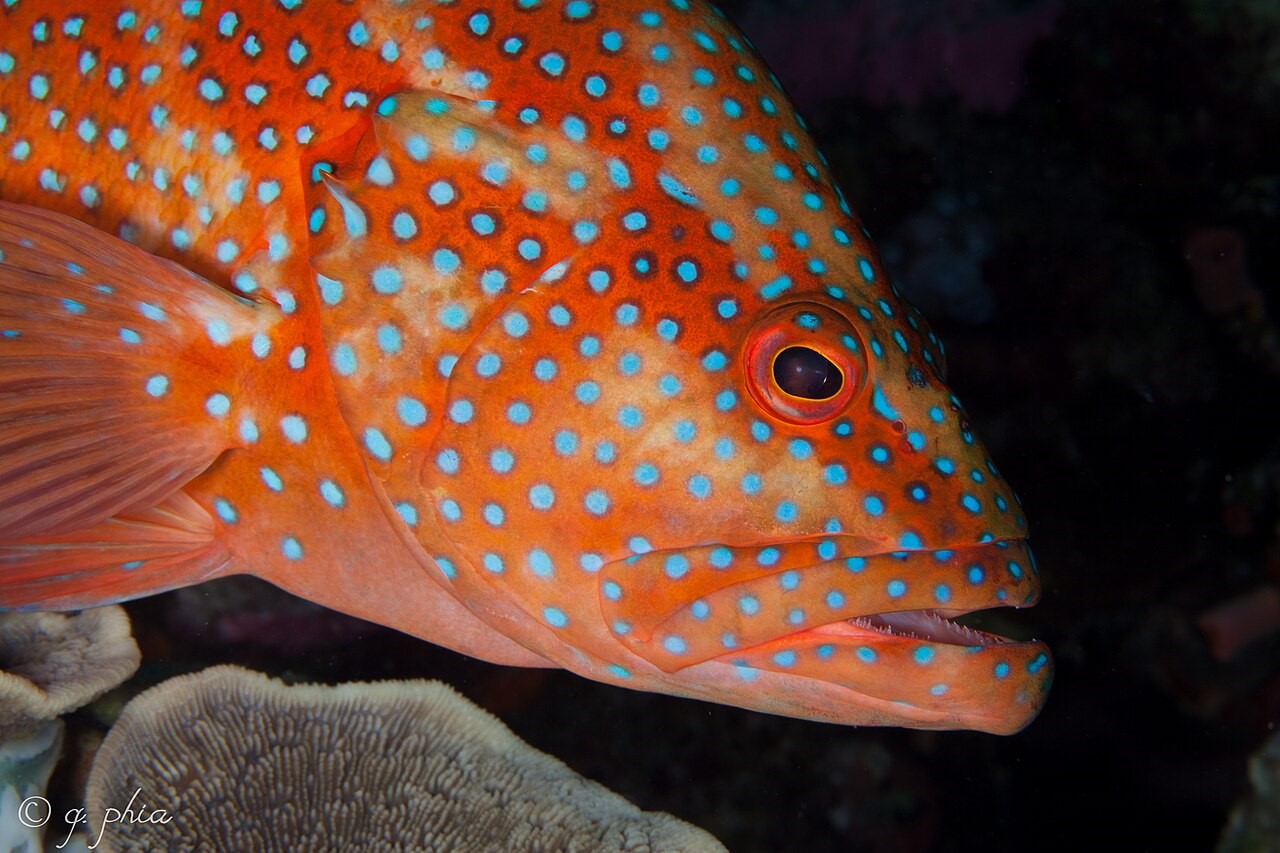
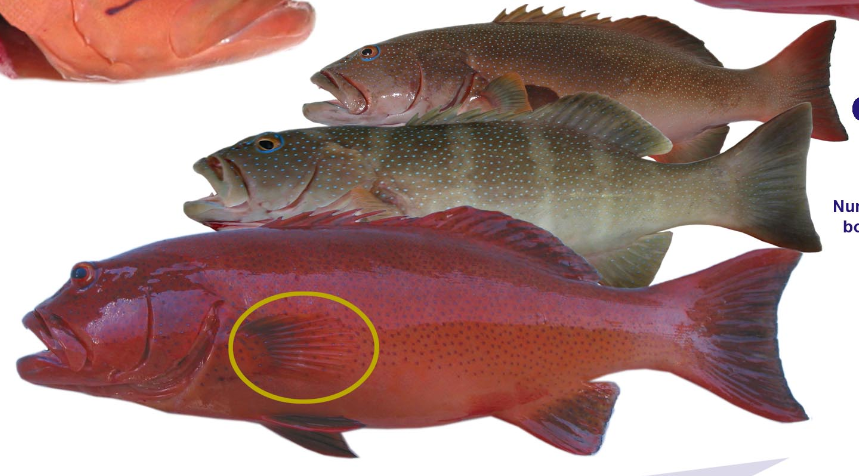
The leopard coral grouper, also known as strawberry trout and common coral trout despite not being a trout, scientific name Plectropomus leopardus is a well known marine reef fish! The most widespread fish along the barrier reef, found both from inshore to outer reefs. Found in the Western Pacific ocean stretching from Southern Japan down as far south as Sydney Australia, and a range from as far West as Thailand, and as far East as the Soloman islands. These fish live along coral reefs from depths of 3-100 meters, often living in pairs or small schools along the floor of the reef. These fish can be identified from the other common reef "trout" (these fish are actually groupers) of Australia by the small dark ringed blue circular markings, and the blue ring around the eyes, with an exhibited red, green, pink, or brown coloring depending on population.
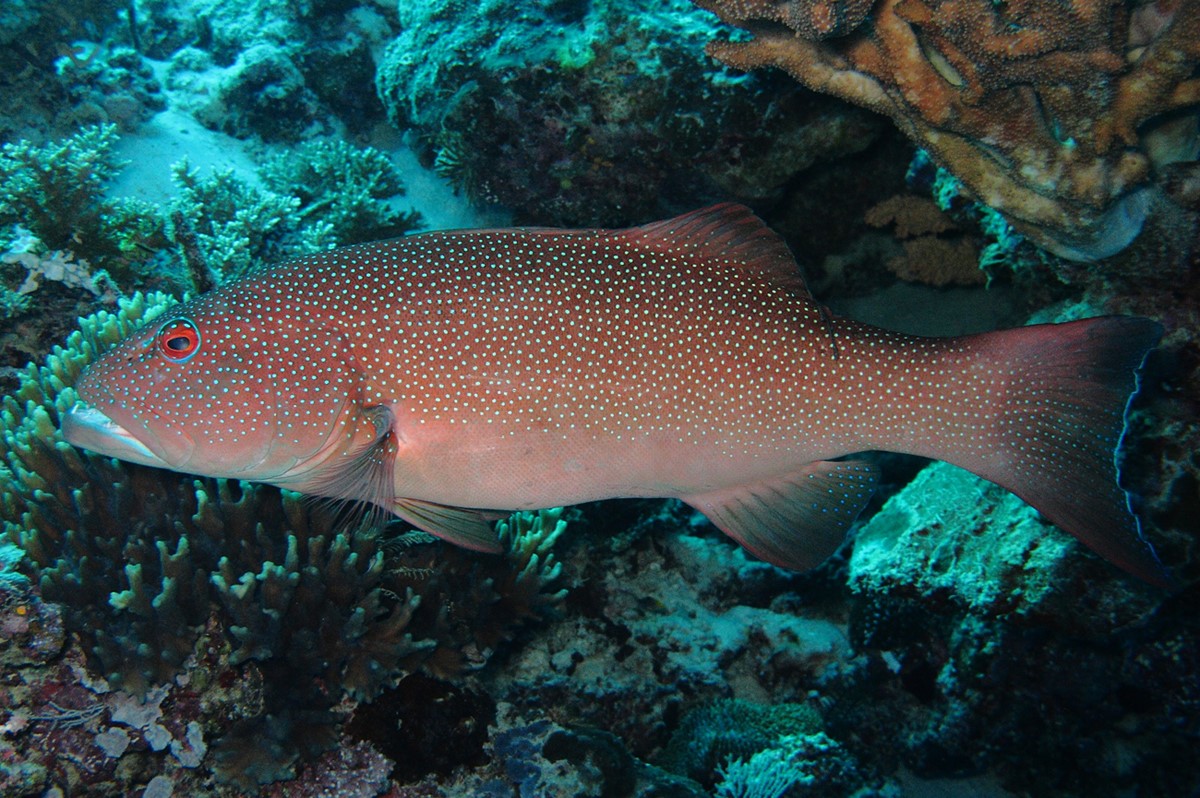
The diet of the coral grouper is made up entirely of other animals. Throughout the majority of their lifecycle, as they are mature adults, they will spend their time on other coral fish, most commonly damselfish species. Although it is very common for larger adults to cannibalize their own species and eat younger coral groupers, including their own children. These fish only feed once every 2-3 days and can hold off starvation for days to weeks at a time if hunting is unsuccessful. Hunting is done by hiding and ambushing prey from below, these fish will camouflage among the corals at the bottom of the reef, waiting for prey to swim over it for a matter of hours at a time.This camouflage is done by quick color changing on the part of the fish, with an ability to change colors in a matter of minutes to plain color or molted patterns. Other times in hunting these fish won't require camouflage at all, instead prowling schools of prey. During this time they will appear as though they are moving slowly toward the prey from an angle, and then quickly change direction of lunge once closer. This diet can allow them to get to sizes as large as 47 inches in length, but most are only 10-15 inches. Too large for most coral and carpet sharks in similar geographic range to predate on them, but some larger sharks still feed on mature adult coral groupers.
These fish, like many other groupers are protogynous hermaphrodites, just like the california sheephead discussed last week, these fish begin life as female and will trigger sex change later in life, although currently our understanding of what triggers it is unknown. It is believed to be related to the ratio of male to female fish on the current reef, this change occurs anywhere between the fish reaching a size of 9 inches to 24 inches, and will remain as male for the remainder of their lives. This change does not happen to all female fish that get that large, but it is more common for large coral groupers to transition and for smaller fish to remain female. Once a fish has transitioned to male (a process that can take anywhere from 2 weeks to 2 months) these fish become incredibly territorial,
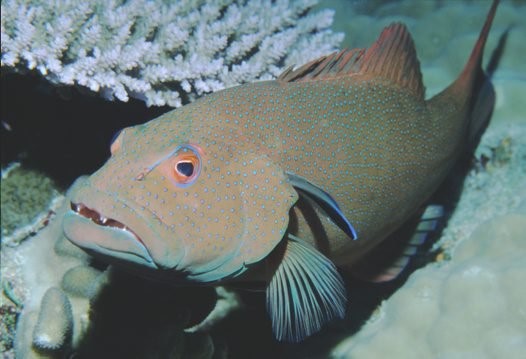
Between September and December, when it is late spring and summer in the southern areas this fish calls home, the coral grouper is spawning in the North barrier reef, whereas those in more Southern areas, spawn in October to February. The coral groupers in this area will form dense groups at steep slopes of the reef, spawning at a peak of the new moon and at dusk when the light is low and predators are less active to prey on released eggs. These tight groups of fish are formed as a male chooses an area to defend and entice females into his territory with a courtship ritual. This ritual is made up of a male repeatedly darkening and displaying their fins darkened edges, which they change the color of quickly. If a female accepts they will swim in circles toward the surface releasing sperm and eggs before splitting ways. These fertilized eggs will be released into the water stream and larvae will develop in the nearby reefs, becoming fully formed and hunting fry at an age of only 5 weeks. After this, maturity is based on size rather than age itself, and they'll live a long and full 16 years on average unless predated on.
That's the leopard coral grouper, everybody! Hope you have a wonderful Thursday!