Date:Wed 12/11/2024 3:00 PM
Happy Tuesday, everyone! Today's fish of the day is the Boeseman's rainbowfish!
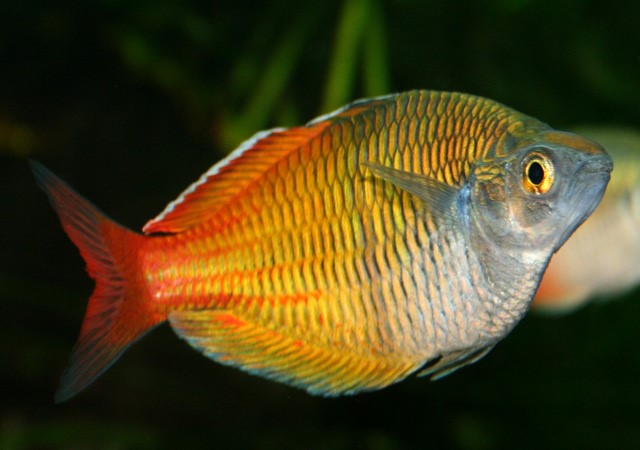
The Boeseman's rainbowfish, also known as Boesemani rainbowfish, and scientific name Melanotaenia boesemani is a common freshwater fish in the aquarium trade. Rainbowfish in general are a wide family made up of tens of genus, all of which are made up of hundreds of species. Almost all rainbowfish are incredibly common in the freshwater aquarium trade, tending to interact nicely with tetras and guppies in captivity, a popular choice due to their bright coloration. The Melanotaenia genus in particular, of which the Boesemani is, is found around Australia, New Zealand, and other islands around this area. Bosemani specifically is found in the Ayamaru Lakes of Western New Guinea and Indonesia. In particular these fish congregate in schools around vegetation in fast moving waters in areas with high alkalinity of 8.0-9.0. Its name hails from the Dutch fish biologist Marinus Boeseman.
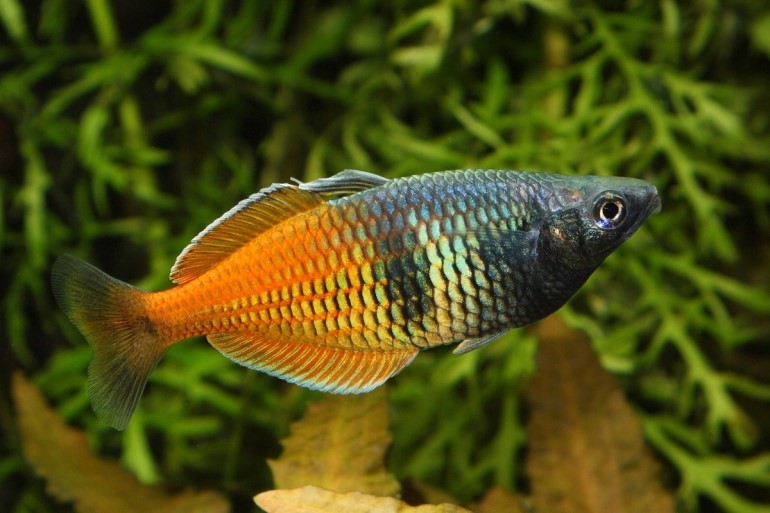
The diet of this fish is omnivorous, eating almost anything they can fit into their mouths, such as smaller live fish, algae, and aquatic vegetation. In captivity it's often recommended to feed them fish flakes, but without enough meat in their diet much of the bright coloration will fade. In wild populations some fish can get as large as upwards of 5 inches, but in captivity the largest recorded fish has been only around 4 inches. Their coloration is incredibly susceptible to change in captivity, with ability to change intensity at will and is seen as a show of mood and health. In the wild these fish are heavily predated on by larger fishes in their lakes and streams, such as cichlids, snappers, and cardinals.
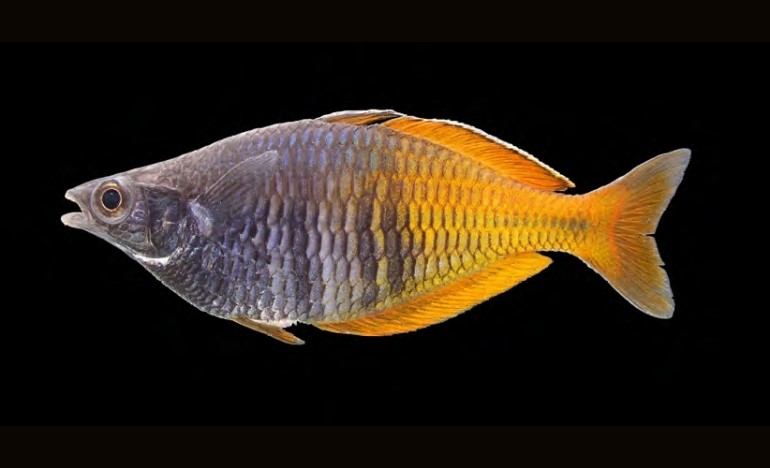
Rainbowfish are known for breeding year round, but are triggered to do such by warmer temperatures in captivity. In Boeseman's rainbowfish when the fish are ready to breed (having stocked up on enough food) the male will develop a white stripe along the head and flash colors along this stripe, dancing to court a female. These fish will spend anywhere from 7-10 days releasing eggs and sperm into the surrounding water. These eggs stick to nearby aquatic vegetation, taking two weeks until hatching. These fry are only 4mm in length, surviving off of zooplankton until they grow large enough to begin eating small shrimps. These fish will survive on average 5-8 years in captivity, although some hobbyists claim fish that have lived around 13-15 years, living through tens of breeding seasons throughout their life. In the wild however far less is known about these fish, as they have less and less surviving offspring every year, making them vitally endangered.
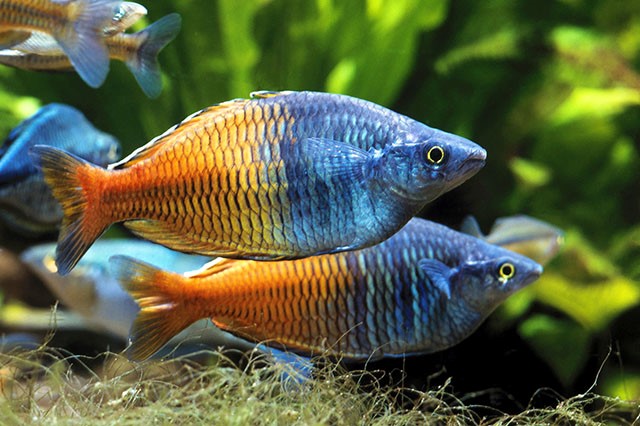
That's the Boeseman's rainbowfish, everybody! Have a wonderful Tuesday!