Date:11/25/24
Happy Monday, everybody! Today's fish of the day is the California sheephead!
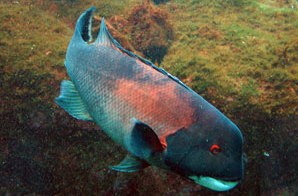
The California sheephead, as some of you who have been here since the early days will know, happens to be the first ever fish I wrote about for fish of the day back in January 2022! Known by the scientific name Bodianus pulcher, (formerly Semicossyphus), this fish is a species of wrasse in the Pacific. Found along the coast of California and Mexico, stretching from Monterey Bay California to the Gulf of California. They live along the kelp forests common in this area. Although, there are populations living along rocky reefs and sandy seabed areas. The fish are highly territorial over their home, and only settle in a very small refuge area, which they protect. These areas and the cycle of migration with the California sheephead are shaped almost entirely by light levels, as they travel between a refuge area and a foraging area throughout the day, and then when spawning these fish travel to a breeding area. This is why some issues have arisen due to overspilling light pollution by humans.
Their diet consists primarily of sea urchins, although they also prey on crustaceans, mollusks, and other fish. Their role in the ecosystem of kelp forests can not be understated, which is why the overfishing of them by humans is such a problem. This is because the overabundance of urchin in an area can decimate entire kelp forests at a rate of 30 feet a month in herds. Their diet of urchins allows these fish to get as large as 3 ft in length. Despite their large size, these fish are regularly predated on, primarily by sharks in the area. The California sheephead can warn other fish in the area of their plight however, damage released chemical cues come forth once the skin is ruptured, informing other fish in the area. These chemical cues are not always perfect however, as fish infested with parasites reduces reliability of these cues.
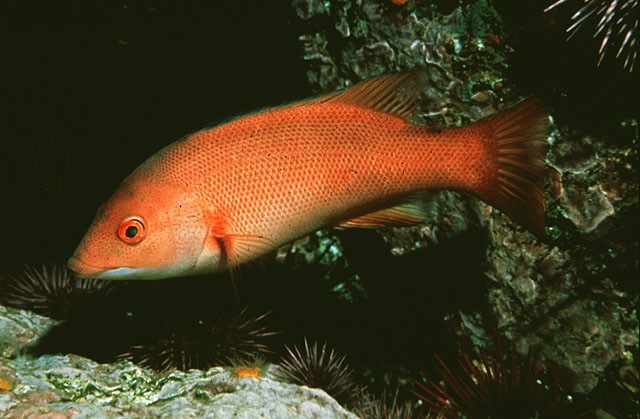
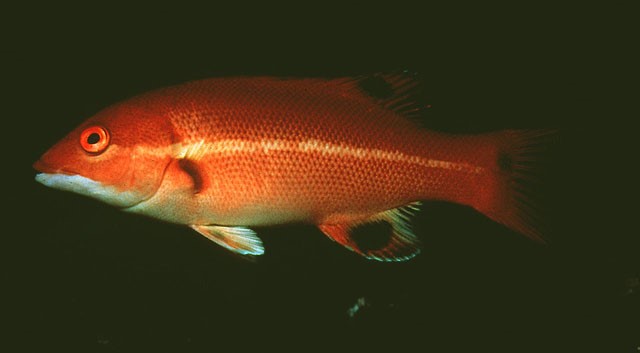
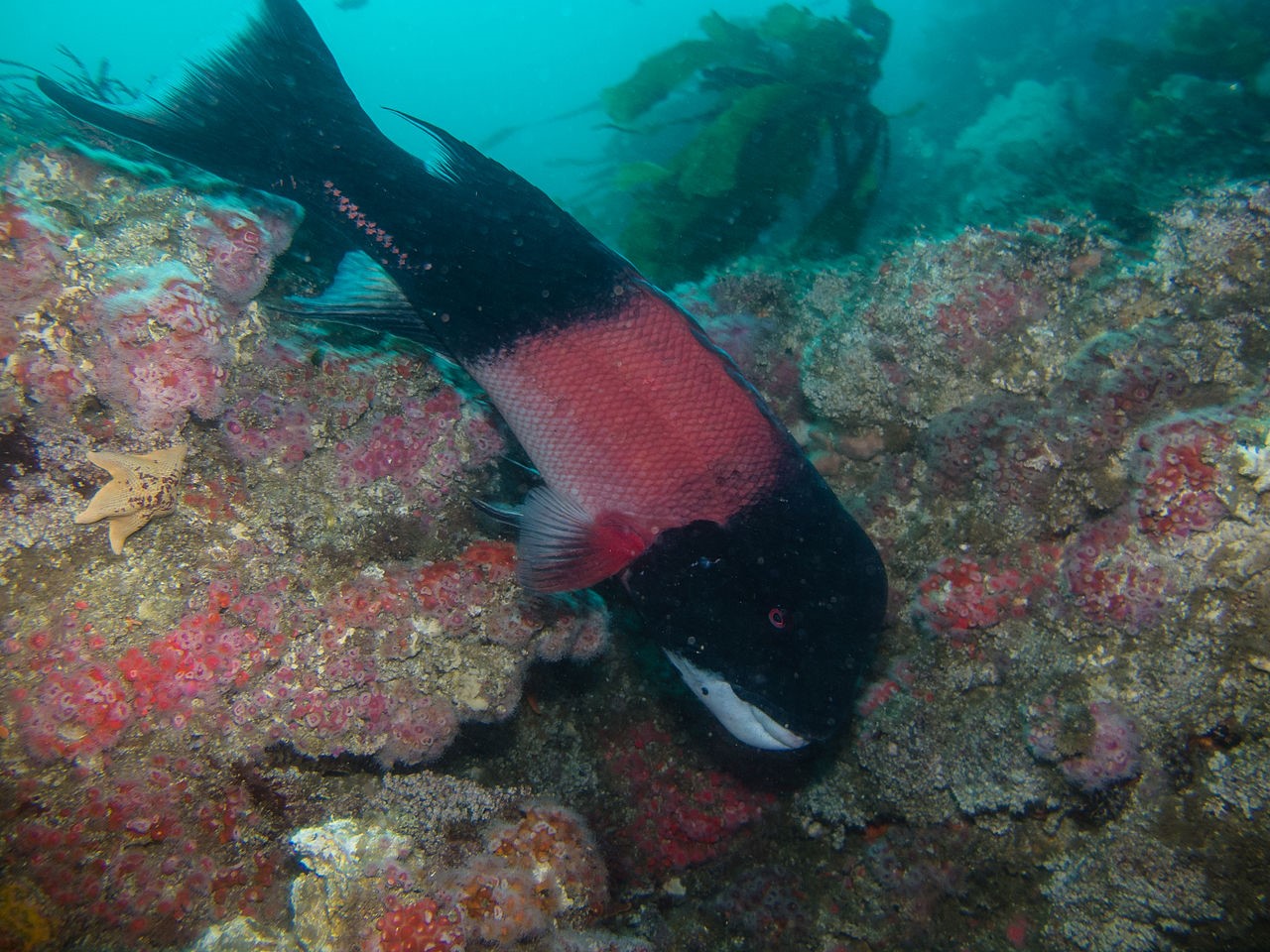
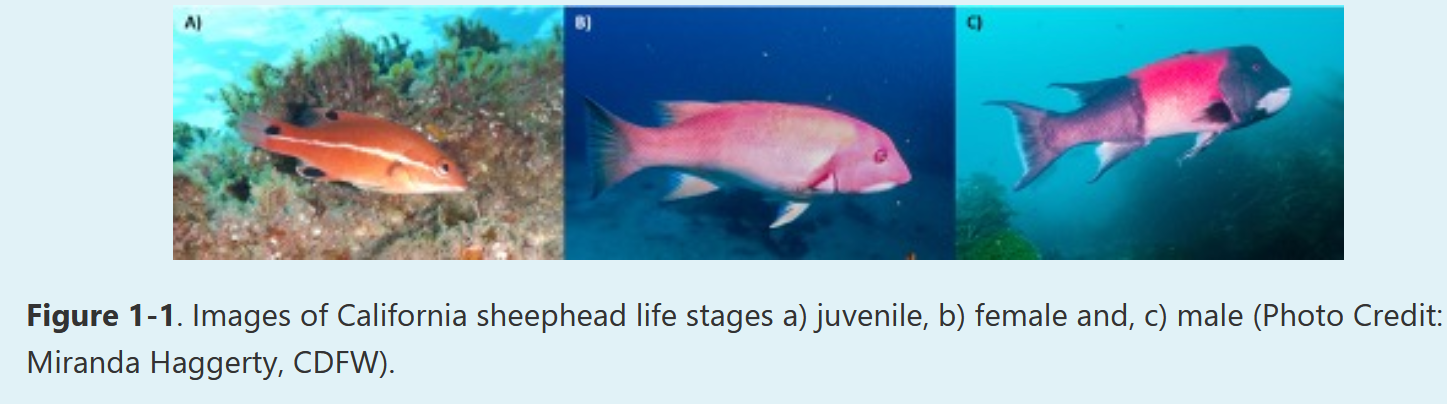
California sheephead, as like many wrasse, are born female and can morph into functional males throughout their lifespan, called Protogynous sex change. This change is moderated by a steroid hormone, and is undertaken by the largest and best fed individuals in an area. Male fish are distinct by their black heads and tails, as compared to the female sheephead which remain a dusky pink color. Sheephead are hermic spawners, and males have a group of females of which they protect and breed with. When the male for a group of females passes away, the largest female will morph into a male form and take the role. This can take anywhere between 2 weeks or several months. The mating season for these fish is between June and September, and the male will lead all his females in a circular pattern, releasing eggs and sperm. Females during this time can release as many as 130,000 to 375,000 eggs in a day, which will hatch into planktonic larvae. They will continue life as larvae for 34 to 78 days, before settling in a shallow reef and growing as normal. For their first year after settling these fish will appear different from both male and female sheephead, bright red-orange and a white stripe along the lateral line, with dark spots on the caudal fin. By the time they reach an age of 4 and a size of 10 inches, the fish are ready to spawn, although this is variable between populations. These fish can live upwards for 20 years in the wild, and as long as 50 in captivity, living through tens of breeding seasons, and producing hundreds of children.
That's the California sheephead everyone! Have a wonderful Monday, and a great Thanksgiving week!