Date:11/20/24
Happy Wednesday, everyone! Today's fish of the day is the widemouth blindcat!
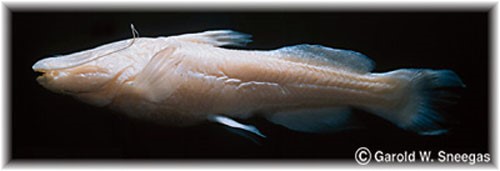
The widemouth blindcat, also known as the Texas blind catfish, and scientific name Satan eurystomus, is a rare freshwater cave fish. Living in a giant cave system beneath San Antonio, the widemouth blindcat has found itself living 900 feet below the surface in one of the largest Aquifers in existence. The Edwards Aquifer, which ranges from Arkansas, Oklahoma, and stretches almost the entire length of Texas East to West. The aquifer, which was formed around 70 million years ago due to the same tectonic event that helped form the Rocky Mountains, provides water to millions of people in the United States and hosts a range of various cave fish and endangered species. The widemouth blind cat in particular was discovered only in 1947 in a well, and to this day we still don't know key information on this fish.
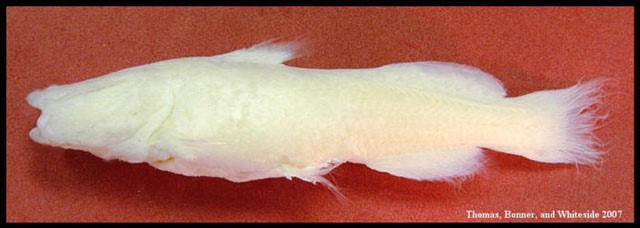
As the name may imply, the widemouth blindcat is, like many other cave fish, thought to be completely blind. The fish itself lacks all pigmentation, and has no visible eyes externally. Although, the remnants of eyes remain, exceptionally small with no retina or lens remaining, but the optic track still remains. Despite this total blindness, the widemouth catfish is thought to be an apex predator in its environment, as specimen have been found with freshwater crustacean in their stomachs, primarily different shrimp, along with mud-like substances. The scientific name of this animal hints at the theory of their role in their environment, as the direct translation of Satan eurystomus into Latin is "widemouth prince of darkness". A name given to the fish by Carl Hubbs, who is well known for his interesting naming of cavefishes due to a belief that Hell is underground and cavefish should be named to reflect this..
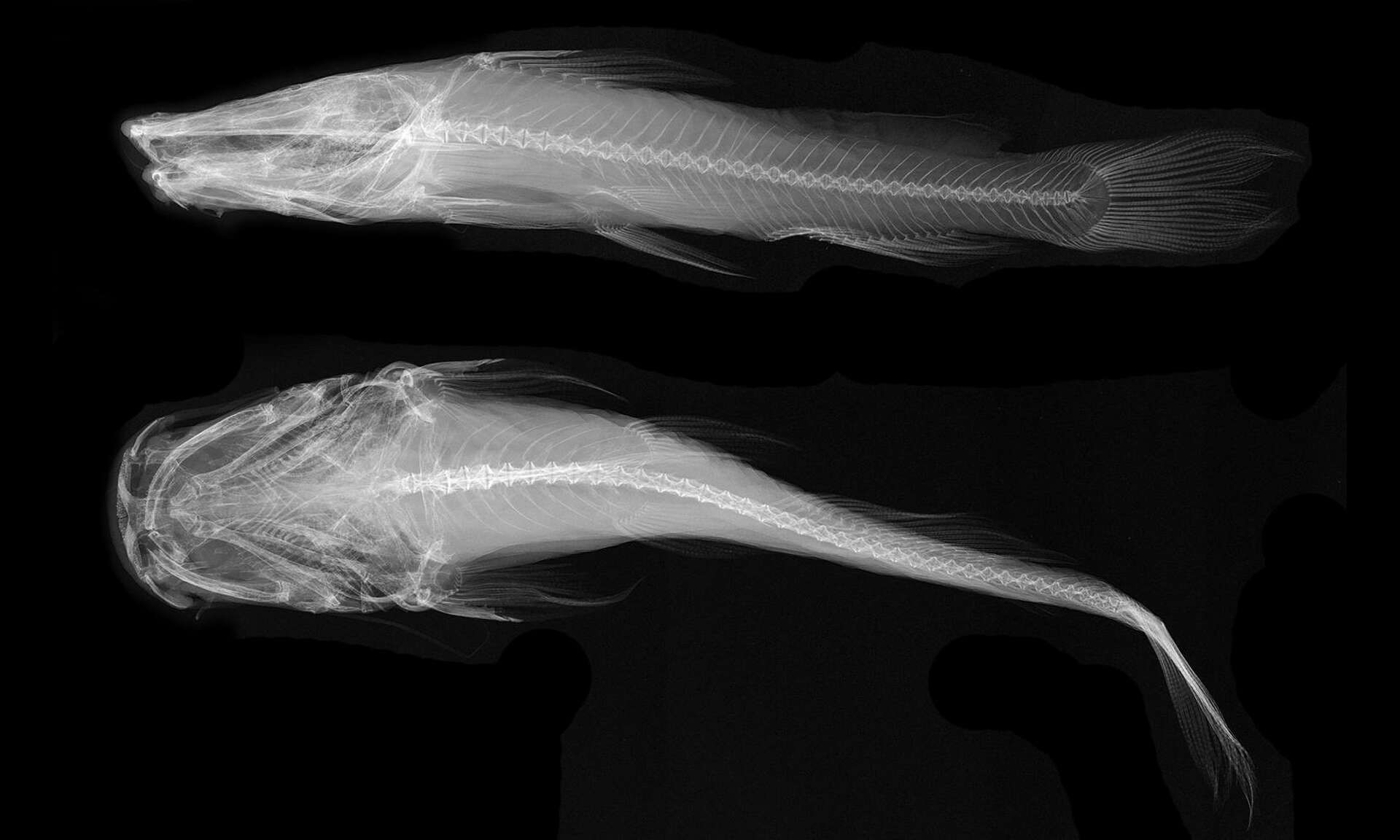
The closest non cavefish relative of the widemouth blindcat is the flathead catfish, who some reader may remember was written about last month. in comparison to them, we can see many other changes that have taken place in the blindcat. Such as: a cartilaginous skull, and ossifying skeleton system, hugely reduced swim bladder, broken up lateral line, and other traits that are common in juvenile catfishes. This is due to a phenomena called Neoteny, or juvenilization, where traits common in young are retained by sexually mature adults, a phenomena common in cavefishes. Also differing from their closest relative (as flatheads get a size of 70 inches) the blindcat gets as large as 6 inches total, which is pretty large for most cavefish! Many other essential information on the widemouth blindcat is currently unknown. We lack an understanding of spawning season, location, reproductive strategy, migration, age of maturation, longevity, or growth rates. Leaving us many mysteries to uncover in the future of our understanding on not just the widemouth blindcat, but cavefish themselves.
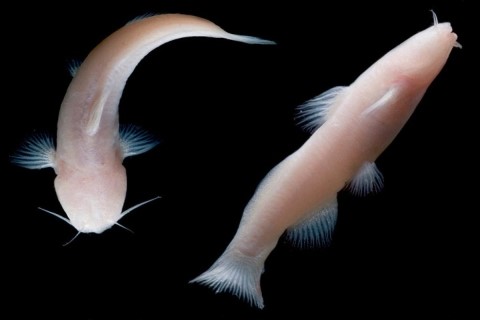
That's the widemouth blindcat everybody! Have a wonderful Wednesday, and a great rest of the week!