Date:11/19/24
Happy Tuesday, everybody! Today’s fish of the day is the westslope cutthroat trout!
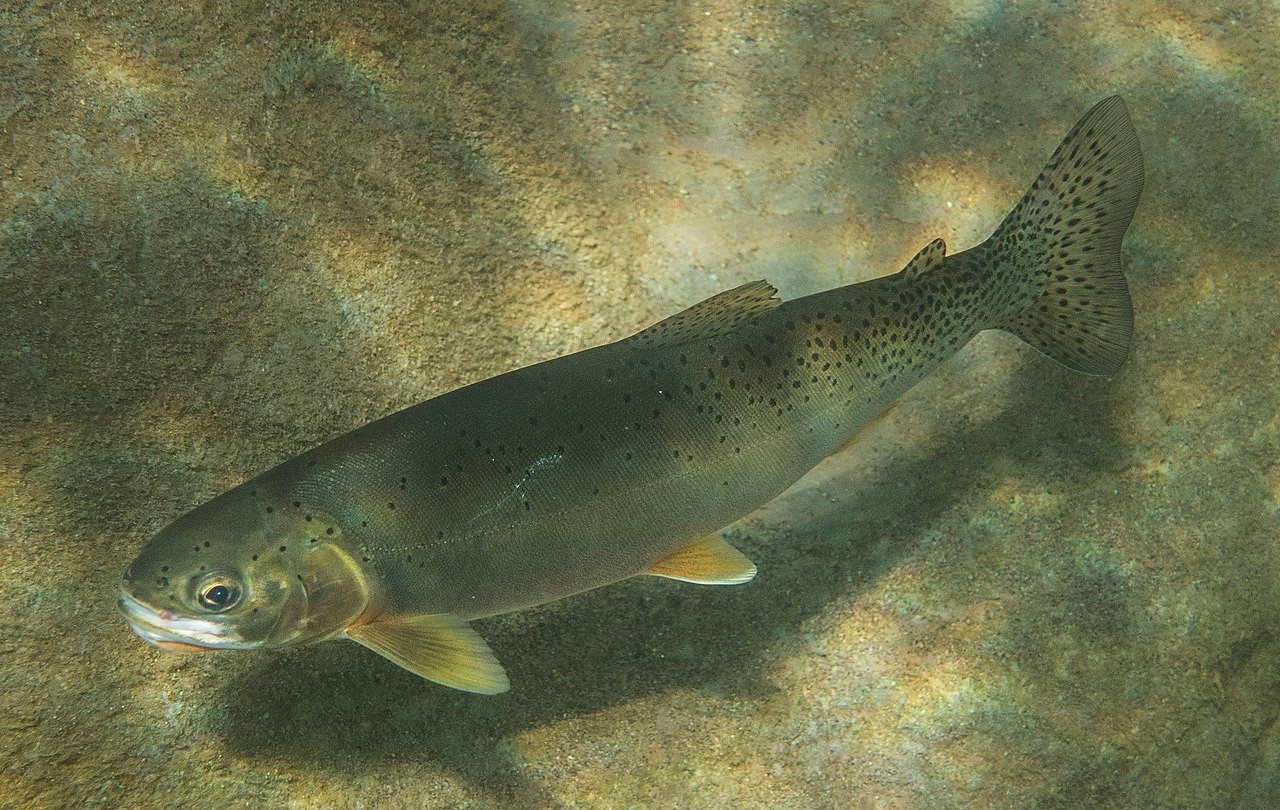
The westslope cutthroat trout, also known by scientific name Oncorhynchus lewisi is a common freshwater salmonid. Known by many names, this fish is one of the four living subspecies of cutthroat trout remaining, and the westslope is sometimes considered to have its own subspecies, as separated by major populations in differing rivers and lakes. Within their range, they tend to settle in rivers that contain more pools and vegetation cover, similar to other freshwater trout. Found across the Pacific Northwest, the westslope cutthroat trout is the Montana state fish, living in the lower areas of British Columbia, Alberta, Wahsington, Oregon, Idaho, and, of course, Montana. Primarily found within the Columbia basin and upper Missouri river basin, with historical ranges stretching far further North, South, and West, but now is only a shadow of its former size. This is due to the aggressive spread of other salmonid trout species, such as the brown trout and rainbow trout, which are non native in the areas and introduced by hobby fishers.
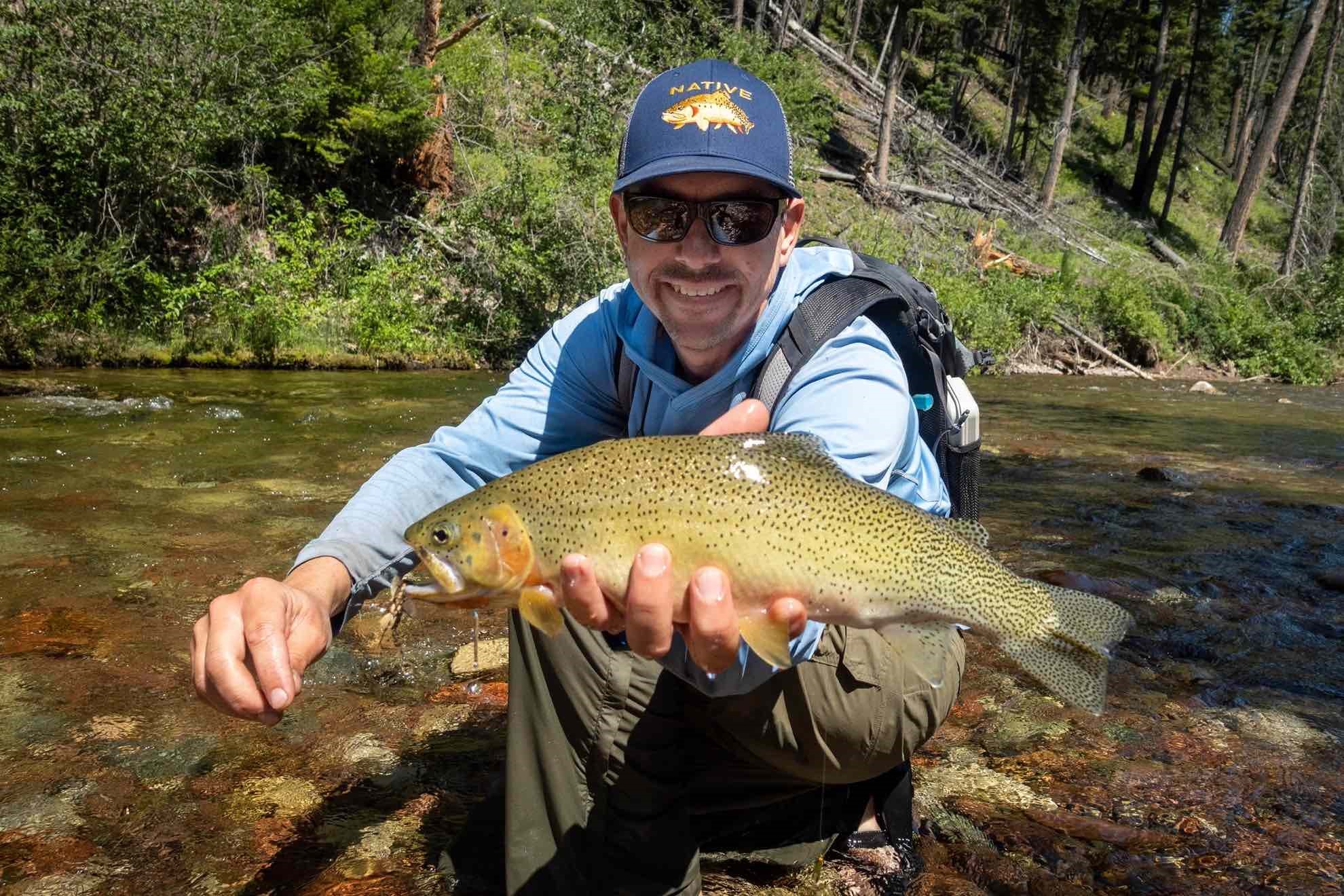
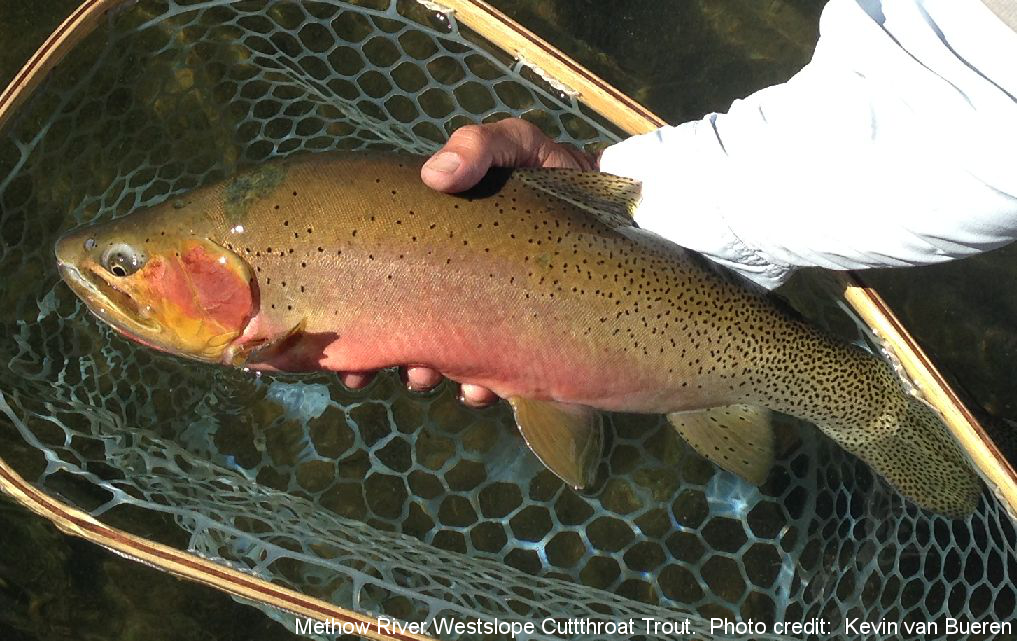
The name of cutthroat seems relatively straightforward, considering these fish are well known for teeth lining: the roof of the mouth, underside of the tongue, and clusters in the front of the mouth. This is in fact misleading. The name of cutthroat was given to these fish due to the distinctive red coloring to the lower jaw of the fish. Despite these many teeth, the cutthroat usually subsists on a diet of insects and their larvae, along with a healthy amount of zooplankton, and algaes. The westslope cutthroat in particular can grow to sizes of 6-12 inches, with few weighing more than 5 pounds. This is significantly smaller than most other inland cutthroat trout, which reach sizes of up to 39 inches at a maximum.
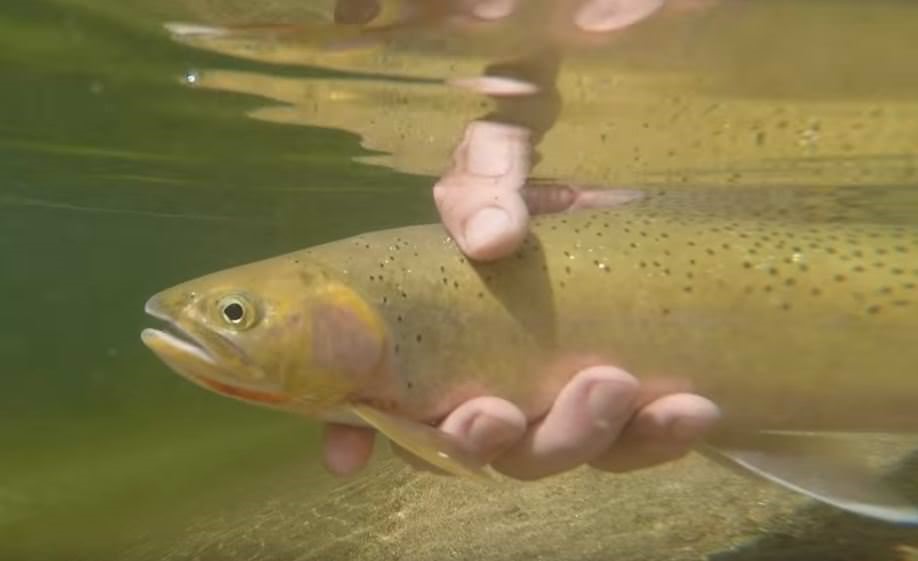
The life cycle and reproduction of the westslope cutthroat is the same as many other salmonids, migratory. cutthroat trout in particular though, especially landlocked ones such as the westslope have three different life strategies—stream resident, adfluvial, and fluvial. Stream resident fish are the ones living within river tributaries, never migrating to a fully different area, just to breeding grounds where the water is clear, clean, and oxygenated. Adfluvial fish live in larger lakes, and migrate down into river tributaries to lay eggs in areas of lower predation. Finally, fluvial fish migrate from larger rivers and basins into tributaries, just like the other trout. This all takes place in their breeding season in the spring, triggered by temperature change, as it begins as soon as the water temperatures regularly reach 50 degrees fahrenheit. Female cutthroats can lay anywhere between 200-4,000 eggs a season, and after fertilization will hatch within a month into fry. Once they reach an age of 3-5 depending on subspecies the fish will begin doing migrations with others of their species to the same breeding grounds they were born in. The fish can live to reach as old as ten years of age, and survive through multiple breeding seasons, ushering in theoretically thousands of offspring in their life.
That's the westslope cutthroat trout, everybody! Have a wonderful Tuesday, and a great rest of your week!