Date:10/29/24
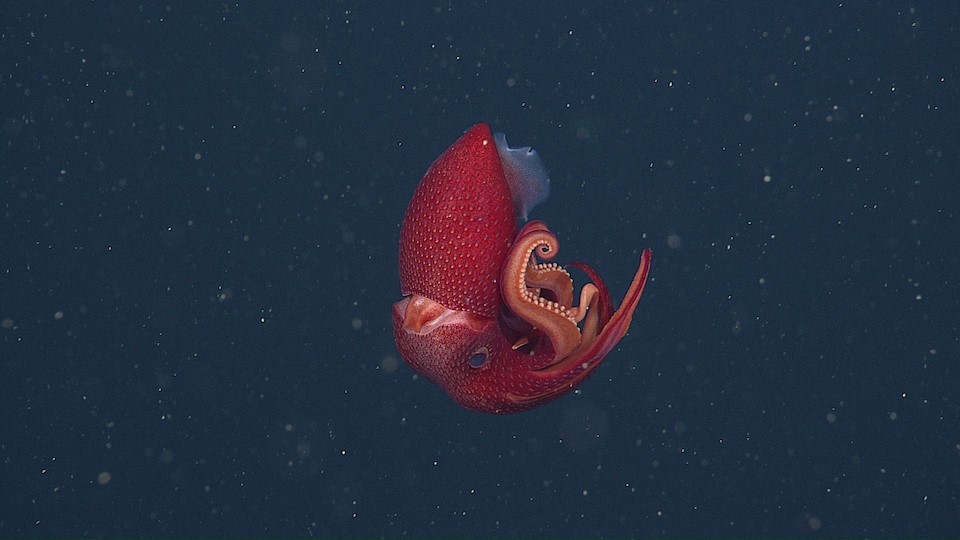
Happy Tuesday, everyone! Today's fish of the day is the strawberry squid!
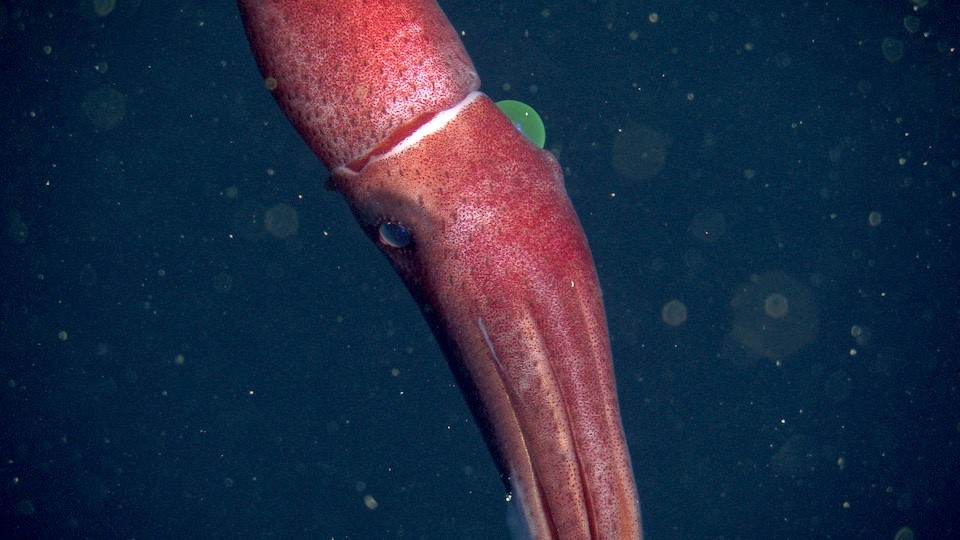
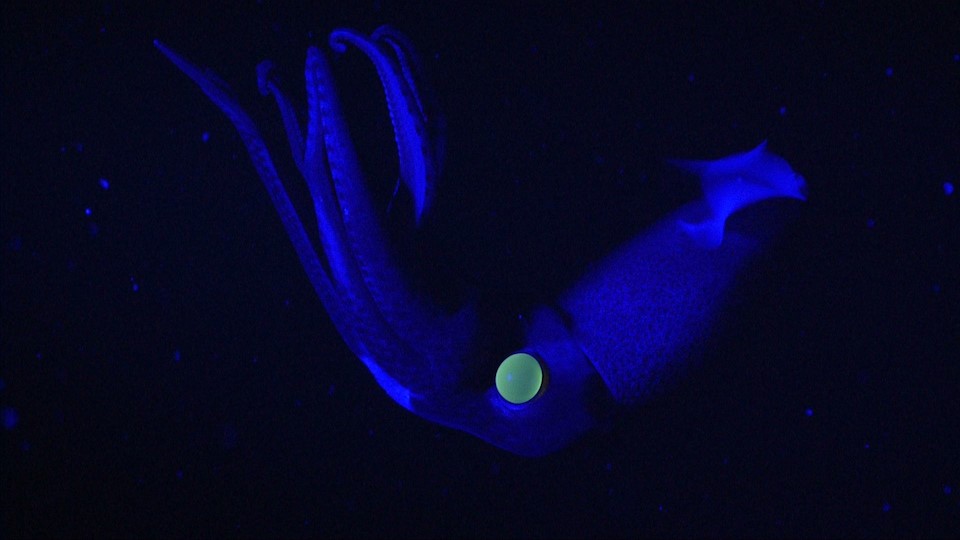
The strawberry squid, also known as the cockeyed squid, and scientific name X is known for their distinctive eyes. Living in the twilight zone (mesopelagic zone) of the ocean, stretching the depths of 200 meters to 1,000 meters, these squid have a unique method for the intake of light in their native range and ability to spot prey and predators. But first, let's go over their range and habitat. The strawberry squid lives exclusively within the twilight zone from 200-1000 meters, undergoing diel vertical migration (a daily migration taking place at night where deep sea animals move upward to predate on various plankton and active nekton) when most predators in shallower waters rest. During the day these squid can be found anywhere from 500-700m, but during the night they are found from 300-400m. Range wise, they can be found in the California and the Humboldt currents, which border the Western coast of the United states, and then further South to the Equator, with the squid living out past the continental shelf.
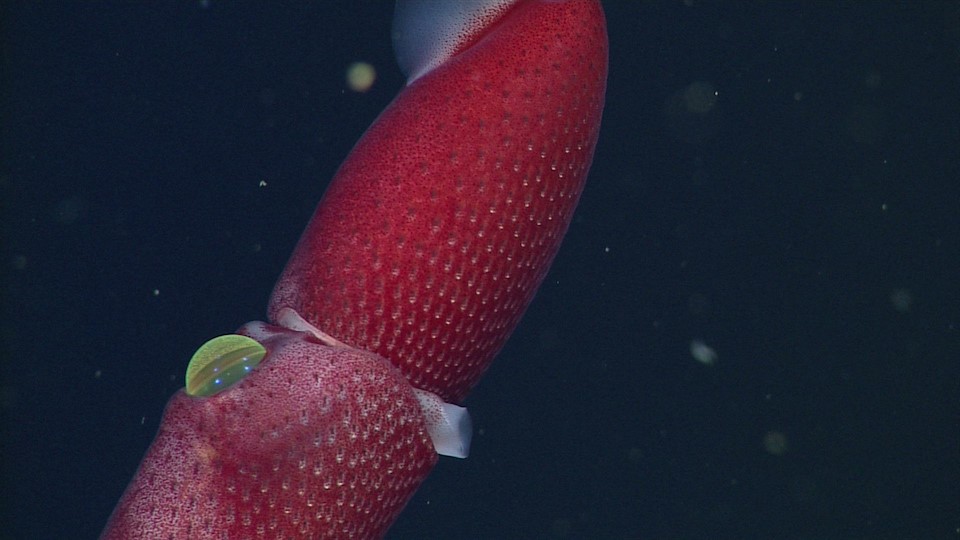
With an entire name focusing on it, the strawberry squid is best known for the unique eyes they have developed. Due to living in the mesopelagic twilight zone of the ocean, only 1% of all sunlight that is present at the water surface can be visible at even the shallowest sections of the zone. These different eyes are designed for seeing better in light/darker areas of water, with the larger eye focusing on looking upward to spot the shadows of prey cast in the water above them. The smaller eye looks downward in the water column to focus on flashes of bioluminescence that could warn of prey or predators. These eyes are the same size when young, but develop as the squid ages. The other, and more common name for the strawberry squid is focused on their general coloration, and the photophores scattered around the body, which are visually similar to strawberry seeds. Photophores can be found on many different deep sea animals, and are small light producing organs, which are only found in the Histioteuthis family of squids, which contains only the strawberry squid and a close relative. These photophores are used for counter illumination, to hide from both predators and prey.
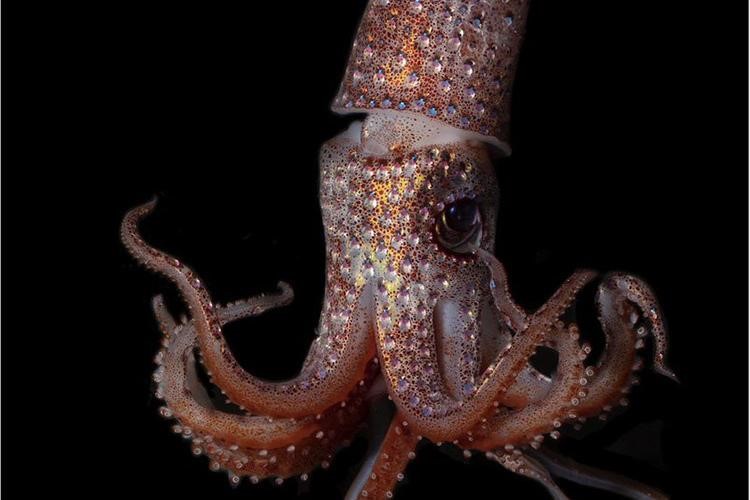
The diet of the squid is made up of shrimps, fishes, and other deep sea squid. These prey are captured by ambush, as the squid very carefully searches for them visually before sneaking closer until it is in range to lunge, wrapping its tentacles around prey and biting down with the sharp beak. They can grow up to as long as 13cm, with only about 5 inches of mantle length. Very little is known about their reproduction or mating, but squids in the Histioteuthidae family lack a specialized mating tentacle, and rather rely on small packets of sperm masses it can send out, which will then find the female squid and meet eggs held within the single ovary. Other than this, the lifecycle of this squid is entirely unknown, leaving many things about them a mystery for now.
That's the strawberry squid! Have a wonderful Tuesday, everyone!