Date:10/28/24
Happy Monday, everybody! Today's fish of the day is the spotted gar!
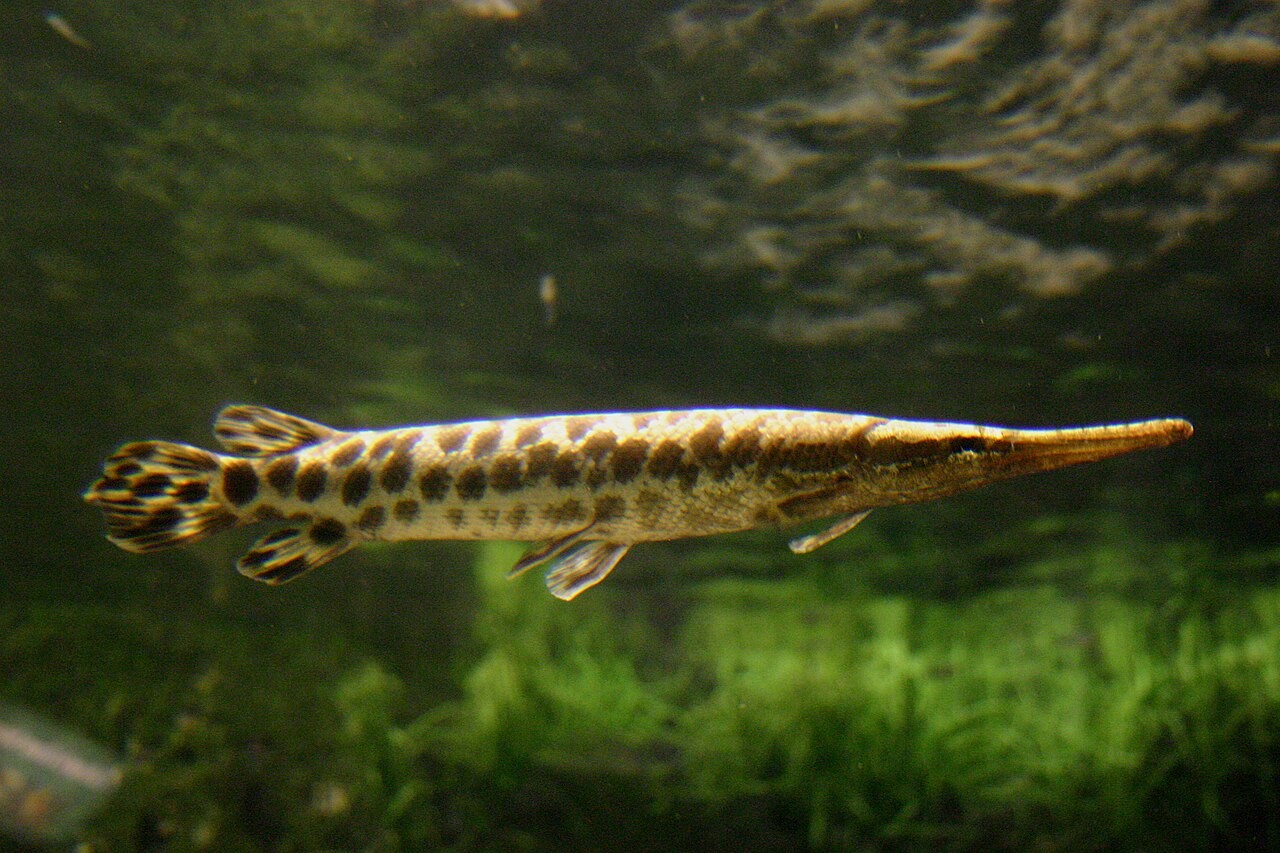
The spotted gar, known by scientific name Lepisosteus oculatus, is a common North American freshwater fish. Found across the South and Midwestern sections of the country, the spotted gar has a range stretching from South of Ontario Canada, to the Northern Gulf of Mexico. In Longitude their range is from Devils river in Western Texas to Florida, with particularly notable populations in the great lakes and Florida rivers. Within this range they can be found around clear and slow moving rivers and lakes, although they will put up with saltier brackish water, and areas with low dissolved oxygen. Spotted gars in particular are known for hiding along the shoreline, where they use vegetation as a cover from larger predators. However despite their large range, their numbers have been dwindling. Previously large populations of spotted gars, once found in Illinois their numbers have dwindled due to increasing lack of clear waters and habitat destruction by humans.
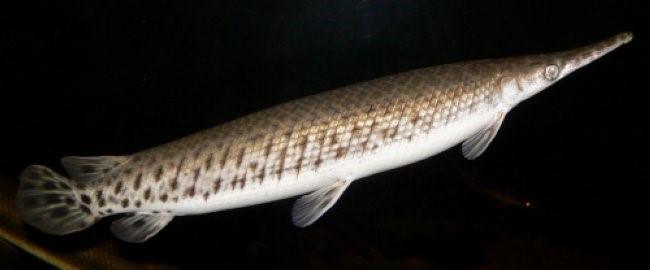
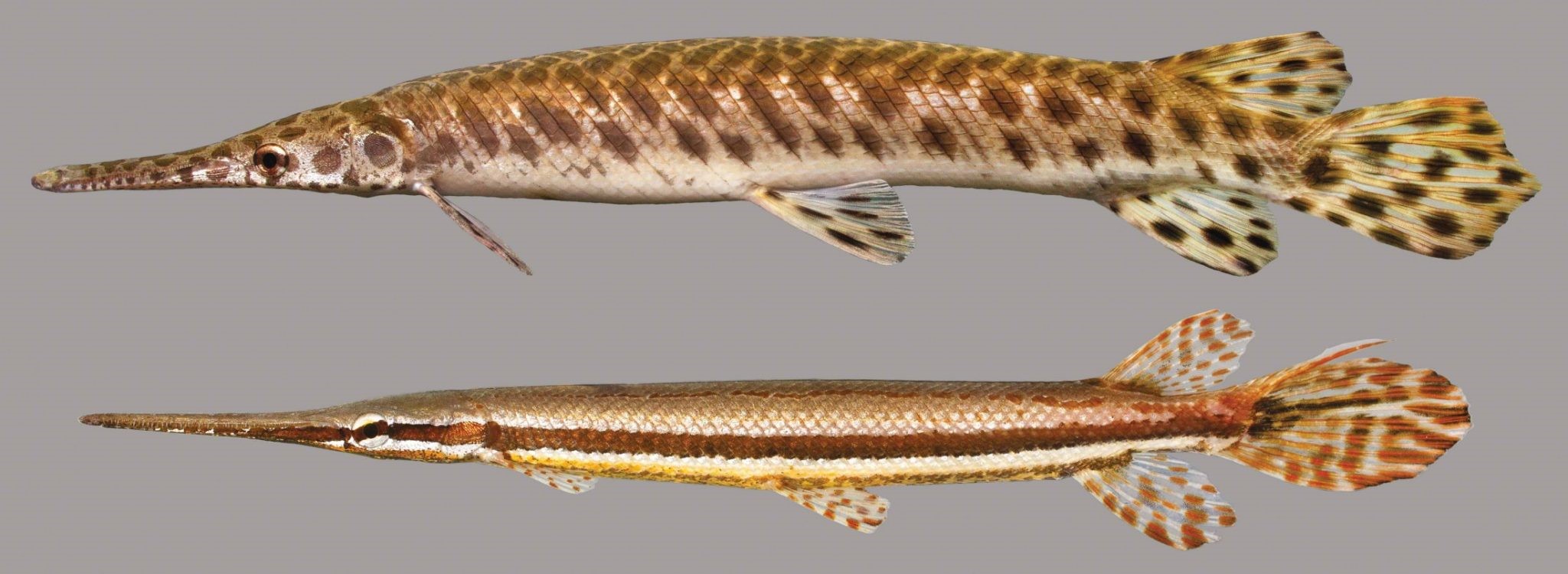
Gars themselves are an incredibly old living fossil animal, having evolved into existence 240 million years ago, in the middle triassic period, they can still be found almost exactly the same as they were back then. There are only 7 extant species nowadays, spread almost equally across two families. The spotted gar in particular belongs to the Lepisosteus genus in particular, which it shares with the Florida gar, longnose gar, and shortnose gar. It can be visually distinct from these family members by the spotting patterns along the mature gars dorsal side. Other than the Lepisoteus genus, there is the Atractosteus genus, which is known for their ability to better withstand marine conditions, being made up of the alligator gar, tropical gar, and Cuban gar. Gars can be identified by the armoured scales around their body and thin knife-like mouth. All gar contain a swim bladder that can be repurposed as a lung temporarily when not in oxygenated water, similar to many other living fossil fish from around this same time period.
Focusing once more on just spotted gar, their diet consists of fast moving prey. Primarily minnows, bluegills, sunfish, and other small fish in their shared environments.Other than fish, the gars diet is made up of freshwater shrimp, learvae, and other crustacean invertebrates. This diet supports them getting to a length of 2-3 feet, relatively small compared to other gar. Other than acting as a predator though, the spotted gar is predated on by larger fish, alligator, and heron. The life cycle of the spotted gar is like that of all other gar. Spawning occurs in the months of late spring to early summer from April-June, depending on sufficient water temperatures (70 degrees or higher) and amount of vegetation. Females can lay up to 20,000 eggs in a single breeding season but on average lay only 13,000. Like many gar eggs, these are adhesive and toxic to predators, taking only 10-14 days before hatching. over 80% of all fry hatched will die in this stage. But, of those who survive, they will sexually mature at an age of 2-4 years old, with most only living to the ripe age of 8-10. Although, in captivity some spotted gar have lived as long as 18 years before meeting their end.
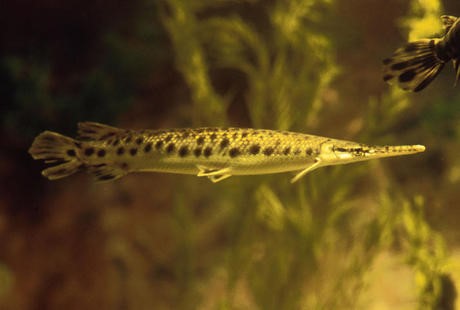
That's the spotted gar, everybody! Have a wonderful Monday and week ahead!