Date:Wed 12/13/2023 8:00 AM
Happy Wednesday, everyone! Today's fish of the day is the sea squirt!
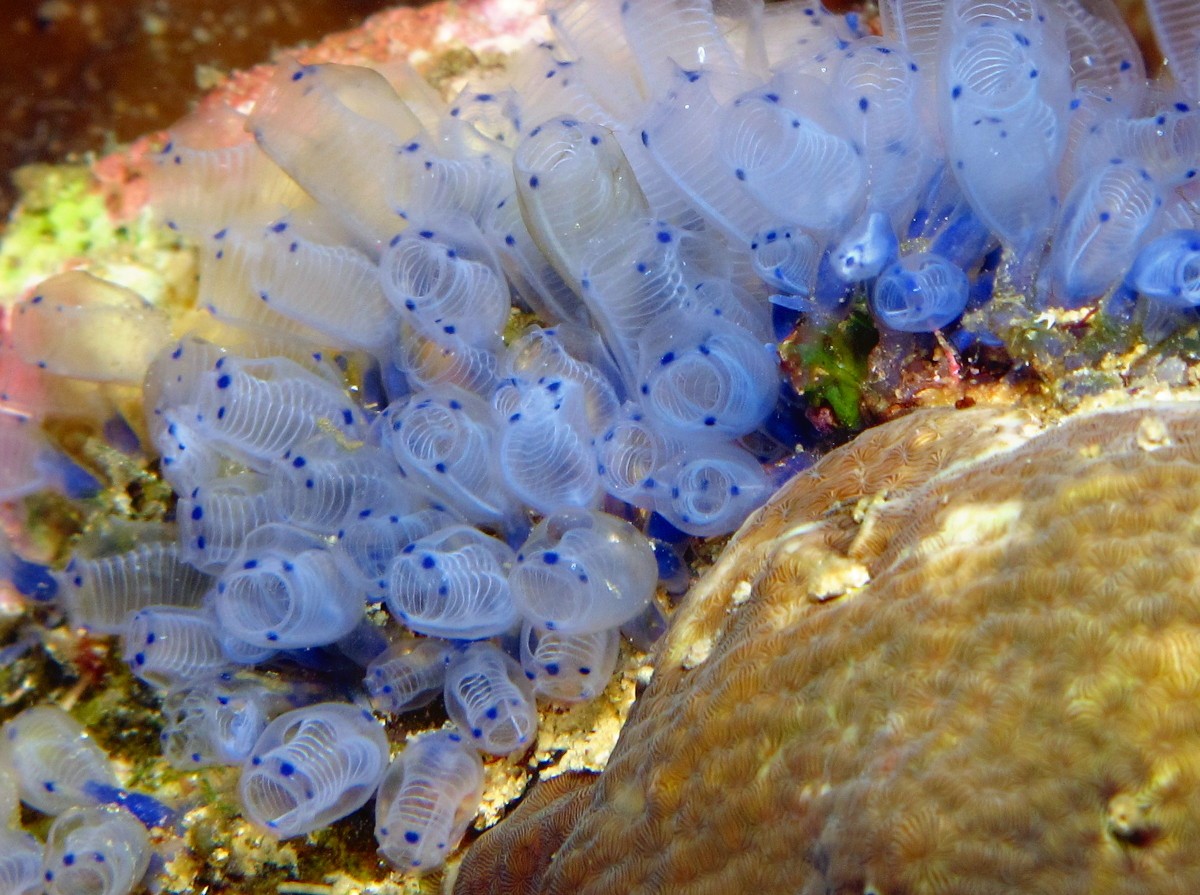
Sea squirts, or ascidians, scientific name Ascidiacea, is an invertebrate class in the tunicate subphylum, known primarily for their very primitive vertebrate features. Sea squirts are sessile, after the larval stage, becoming fixed on a surface, such as rocks, shells, corals, or animals. The sea squirt contains a root-like structure in some individual species, which it uses to hang onto surfaces, but in other species they use only their own ridges. Sea squirts contain two simplified siphons, and when removed from the water it uses this to spit water, which it gets its name from. Some species are individual, whereas others live in connected colonies, where the cellulose tunics are merged to one another.
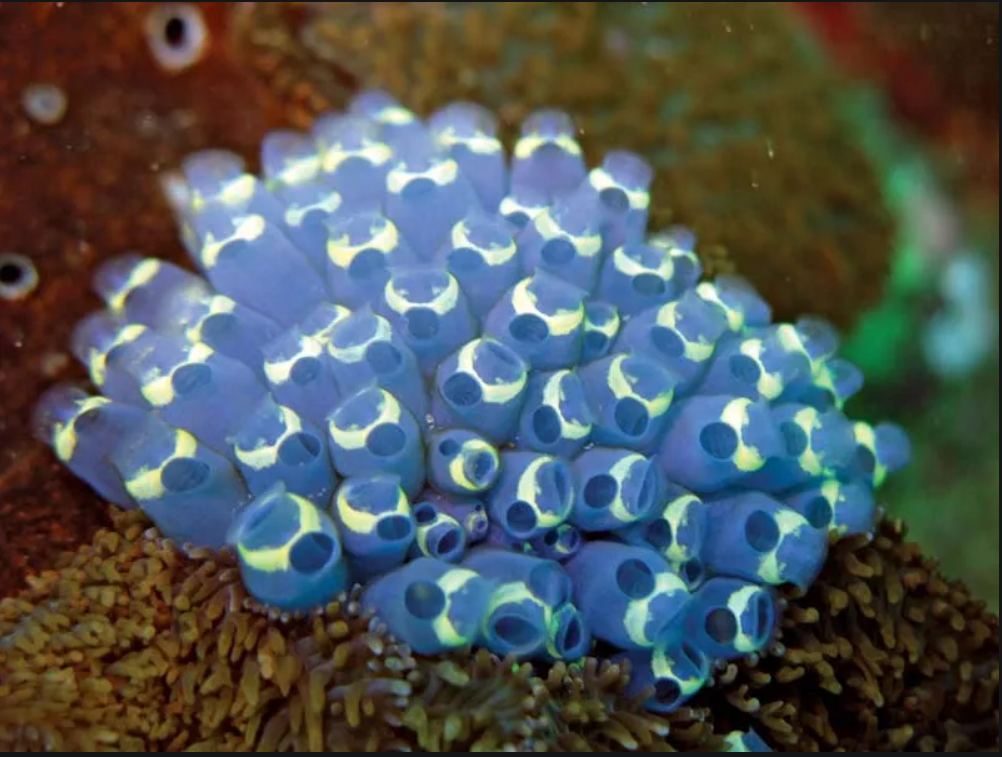
These animals can get anywhere between 0.2cm to 4 inches in diameter, and can be found primarily in shallow waters anywhere with a salinity over 2-3%. Adult sea squirts reproduce asexually and sexually, and in asexual reproduction uses budding. However, sexually reproduced eggs will turn into free swimming larvae until finding a good surface, less than 40 hours after turning free swimming it will "root" and begin juvenile stages.
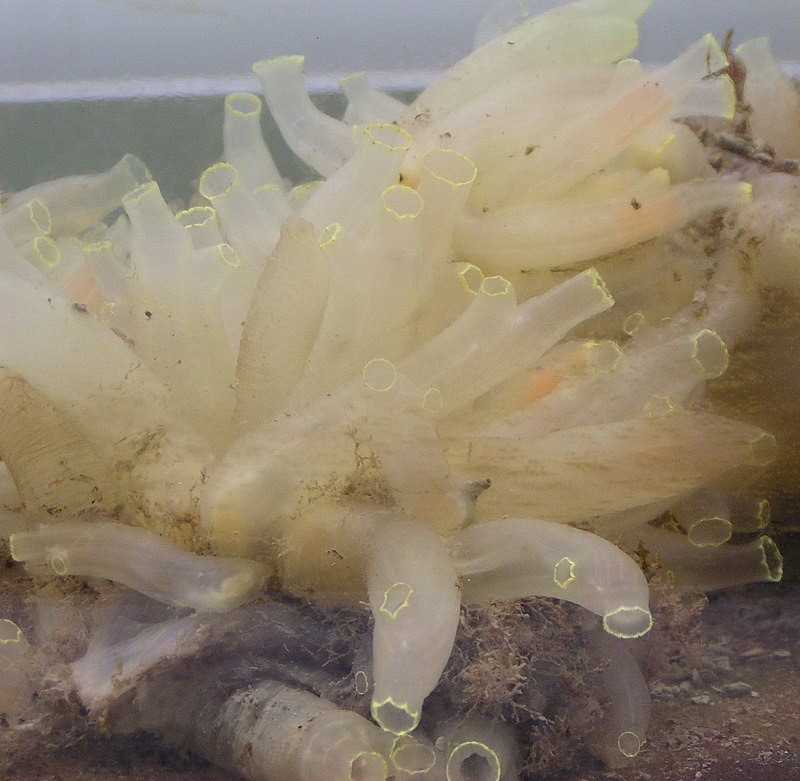
The diet consists of planktonic food particles that pass through the stigmata and become caught on a layer of mucus, that is then drawn into the pharynx and digested.Below the pharynx is where the rest of the organs lay, including a heart made out of a curved tube that has a full circulatory system, with expelled ammonia as waste. Some species display red blood due to iron, and others have green blood due to the presence of vanadium. The nervous system is rather small, and despite lacking a true brain, the exocrine gland is formed from the nerve tube and similar to the spinal cord.
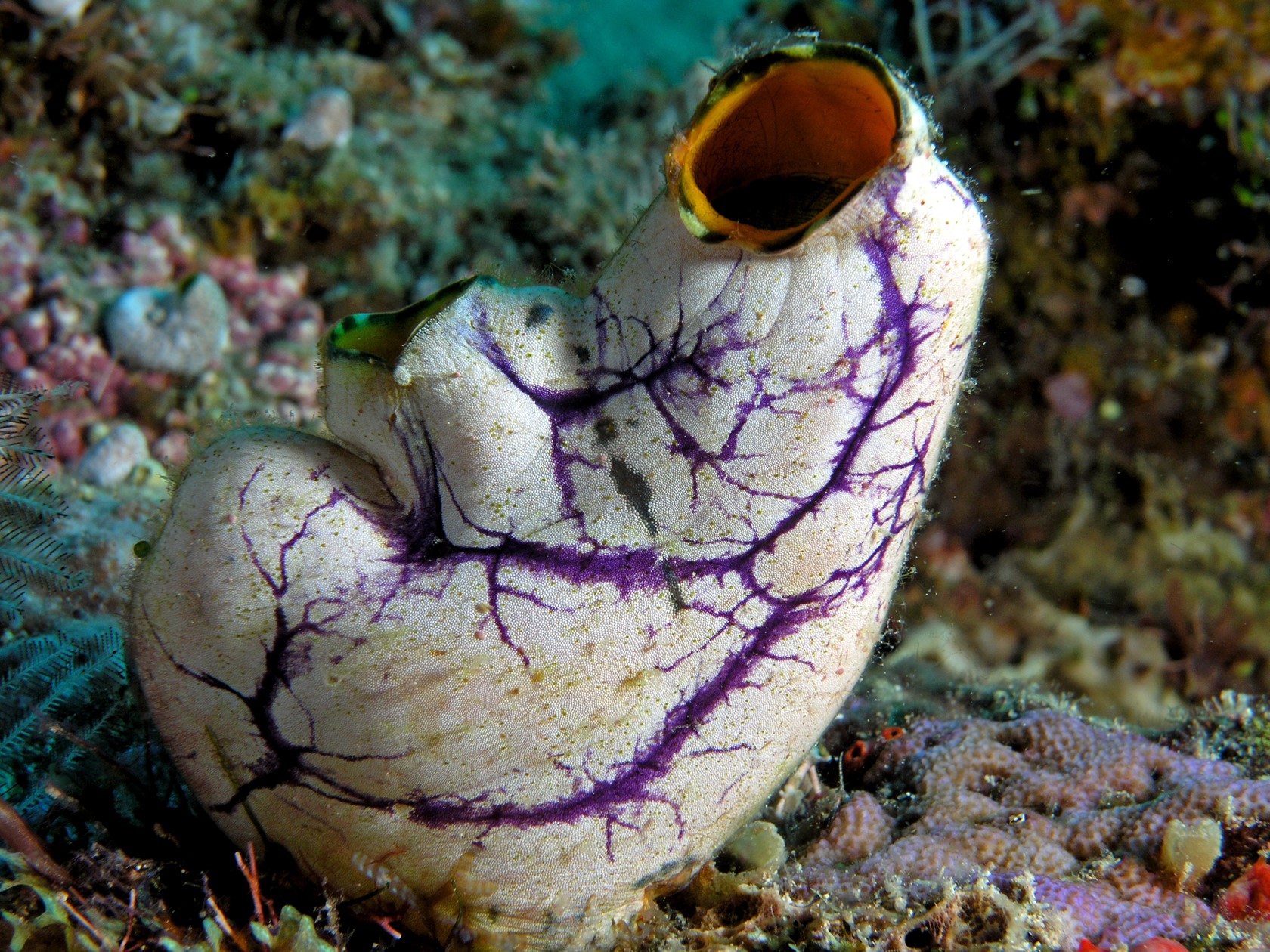
Remember, I am always taking suggestions for future emails. I hope everyone has a wonderful Wednesday!