Date:Wed 11/30/2022 10:57 AM
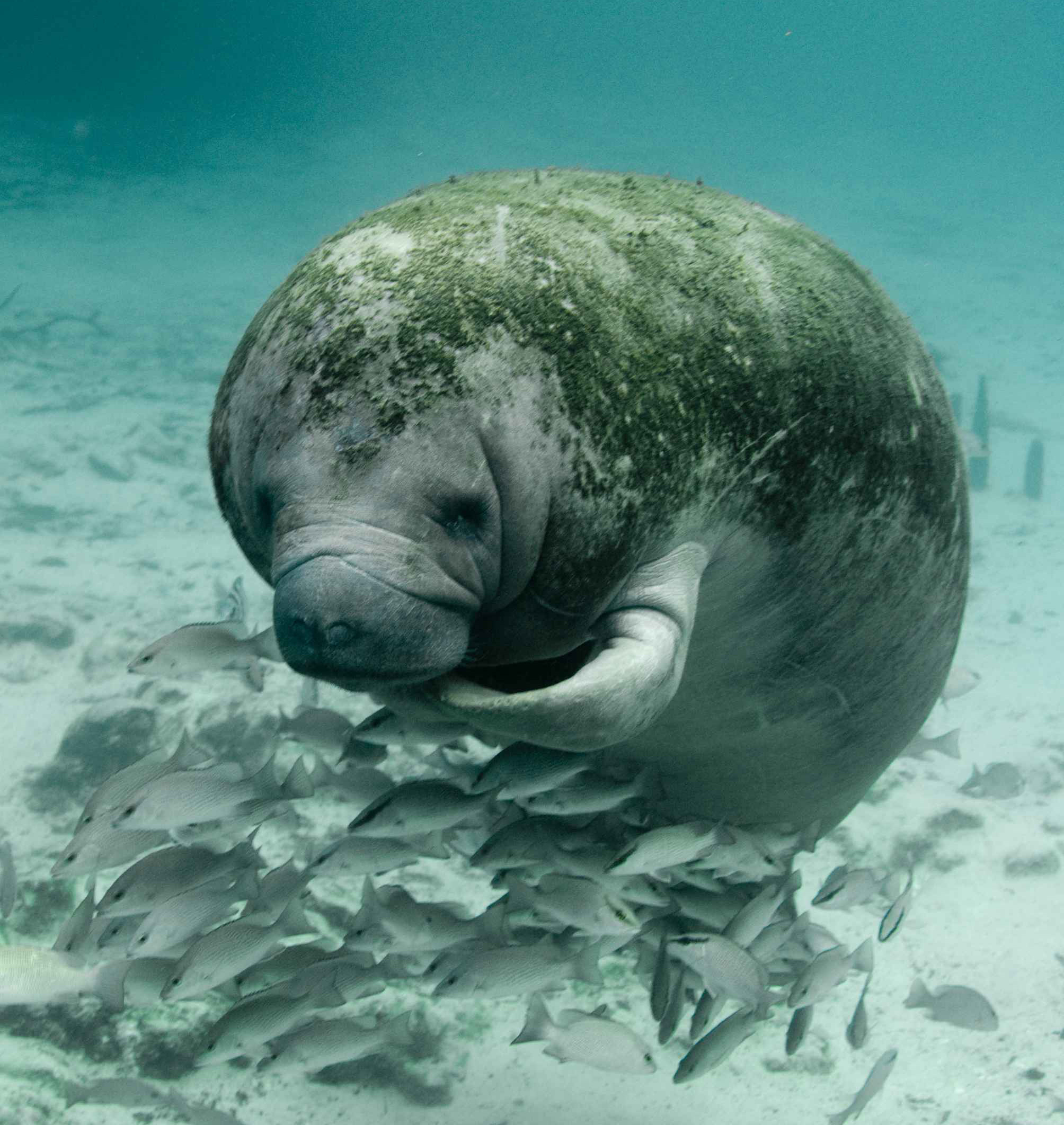
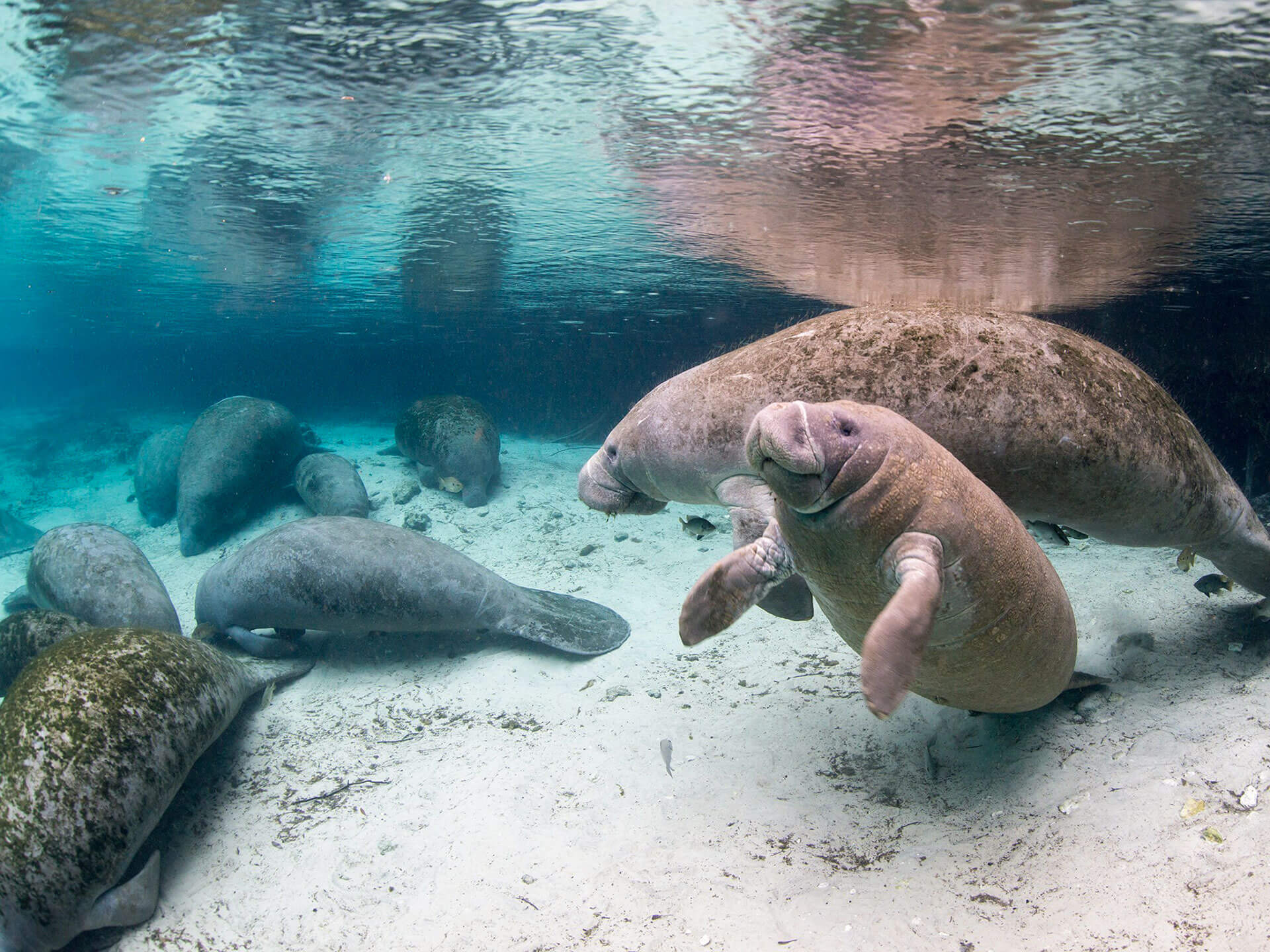
Wonderful Wednesday everyone! Today we will be focusing on an animal that is not a fish at all, but rather the West Indian Manatee! (Also known as the Florida manatee.)
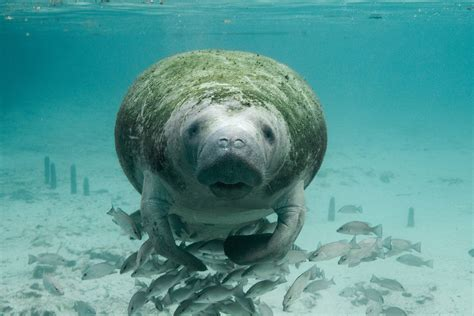
The manatee, coming from the family sirenia, are the smallest surviving family of marine mammals, and the only fully aquatic herbivorous marine mammal, with have only four surviving species, three of which being manatees. The sirenia family is known to have evolved from a similar ancestor to elephants and hippos, 45 to 50 million years ago (the early eocene). The manatee especially evolved teeth designed for eating seagrass and living in warmer freshwaters, although they can live in saltwater just fine.
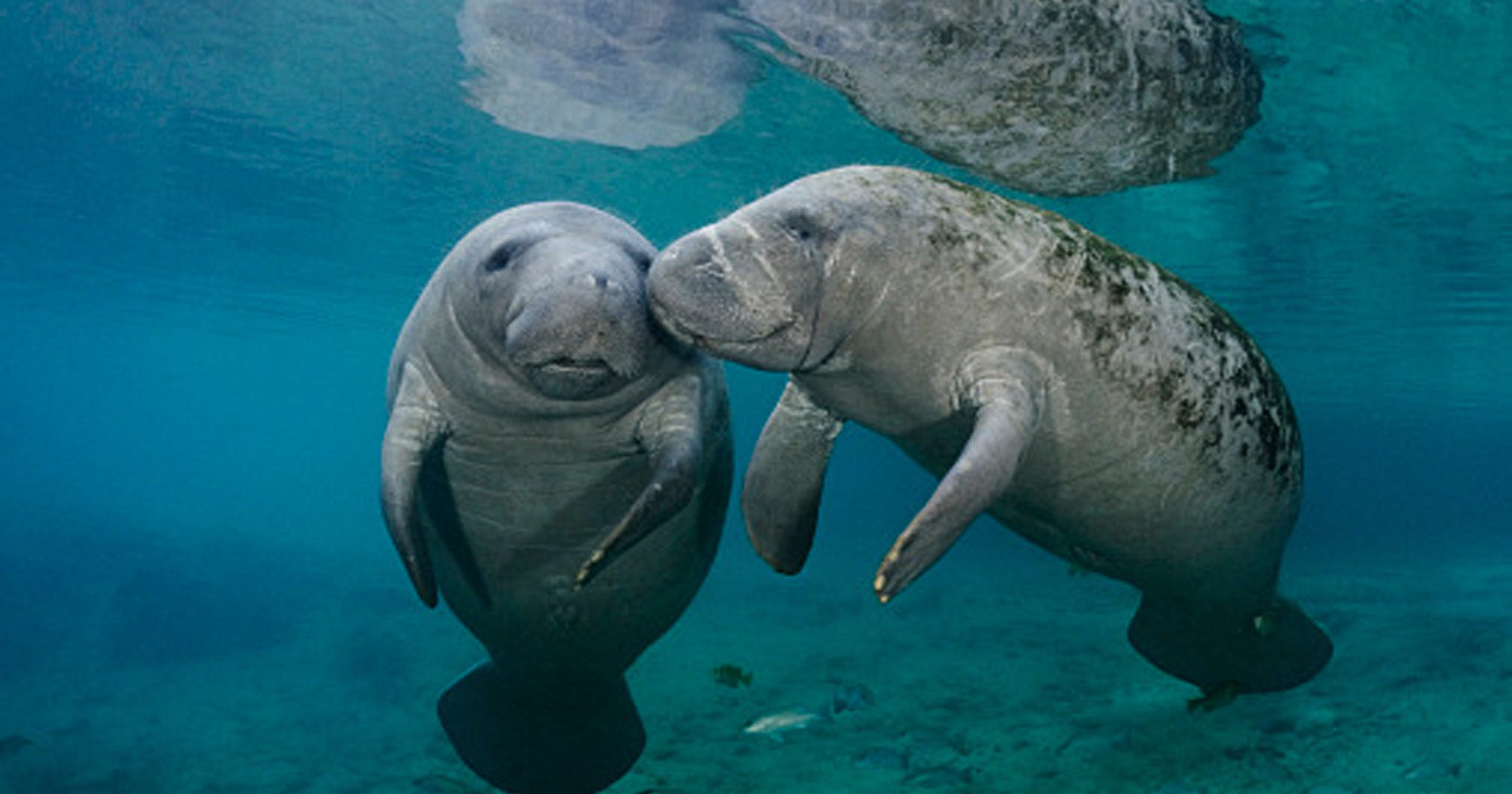
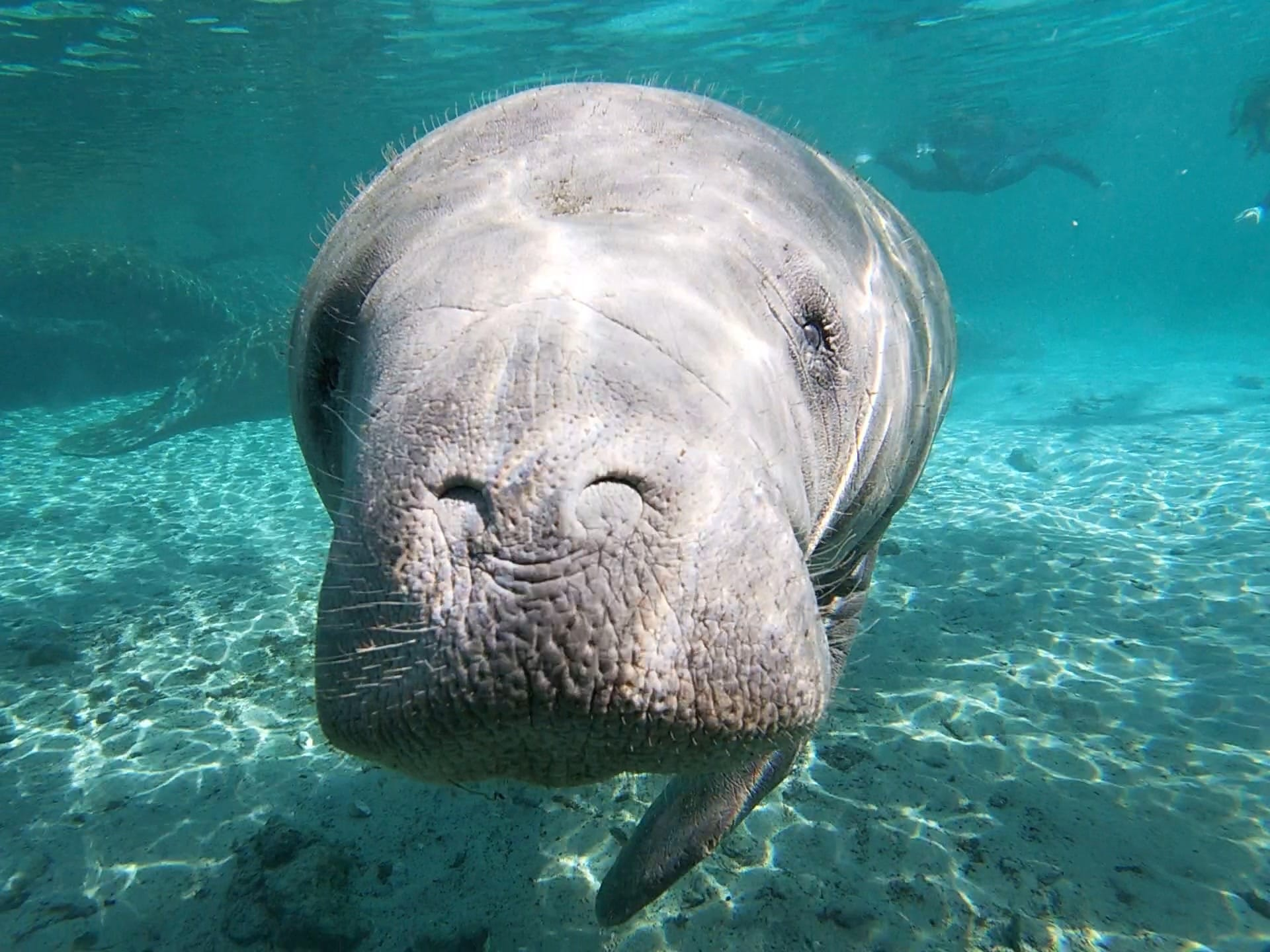
The Florida manatee, scientific name Trichechu Manatus latirstris, is well known for living, unsurprisingly, mostly in Florida. Although, they have populations that live along the coast line spreading down into South America, and even having a subspecies (Trichechus manatus manatus) in the caribbean. Like all manatees, the Florida manatee is a herbivore, feeding on seagrass. Like their relatives, the manatee have prehensile lips, which they use to pull out seagrass. In the back of their mouth they keep molar-like teeth which are used for grinding this seagrass. Along the face and body of a manatee are whiskers, known as vibrissea, and are sensitive, blood filled objects, and can be used to determine the texture of items and are used for finding food and sensing changes in the water.
Vocalization patterns within Florida manatees, like all social animals, imply that they communicate with one another. These animals, when tested, can speak in four separate tones, falling into 5,10,15, and 20 khz. For all provided references, human speech usually falls at 80-250 hz. These vocalizations can go so far as individual vocalizations that might act as names within social herds.
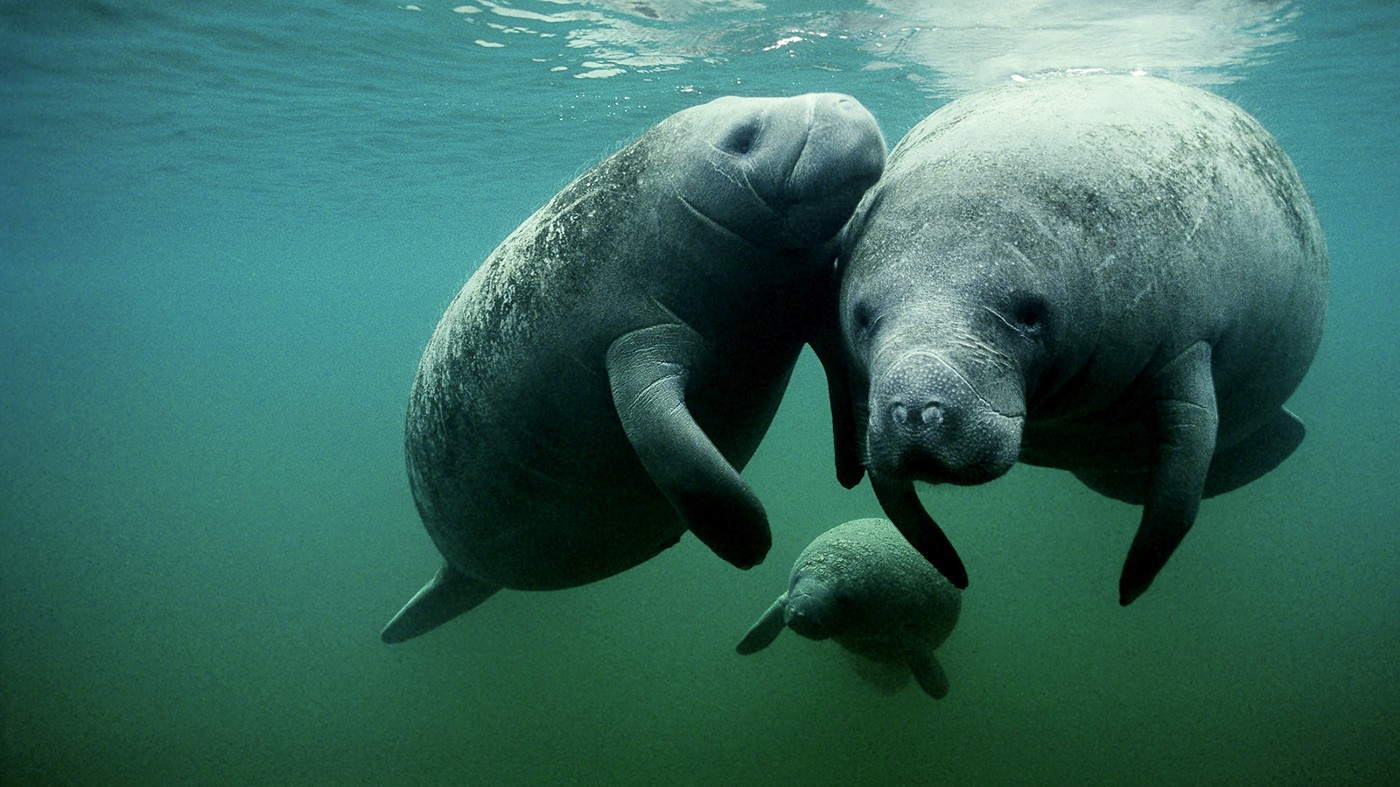
The Florida manatee, like most manatees, is friendly towards humans. This is due to these animals evolving in an area without any natural predators, and thus they are slow moving animals with little fear. Although alligators have been shown to eat manatees if desperate, this does not happen often. There have been West Indian Manatees found before dying from shark bites, this is also unlikely due to sharks not wanting to enter the brackish water these manatees live in.
I hope everyone has a great Wednesday!